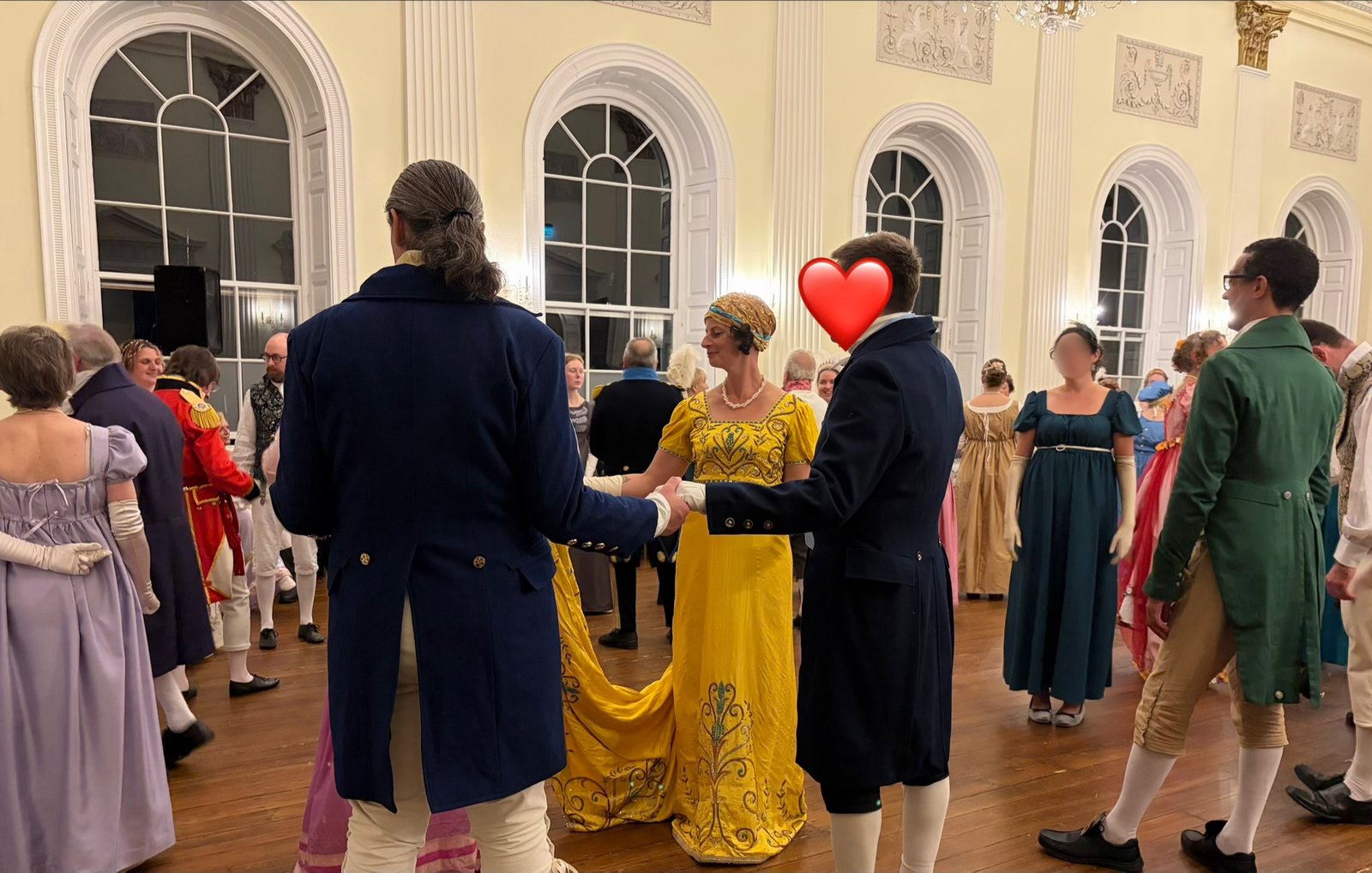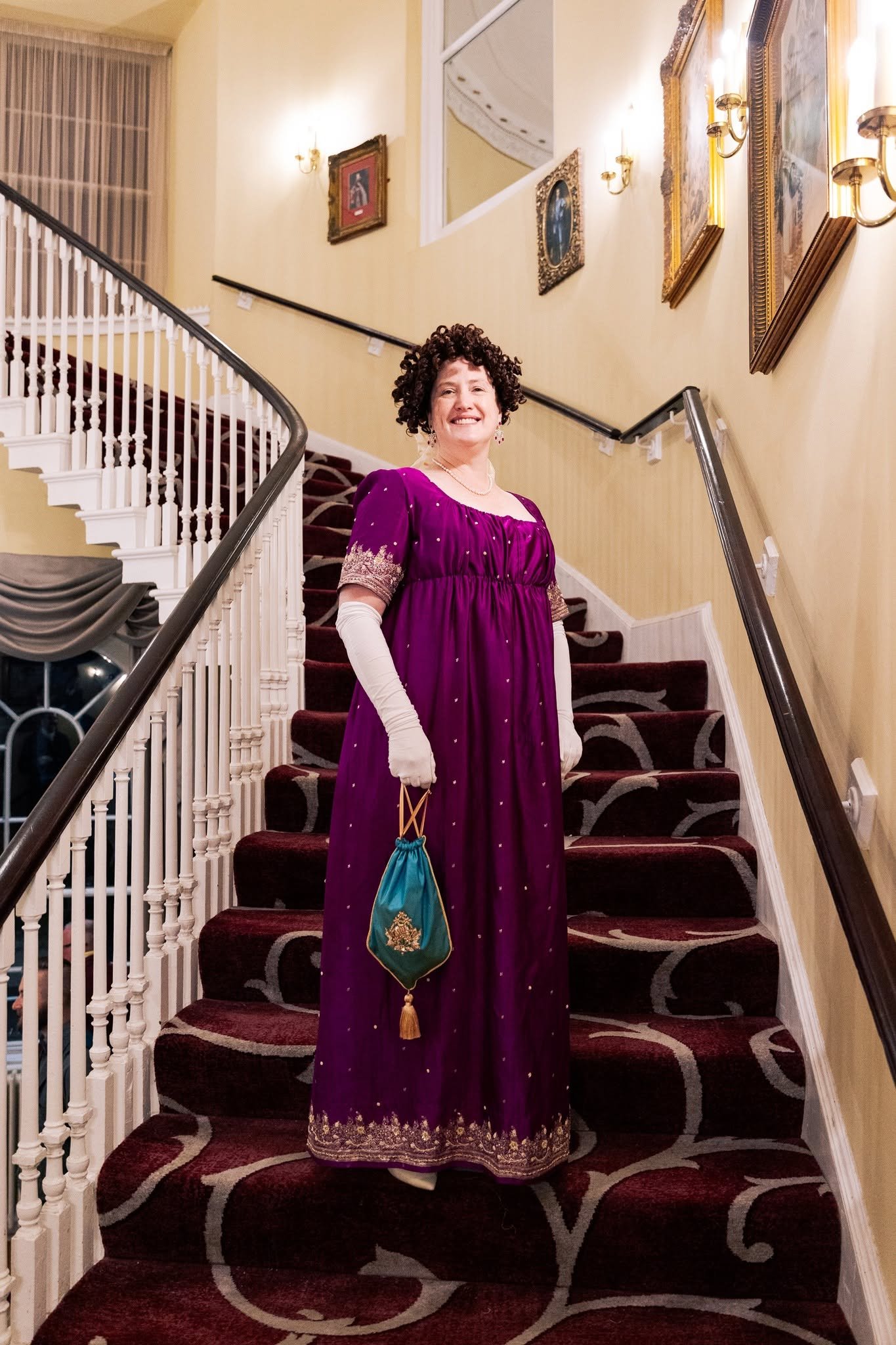
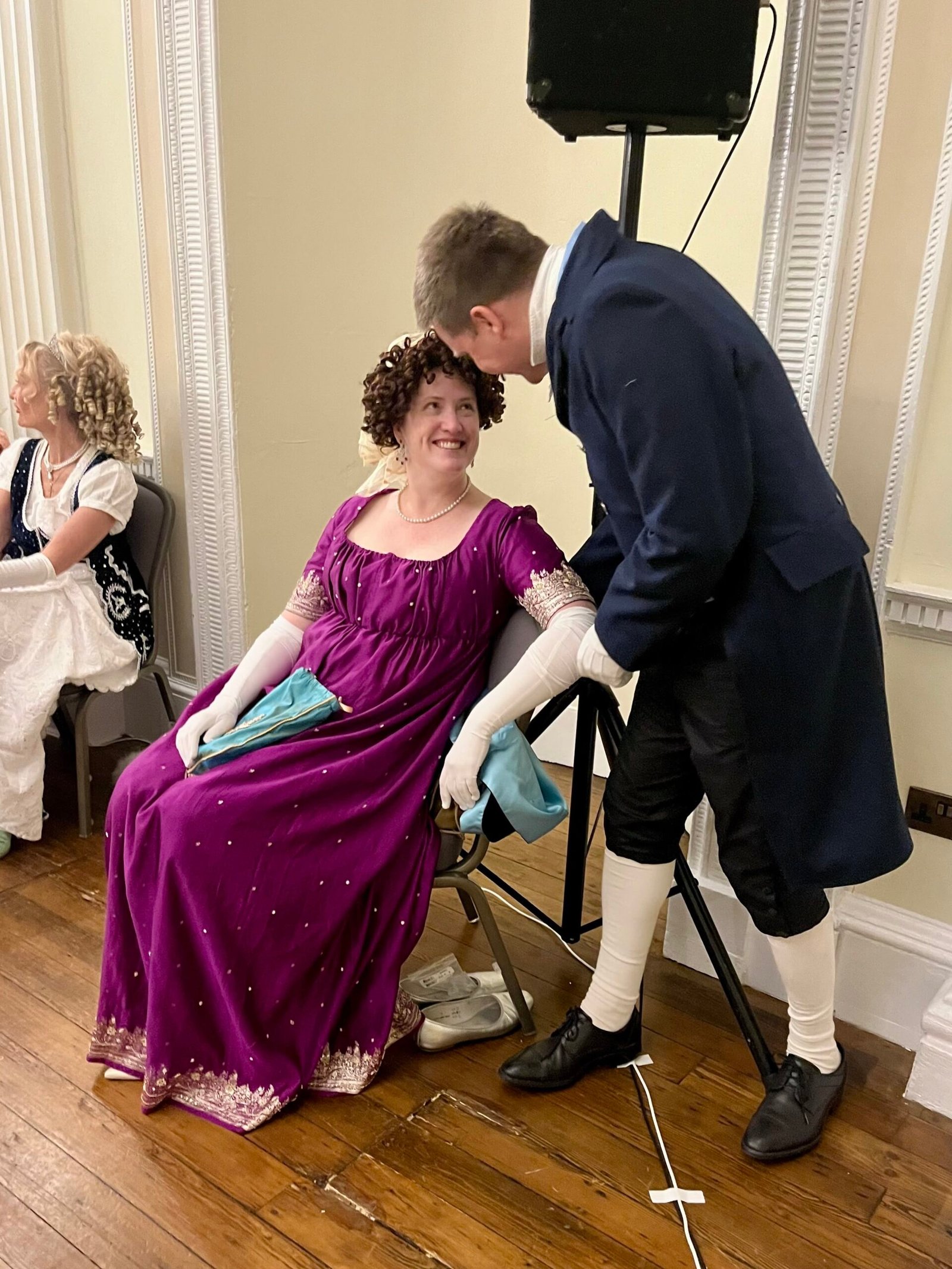
I had originally planned a very different gown for the Regency Ball at the Buxton Georgian festival this past September. But right about when I was about half way through sewing it, Mr Tabubil said “”Hang on. Didn’t you just finish a ballgown? A purple satin regency gown?”
I had, in fact.
“Why aren’t you wearing it, then?”
“The style’s a little early for the period of the ball.”
“So what? The color’s gorgeous. Why make another one when you haven’t work this one yet? We’re in Buxton to have fun! Bring it along and just wear the heck out of it!”
His logic was unassailable. So I did.
Back in 2023, shortly before we left Chile, I had gone on ebay and purchased a saree made from a deliciously buttery purple silk satin, with heavy silver embroidery along the hem and pearls and spangles scattered across the silk. Unfortunately, when it arrived, i found that there was significant ink-staning across quite a lot of the fabric. Working around the stains, I saw that there wouldn’t be enough fabric for the full skirted, puff sleeved gown I’d planned to make, so I put the saree away for later and moved to Canada instead.
Three years later and settled down in Vancouver, I picked up the saree again. I started by laying it out on the floor and marking around all of the ink stains.
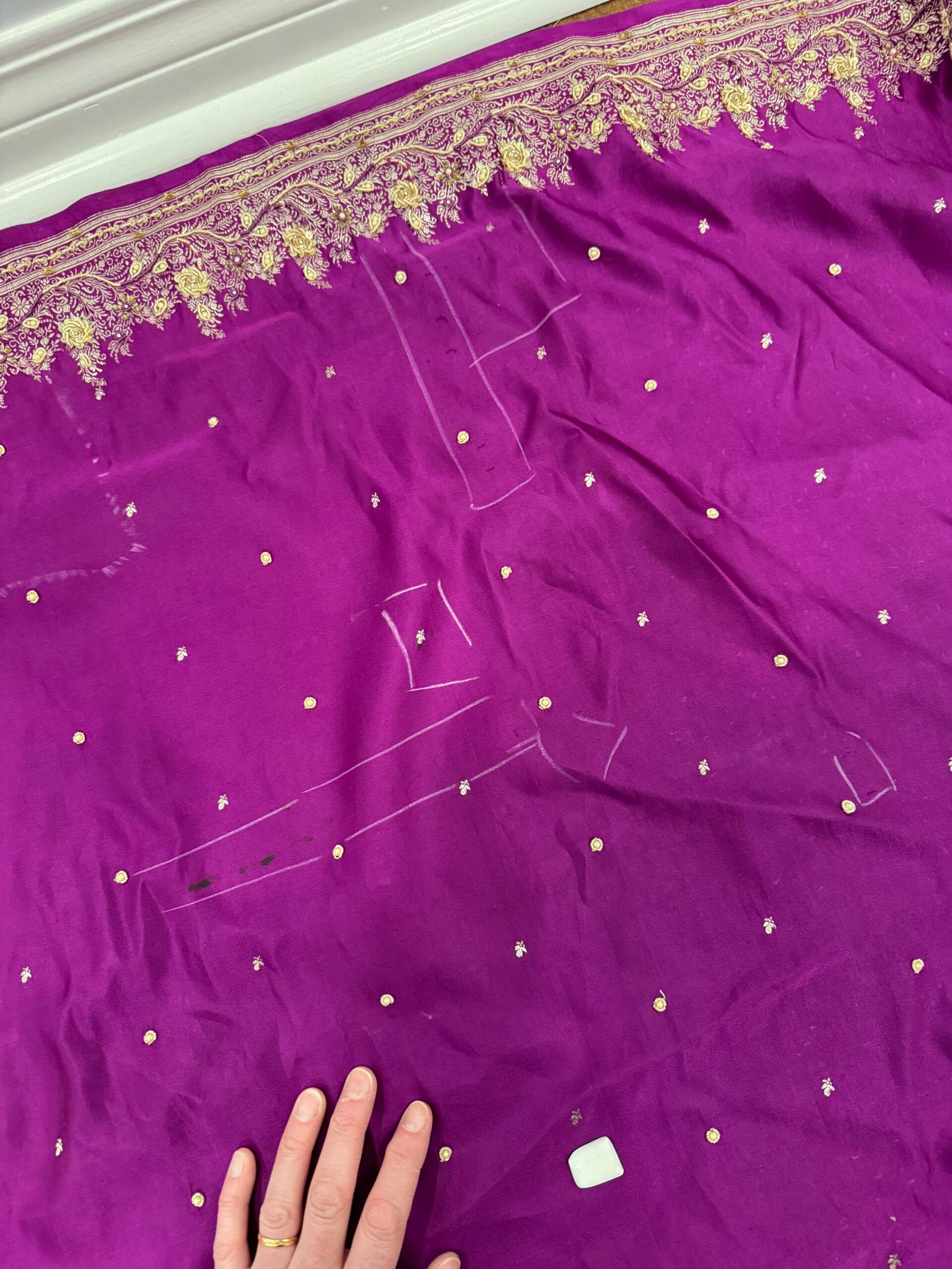
Due to the extent and placement of the stains, my style options were limited, but I loved the purple silk, and I was determined to get a gown out of it somehow. I spent an afternoon playing pattern tetris and made myself a plan. I’d lose a lot of yardage in the skirt, and the sleeves would need to be straight and to feature the heavy embroidered trim. The gown would be closed at the back and the front, but some light gathering on drawstrings at waist and bust would let me slide it over my head.
I weighed down my patterns and started to trace. It was tight between the ink marks, but I could make it work.
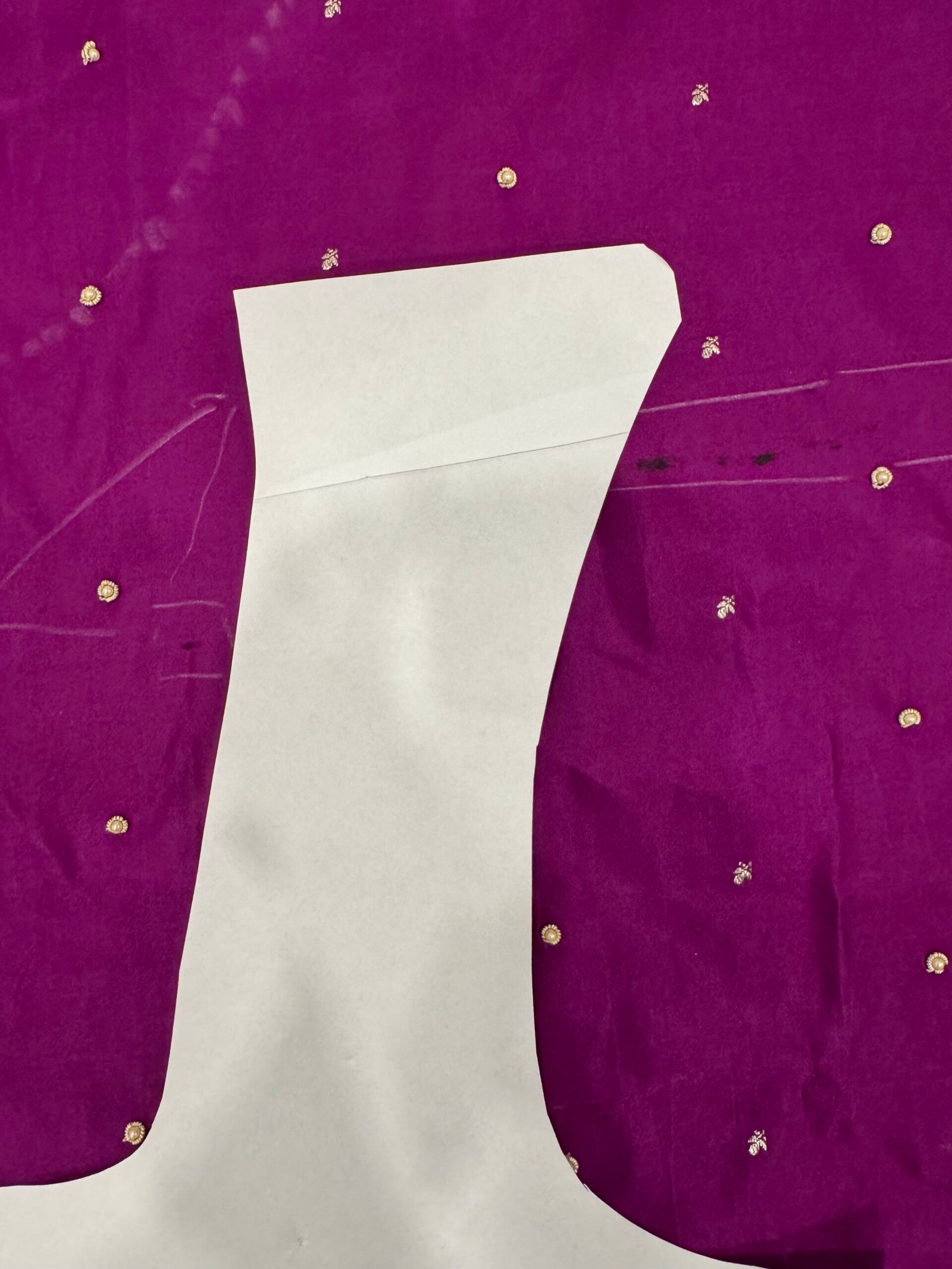
One of the front bodice pieces ended up being cut upside down with regard to the rest of the gown, but the embroidery is almost unidirectional and no one can tell.
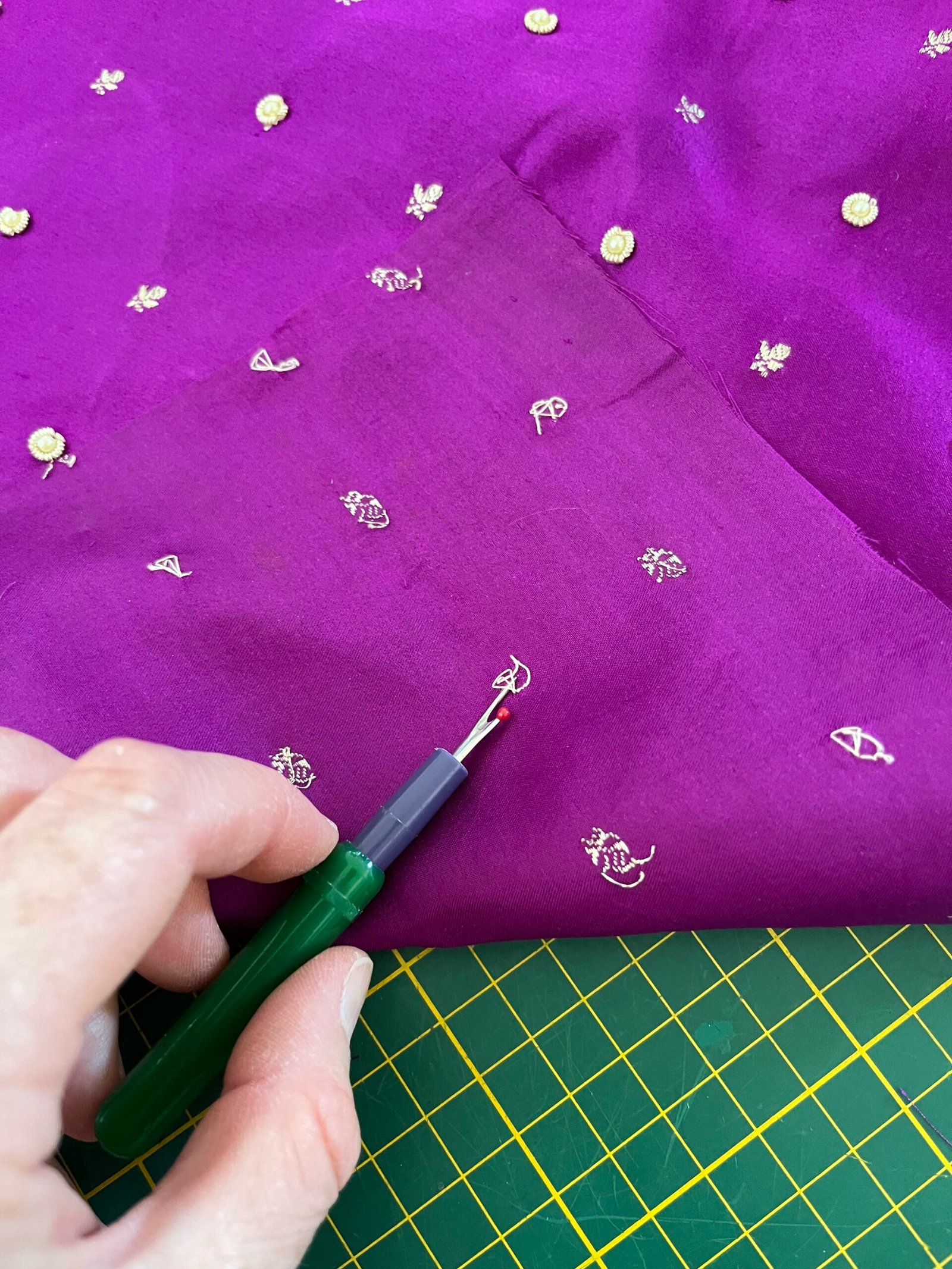
Before cutting, I carefully unpicked all of the raised embroidery elements that crossed my cutting and stitching lines.
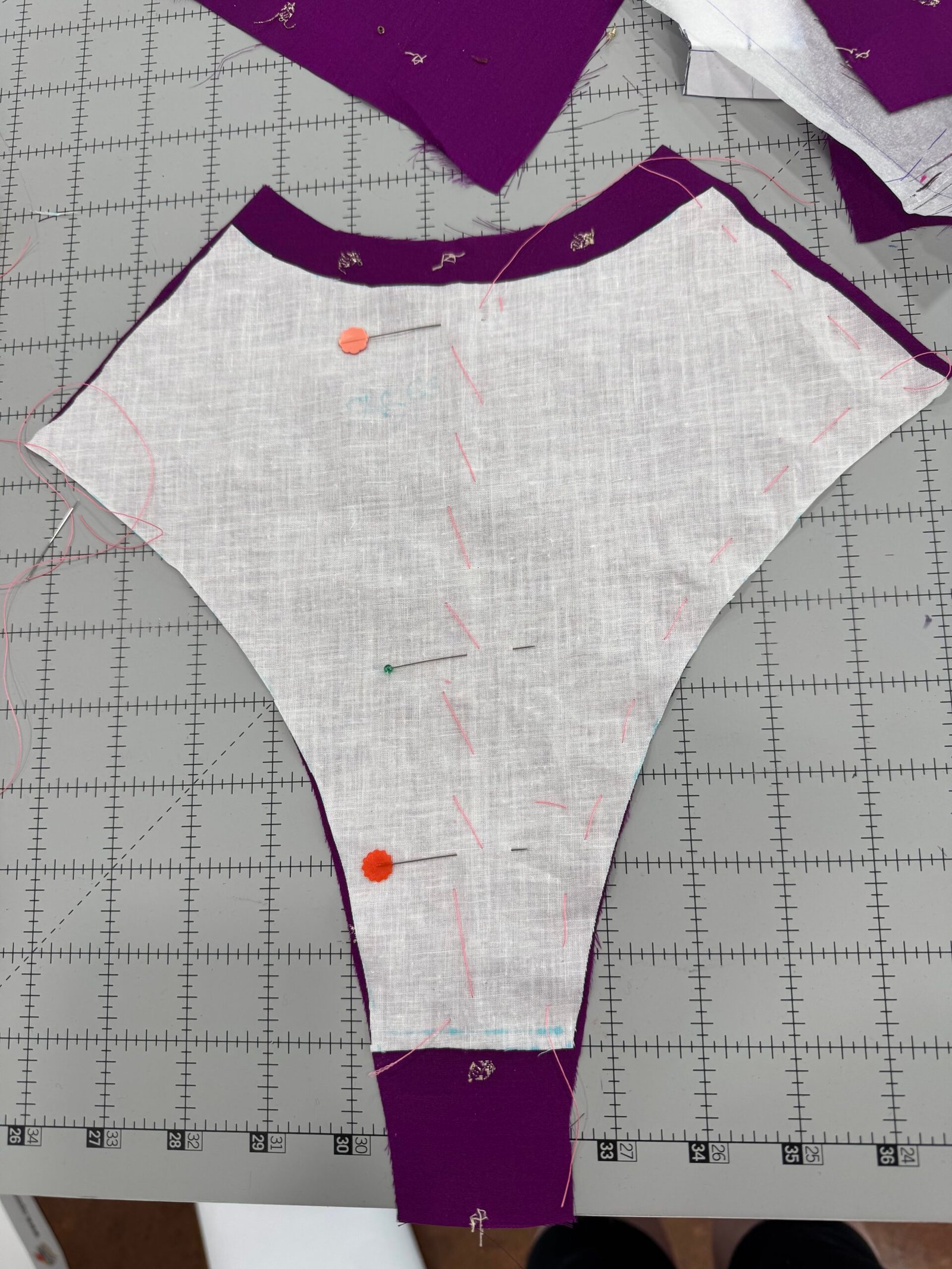
I flatlined the bodice and sleeves in a crisp but lightweight cotton-linen blend fabric.
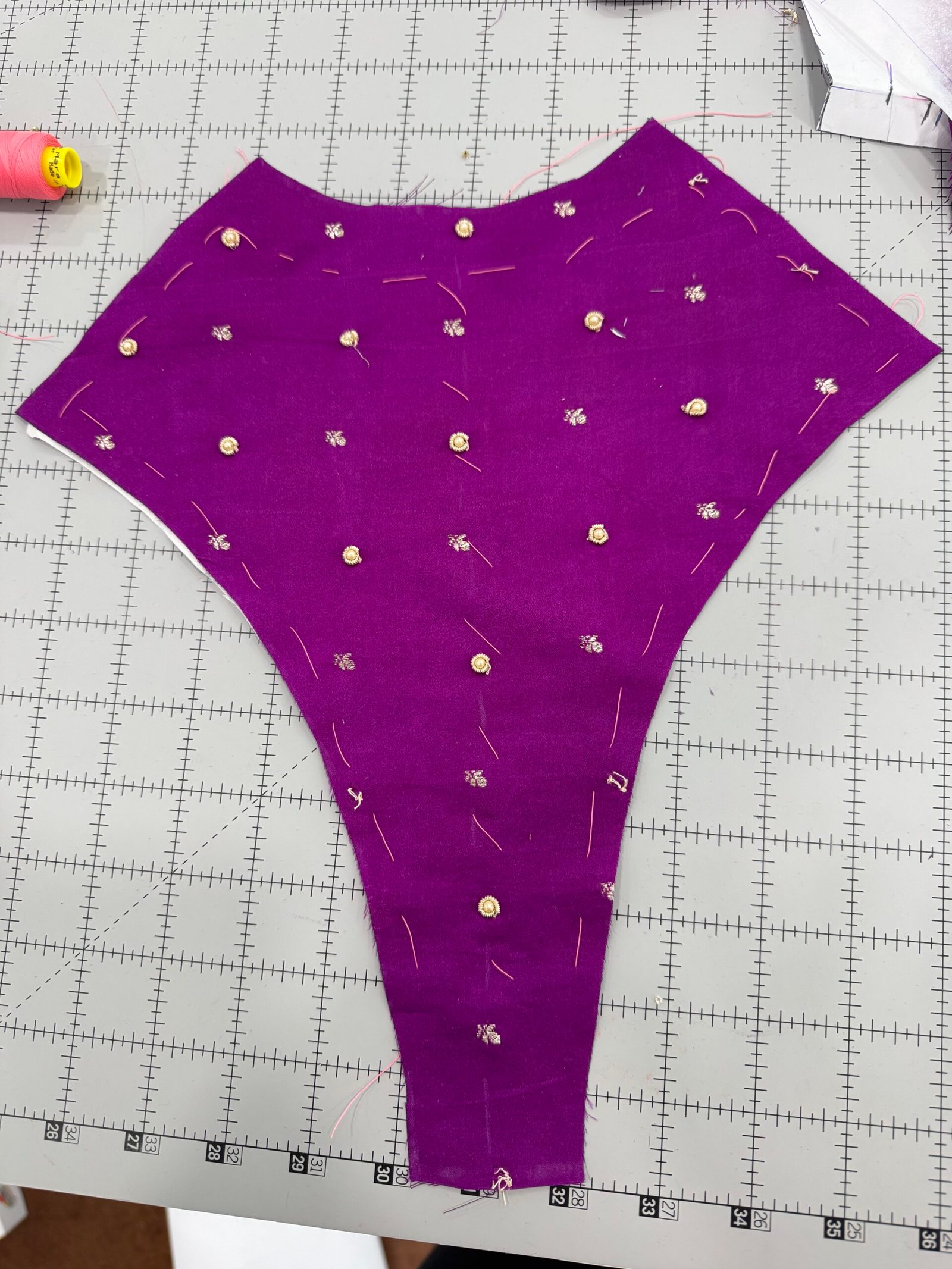
To work with the heavy embroidery on the sleeves and the skirt, I unpicked the applied border elements from the edge of the fabric up to the stitching line. Then I sewed the seams with a piping foot, pressing tightly against the raised embroidery on the inside of the seam line.
With the front of this purple satin regency gown minimally gathered on drawstrings at waist and bodice, the fullness in the gown is concentrated at the back.
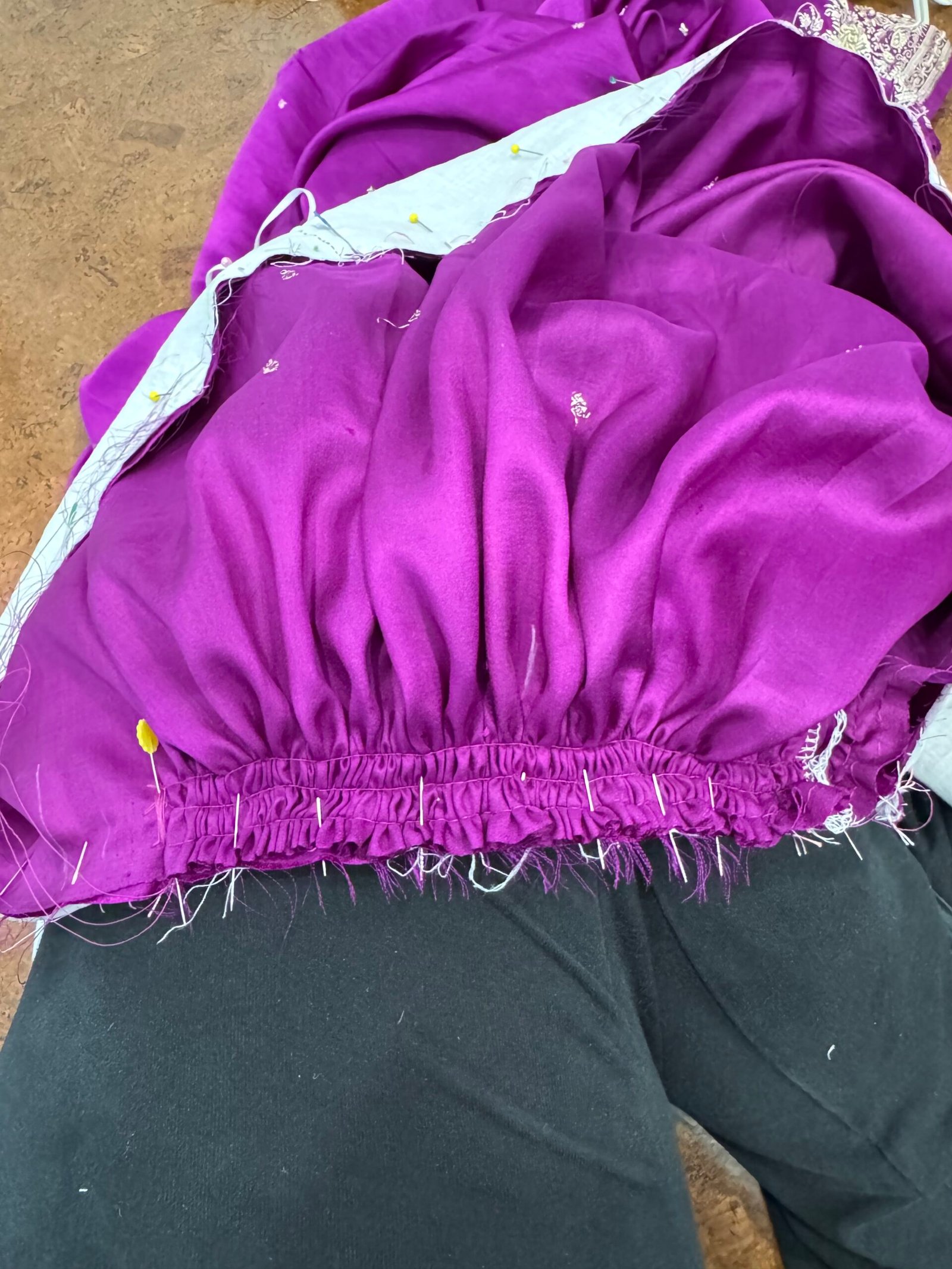
The gown I had made was a solid mid to late 1790s gown. (albeit lacking a train for proper full dress.) Thinking of the Buxton Ball, I was curious to see if i could find any justification for pushing it further forward into the early 19th century.
There are many fashion plates from the years 1805-1810 showing women in full dress with lightly gathered skirts and fitted straight sleeves. Some of them even had what looked like matching decoration on both the lower half of the fitted sleeves and the gown hem. Unfortunately, while these gowns have do light gathering on the front of the skirts, the bodices appear smooth rather than gathered.

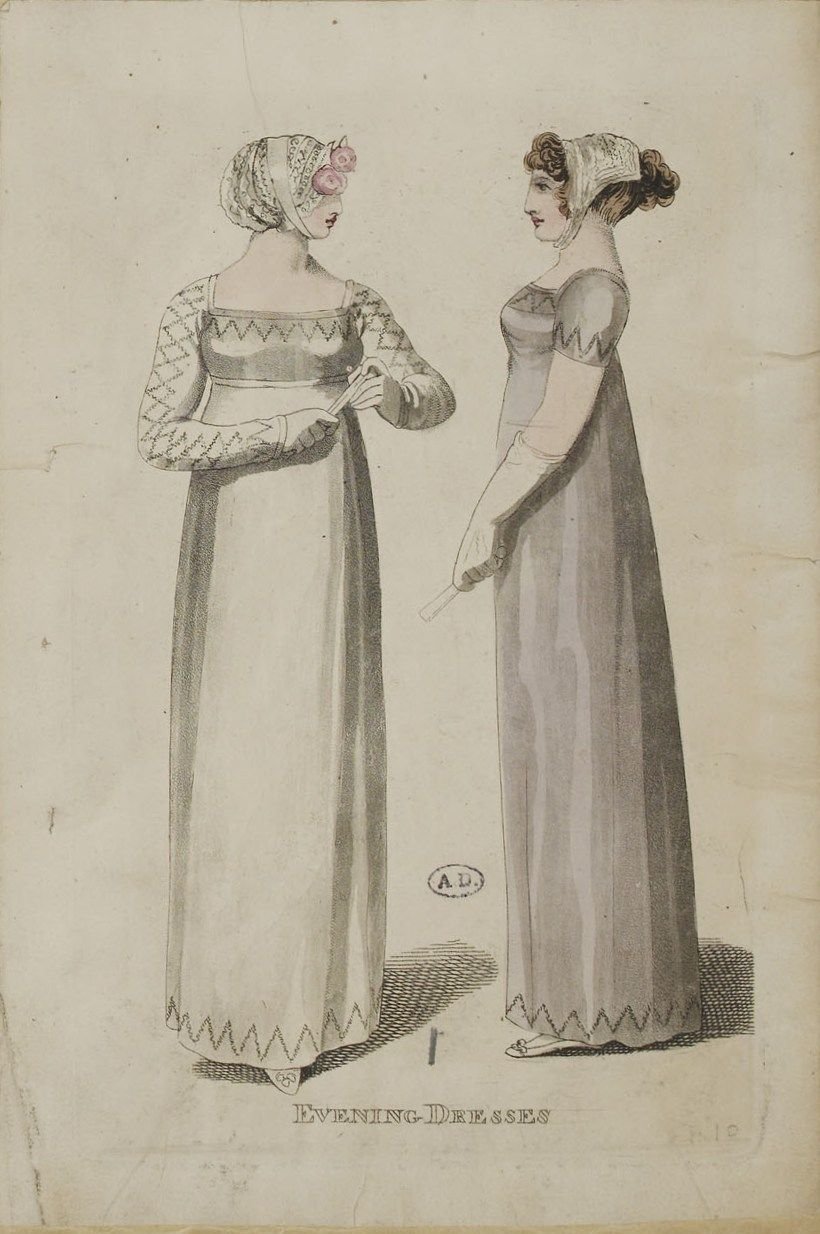
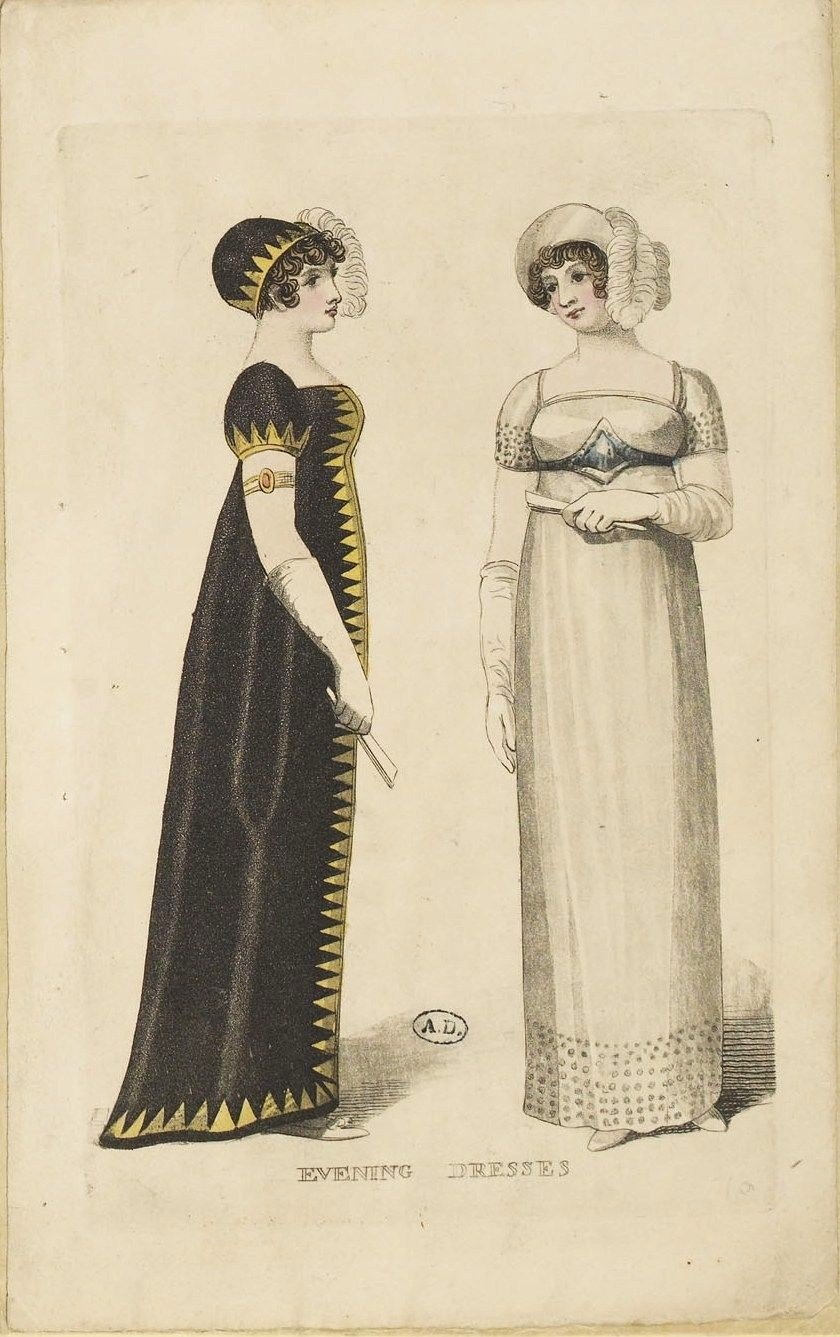
I was able to find a couple of extant gowns from the same period with straight sleeves, embroidered hem detail and a gathered front bodice and skirt. However, the white gown has no drawstring at the waist, and while the purple satin and the black look remarkably like what I’d sewn, I am very skeptical of the dating. Both gowns look mid-1790s to me!
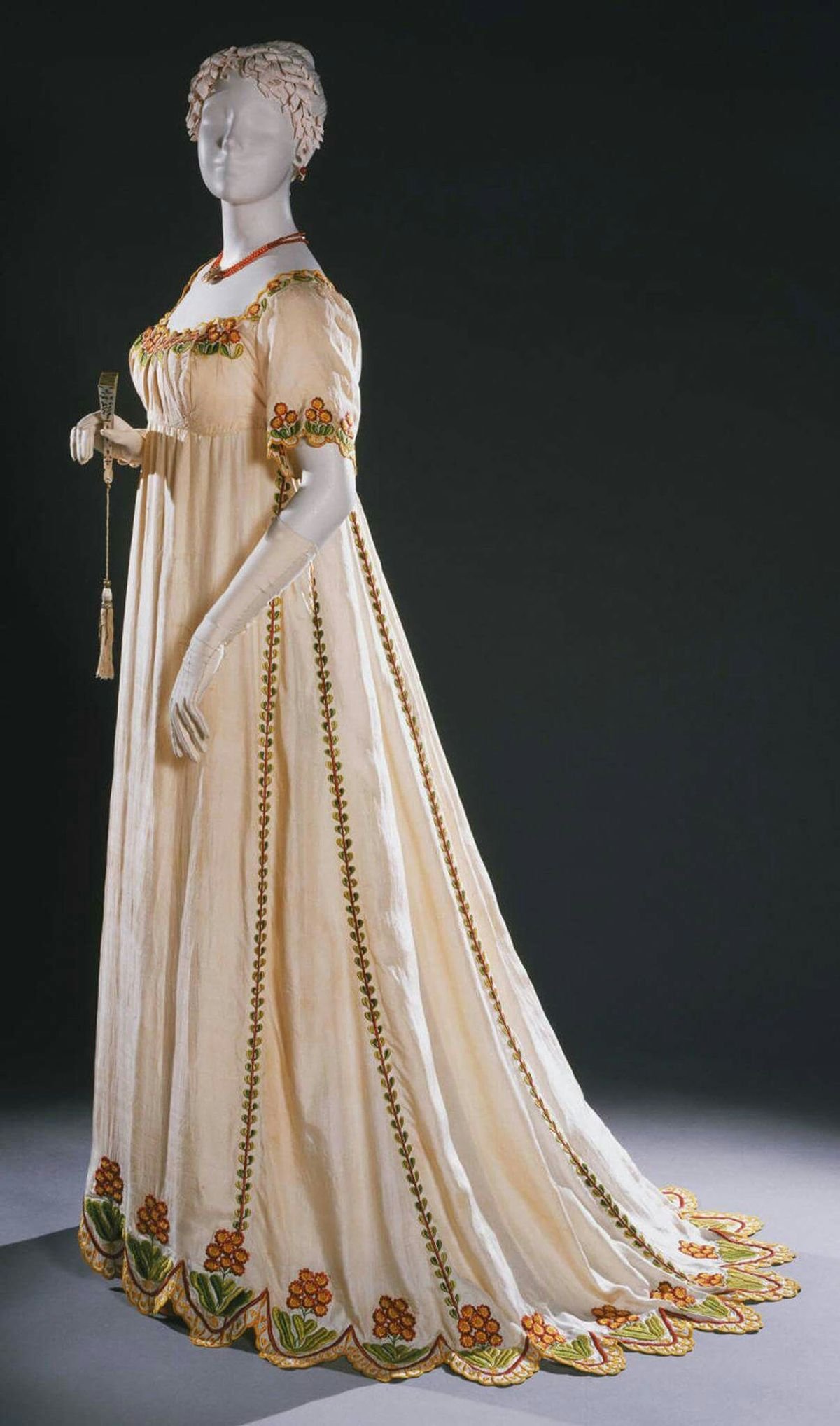
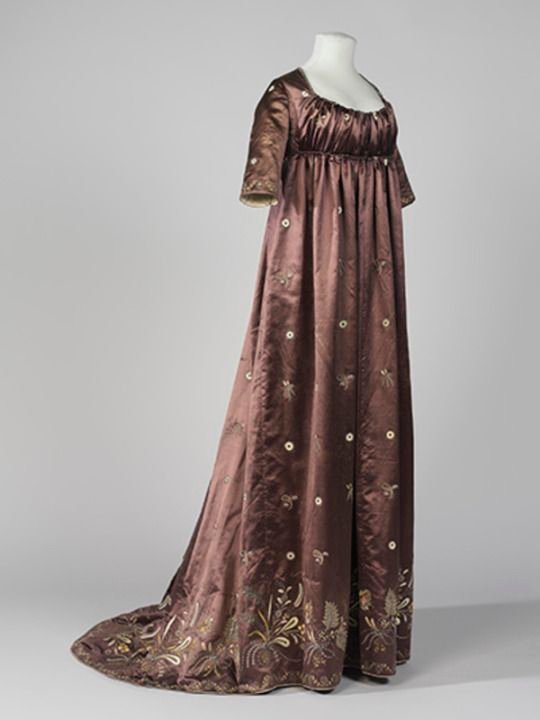
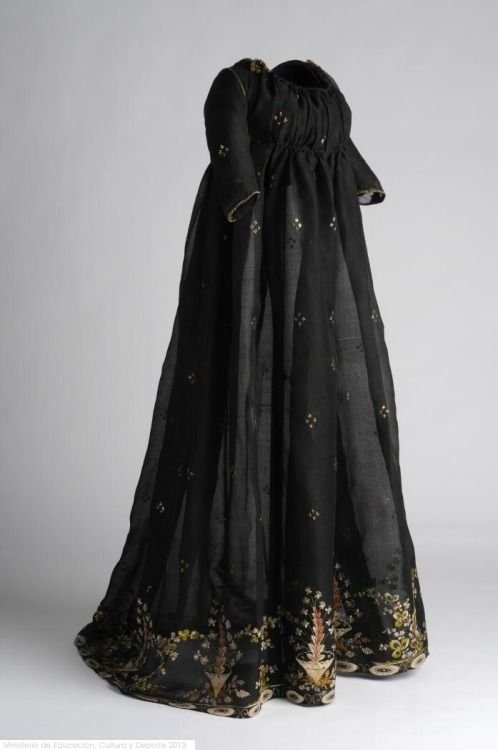
The furthest into the decade that I found a gown with a gathered front and short sleeves was 1803:
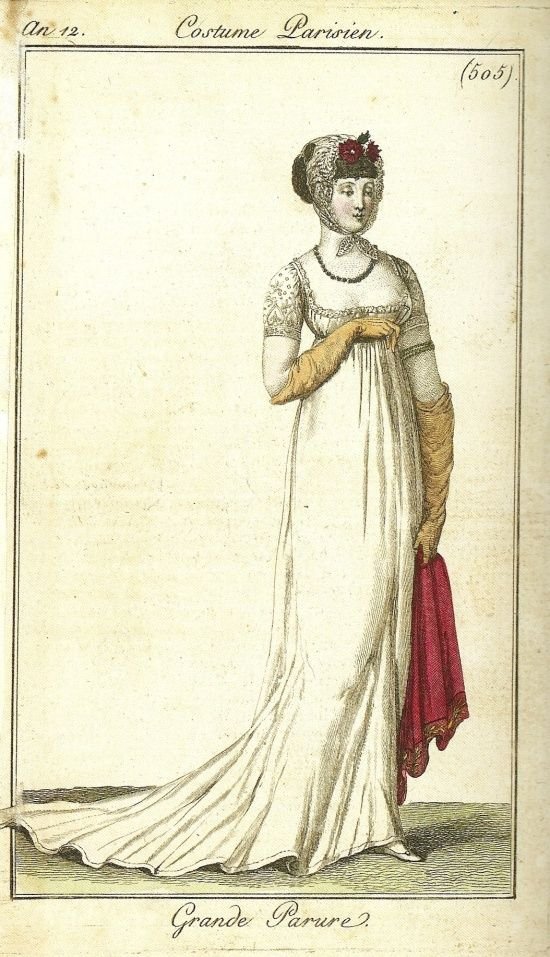
The verdict? Ambiguous. I’ve crossed the threshold of the 19th century, but not very far! Let’s call it an 1803 gown and leave it at that.
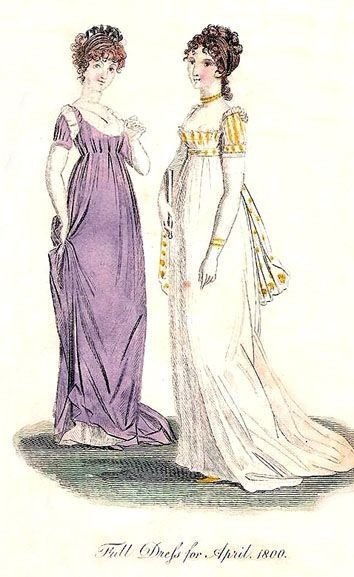
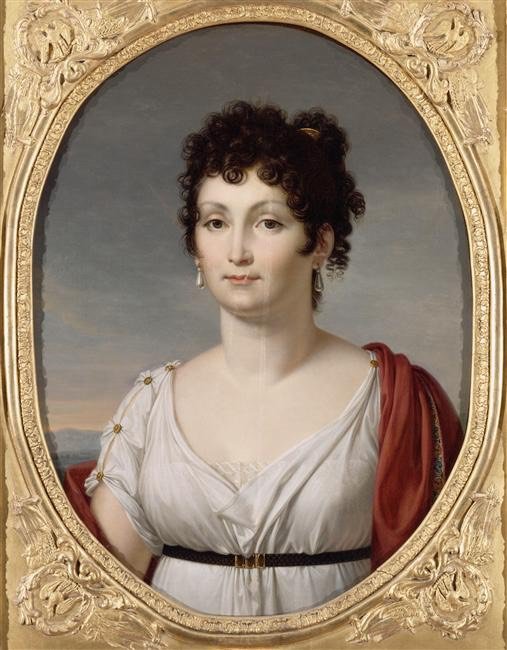
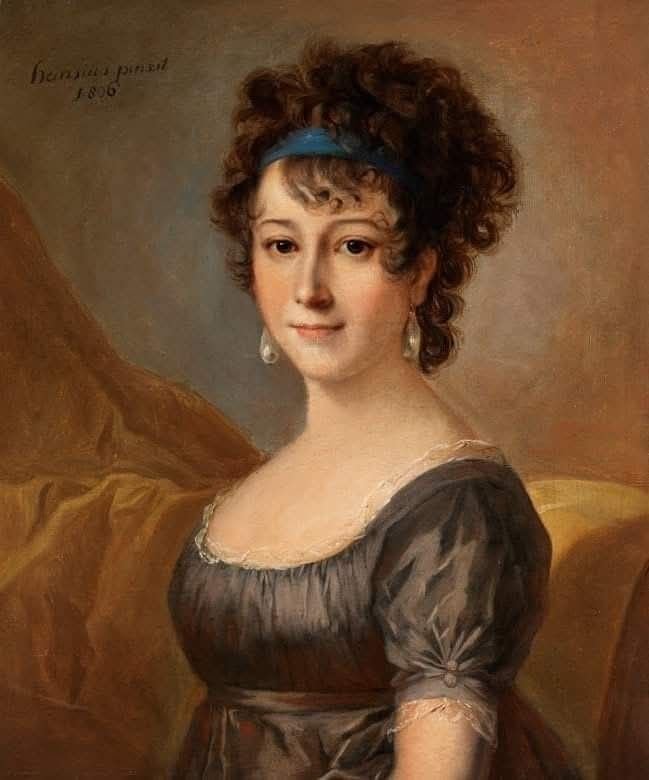
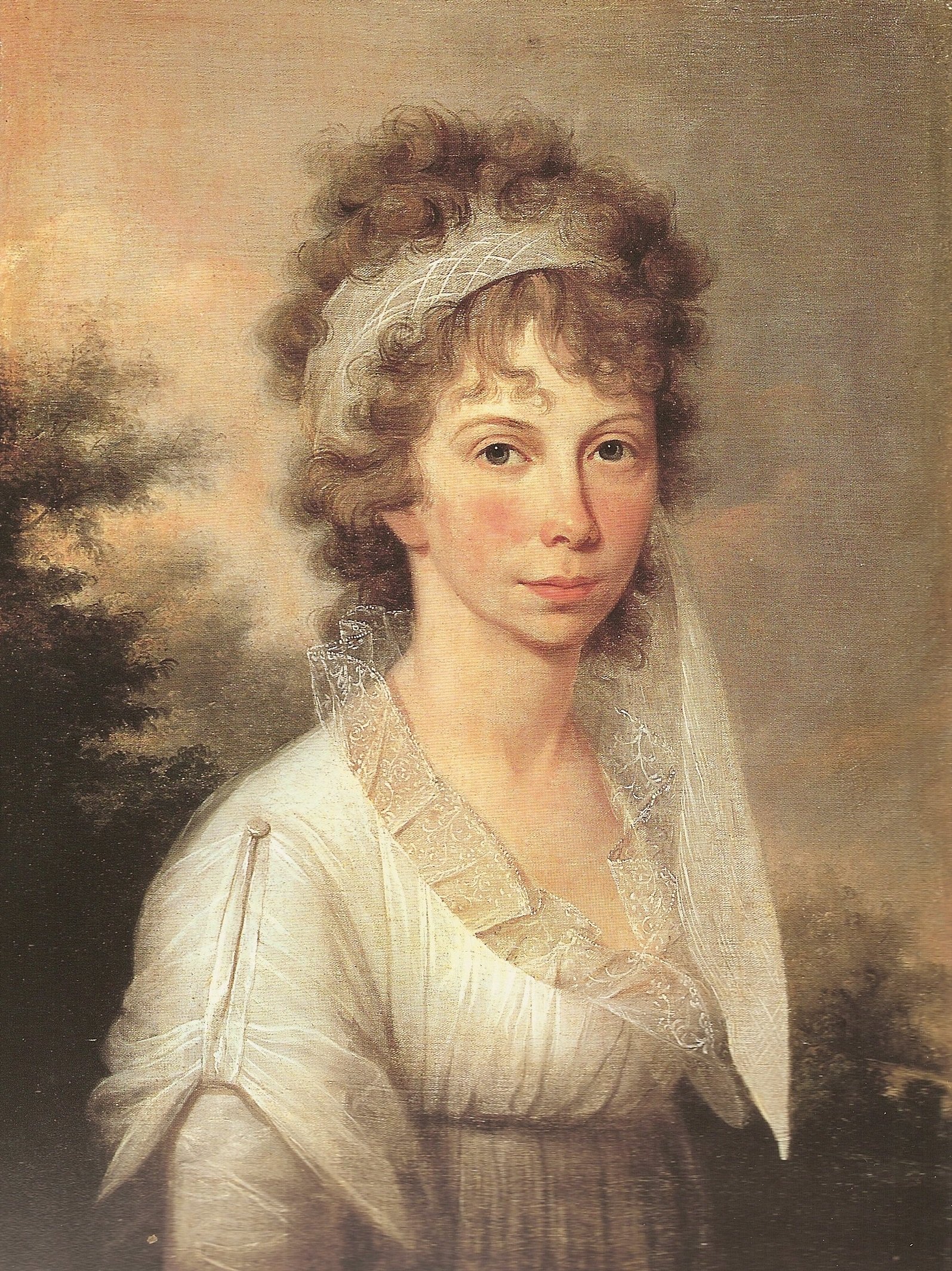
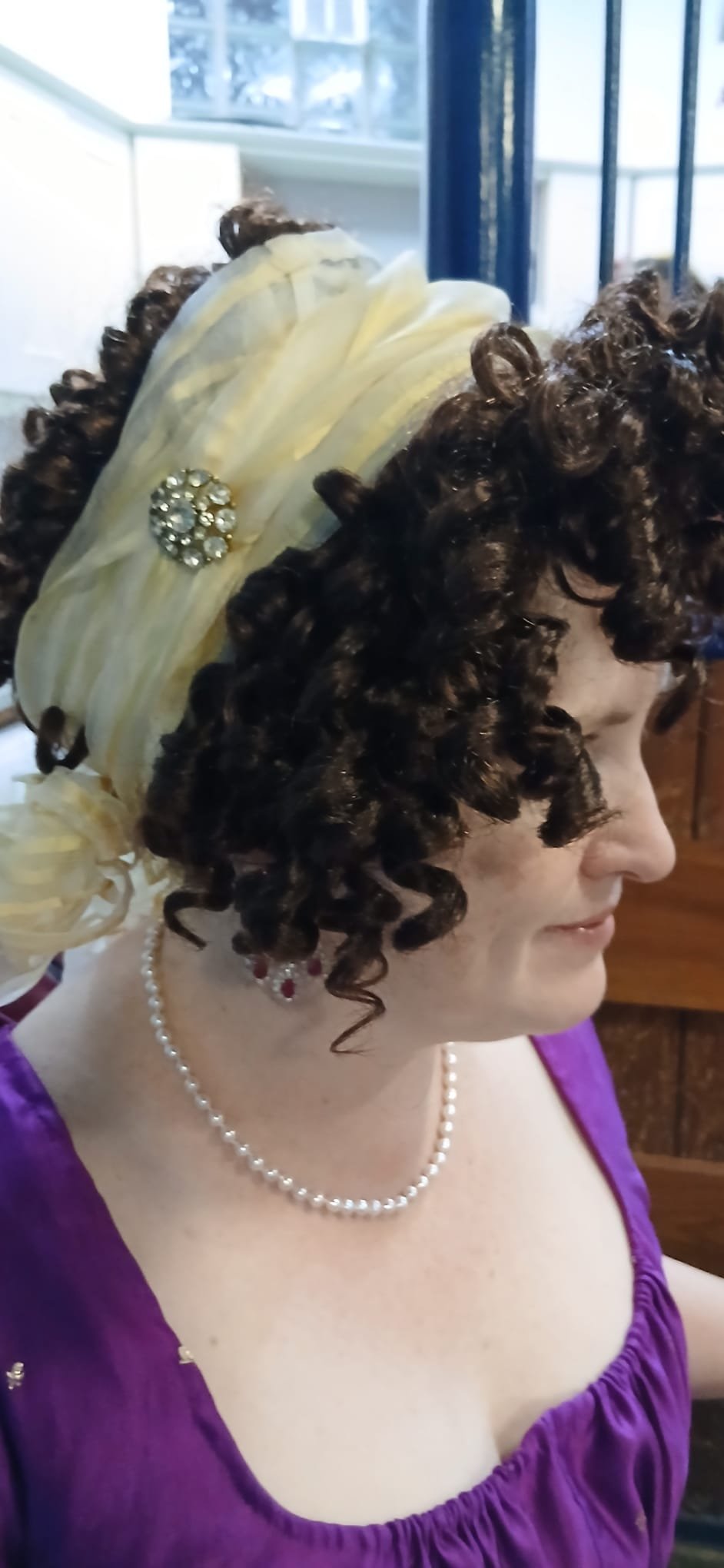
In honor of the suspiciously dated gowns above, I reckoned I should find a hairstyle that would work across the entire purported date range, and it should be something as equally ‘not quite in the common way’ as the gown itself! I modeled my hairstyle for the ball on an elaborately curled and turban’ed greco-roman look that was worn worn between 1795-ish and 1808-or-so.
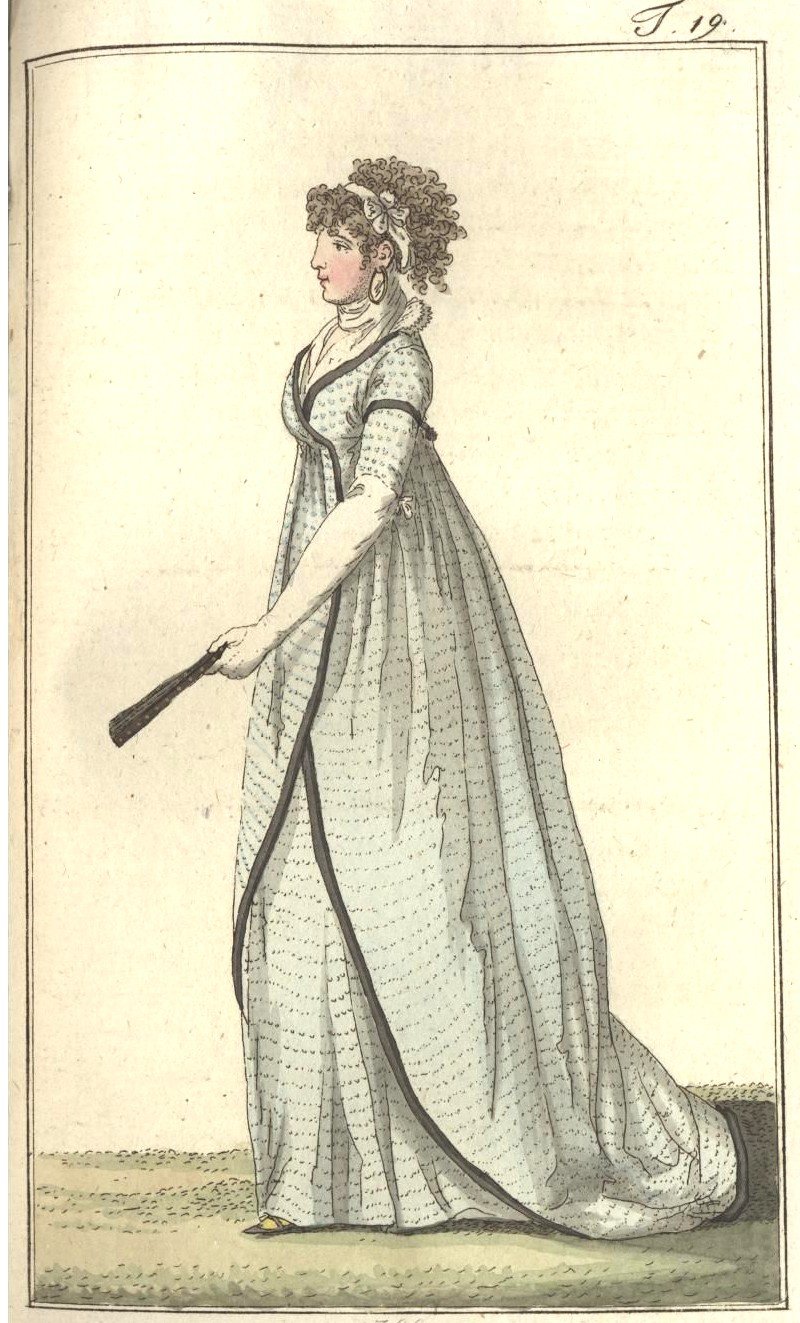

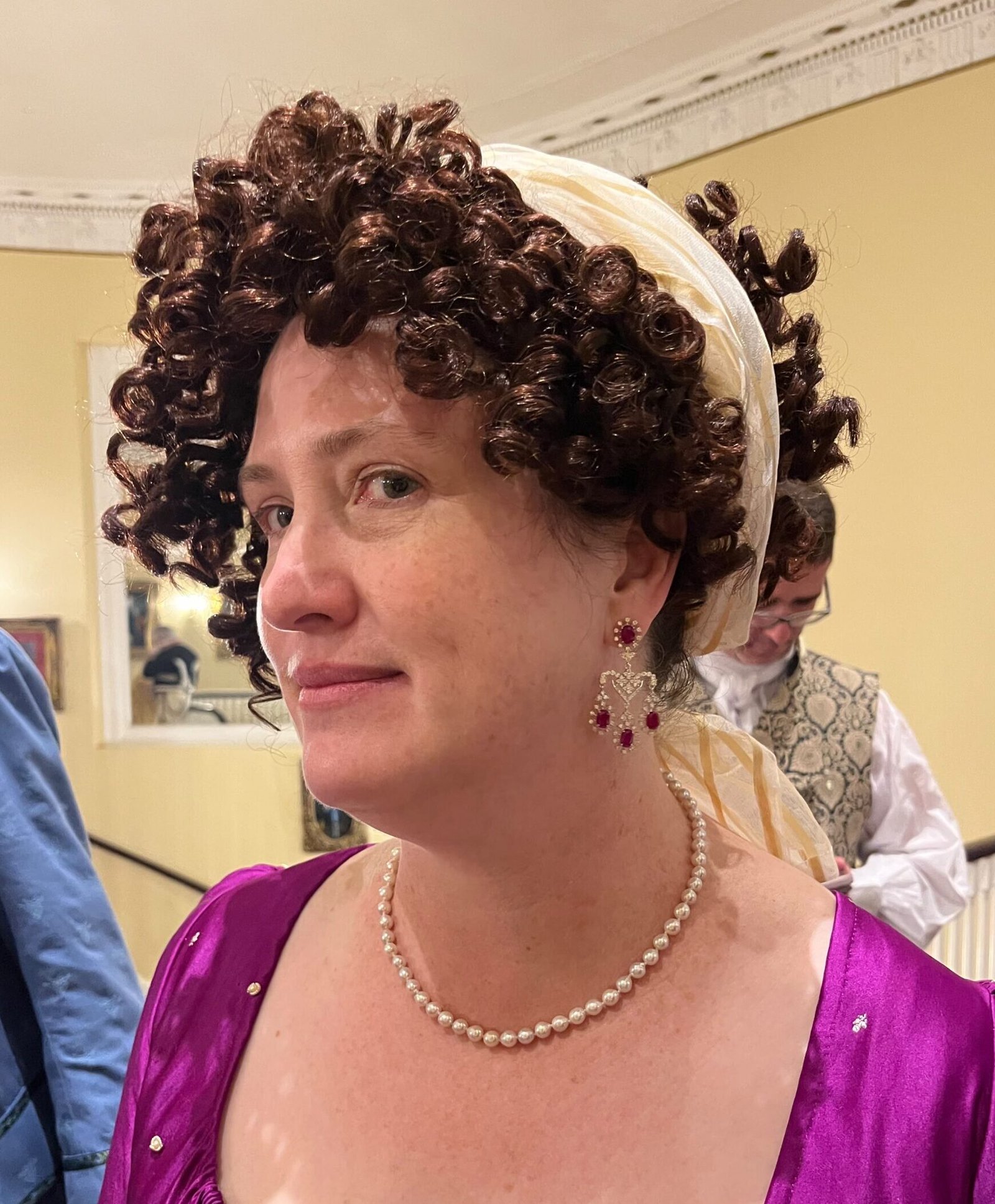
I used my Merveilleuse wig, tying it up in my gold chiffonet and securing it with an antique paste brooch. Are my front curls a tad exuberant? Yep. But I’ve never been good at keeping my hair wrangled even when I’m not wearing a wig. This felt like me.
(You can see my Merveilleuse costume HERE.)
I did have an interesting conversation in the loo of the Buxton assembly rooms with a woman who was deeply impressed with my dedication to my look: I must have spent All Day curling my entire head like that! When I told her it was a wig she was reluctant to believe me. It’s a good synthetic wig, but it’s not that good, so I’m chalking her reaction up to a commitment to the period atmosphere!
My other accessories were minimal: long white gloves, a green sequined reticule, and a strand of metallic freshwater pearls I’d bought from a dealer and strung with a silver clasp.
I wanted to keep my accessories as simple as possible, because on my ears was a pair of ruby girandole earrings made for me by my ridiculously talented friend Niraj in Kathmandu. Nothing would be permitted to draw focus from those earrings – as far as I was concerned, this purple satin regency gown was merely there to provide a setting for these glorious jewels!!
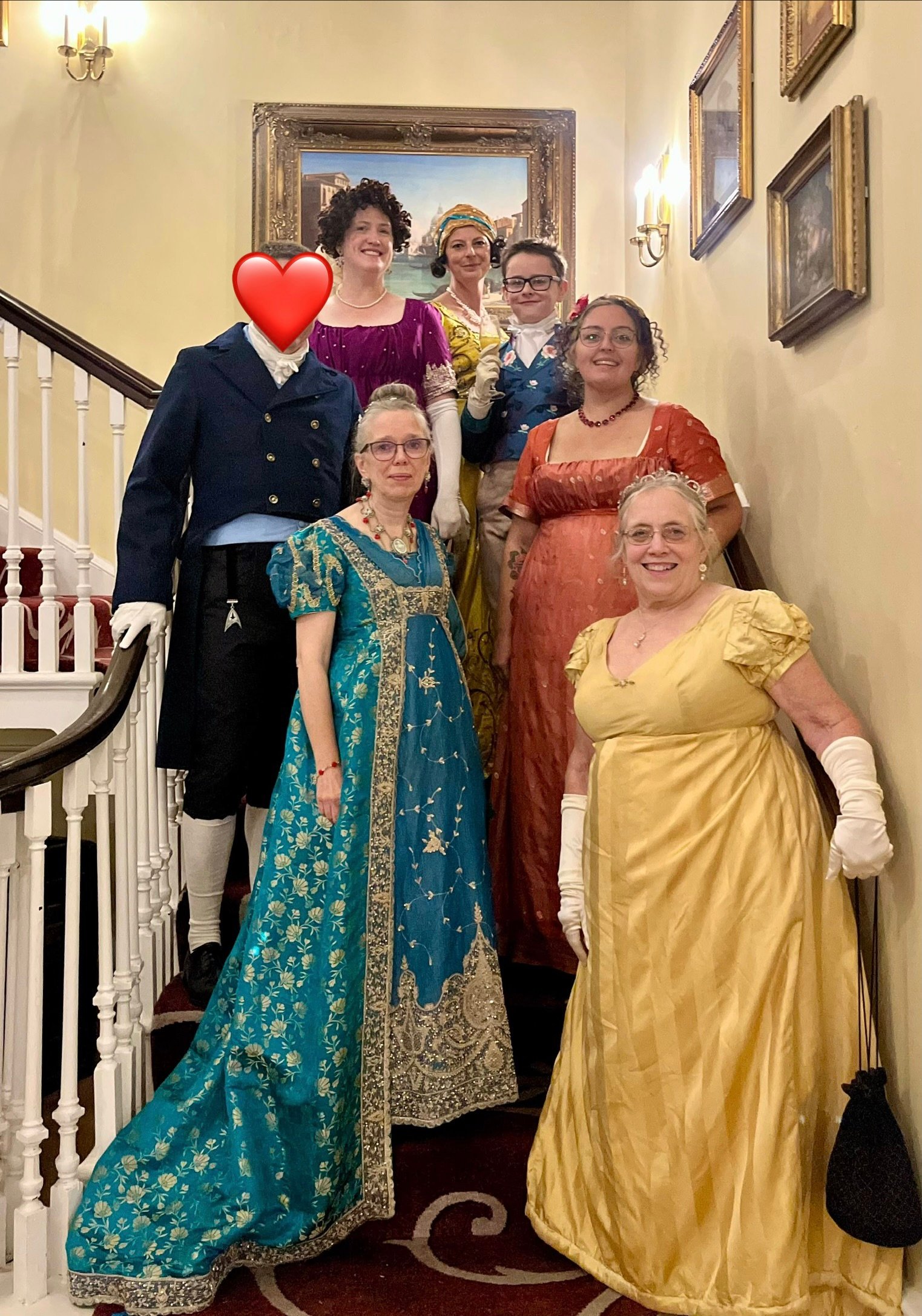
When it came to beautiful clothing, I was in excellent company.
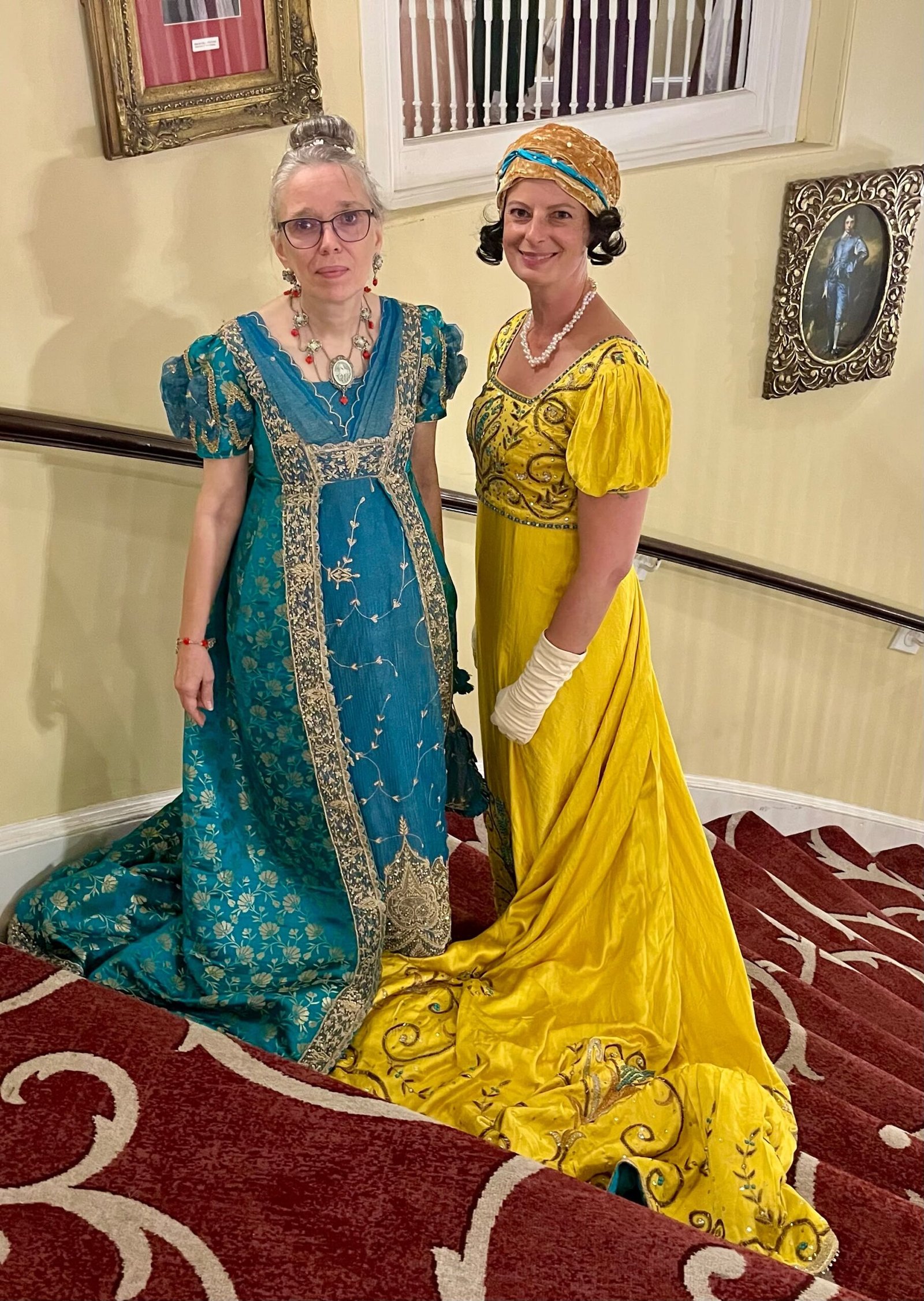
@fannyfadenfroh and Melanie wore regency fantasy dresses designed and embroidered by Atelier Shikaarbagh
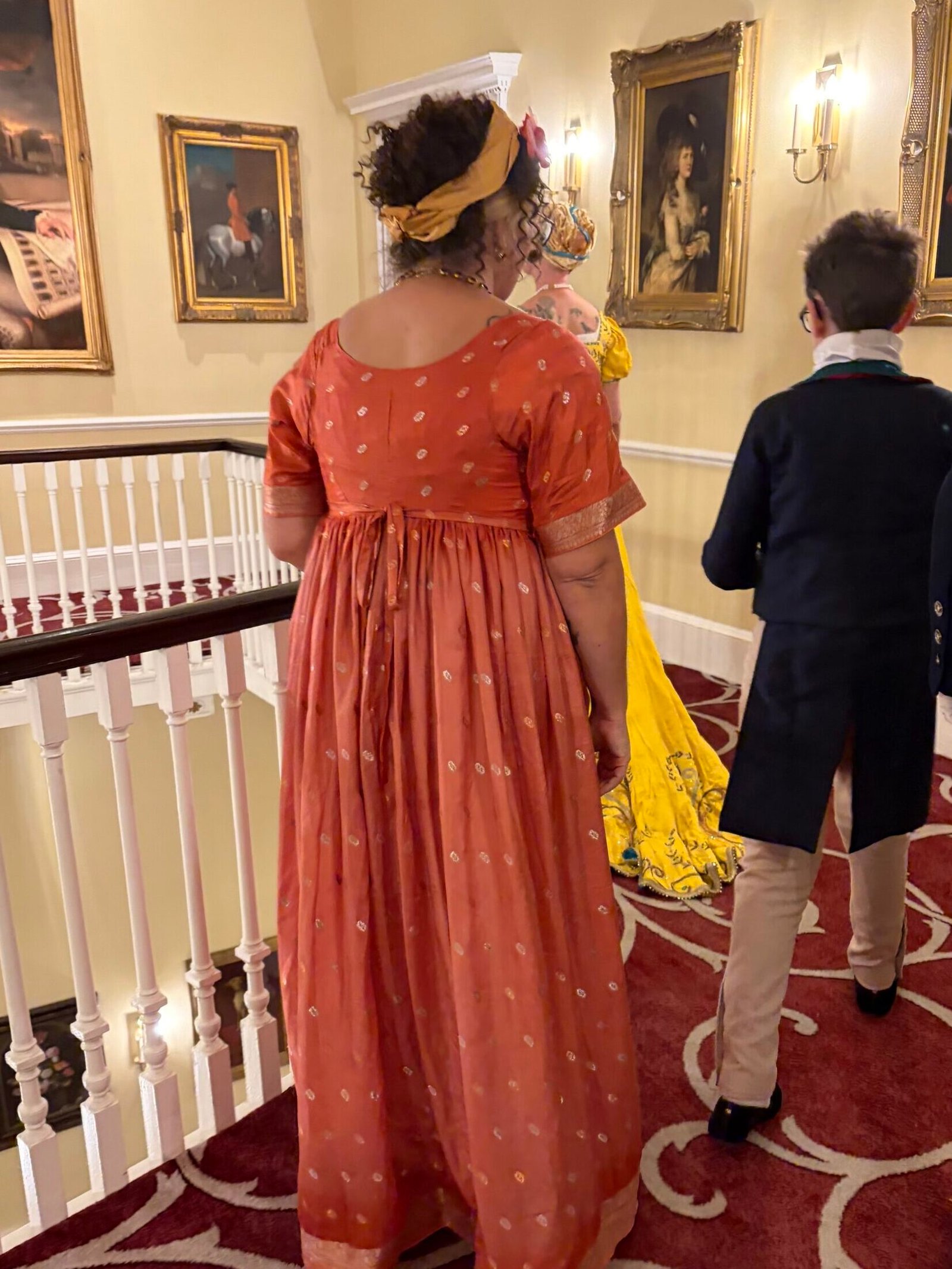
And @chai_and_parche glowed softly in an orange evening gown by Paupers Modiste, sewn like my own from a saree. (Seriously look at the perfect back of that gown!)
I didn’t dance at the ball – I was still recovering from my train sandwich stomach flu.
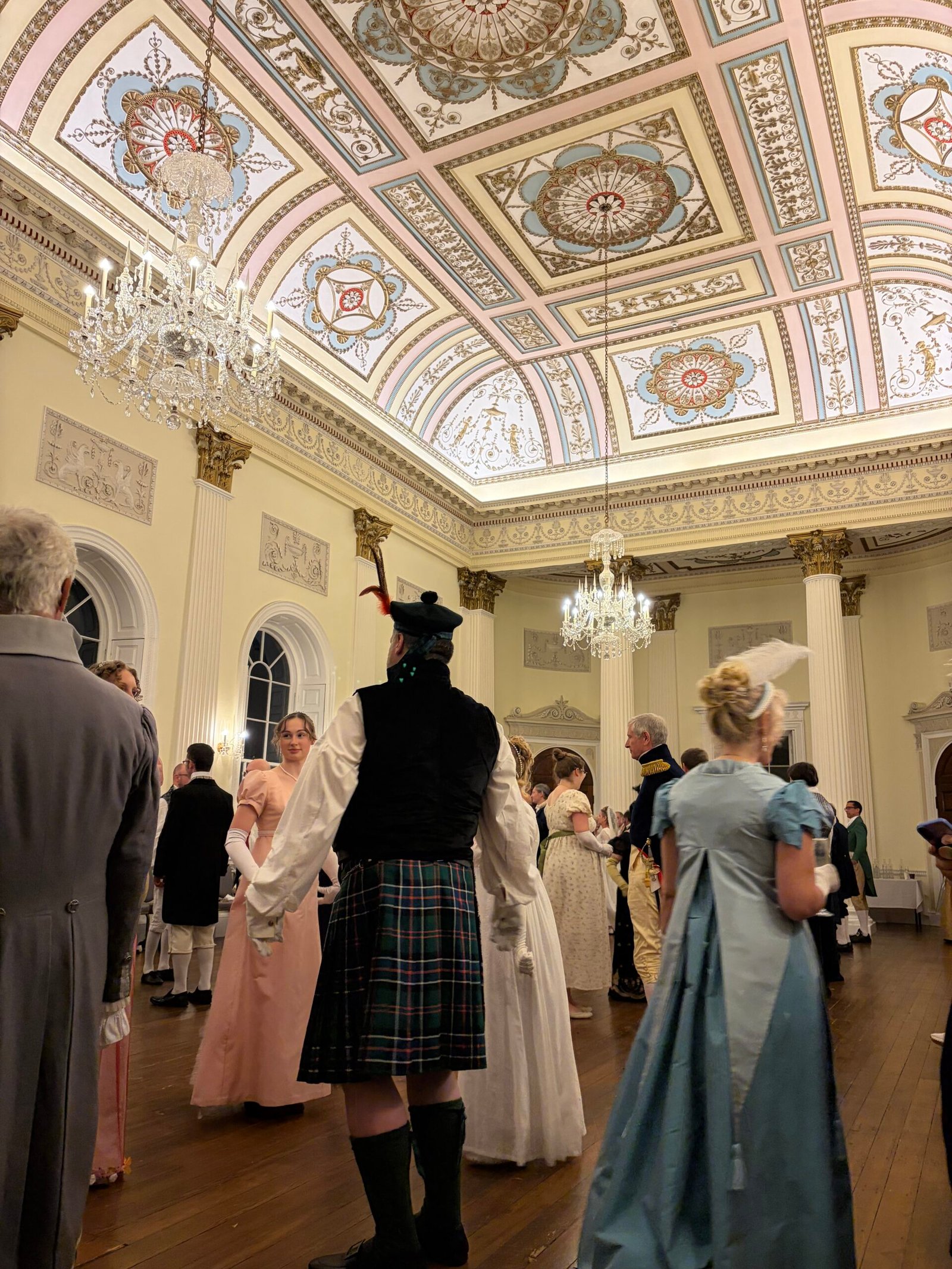
but I had a marvelous time sitting in one the prettiest assembly rooms in the UK, listening to the caller and musicians and watching the dance!