
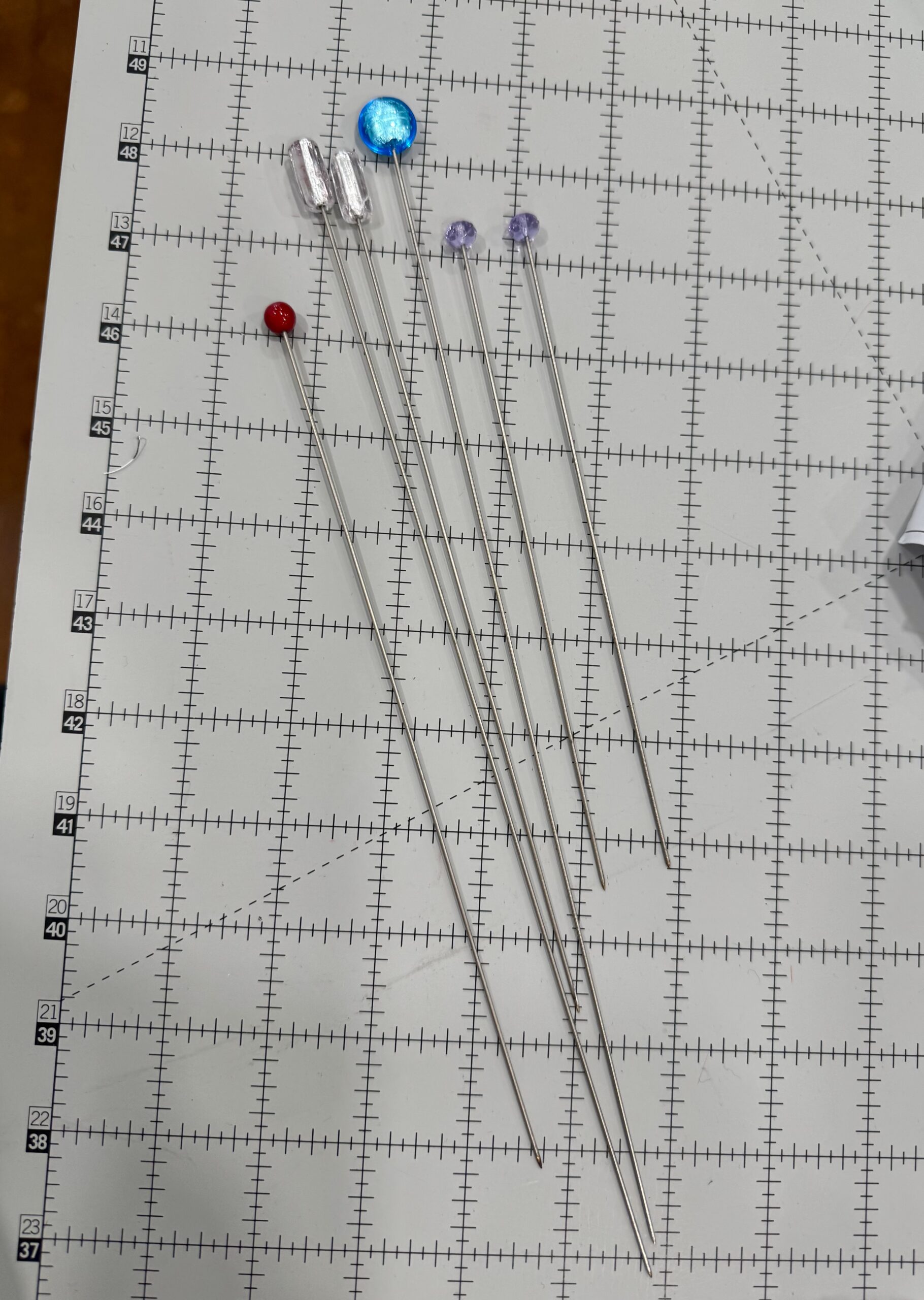
After my knitting needle hatpin adventure at the Hemwick Society picnic last spring, I reckoned that I needed to level up my accessory game and make some proper historical hat pins.
I ordered a batch of hat pin shanks in various lengths from Judith M Millinery Supply House, and dug into my stash for beads to put on the ends. As far as I can tell, when it comes to decorating a hat pin in any historical period, absolutely anything goes, so my only criteria for choosing beads were “does it fit on the shank?” and “ooo this one’s SHINY!”
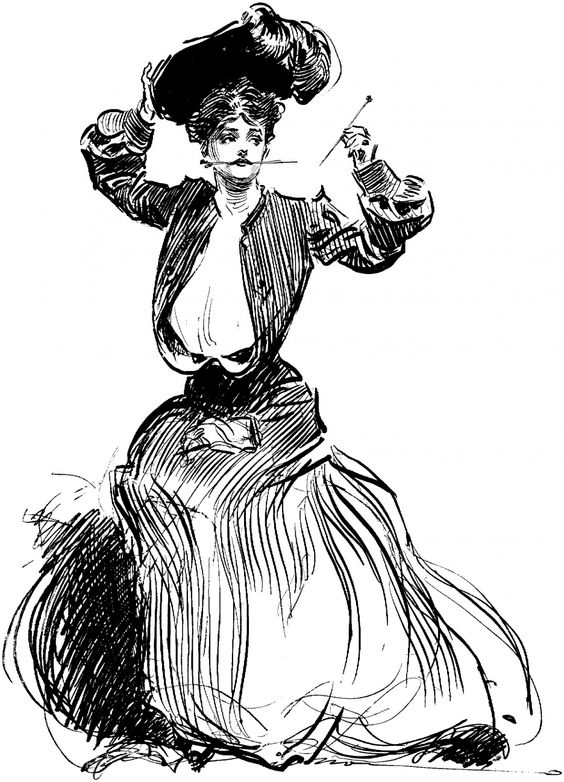
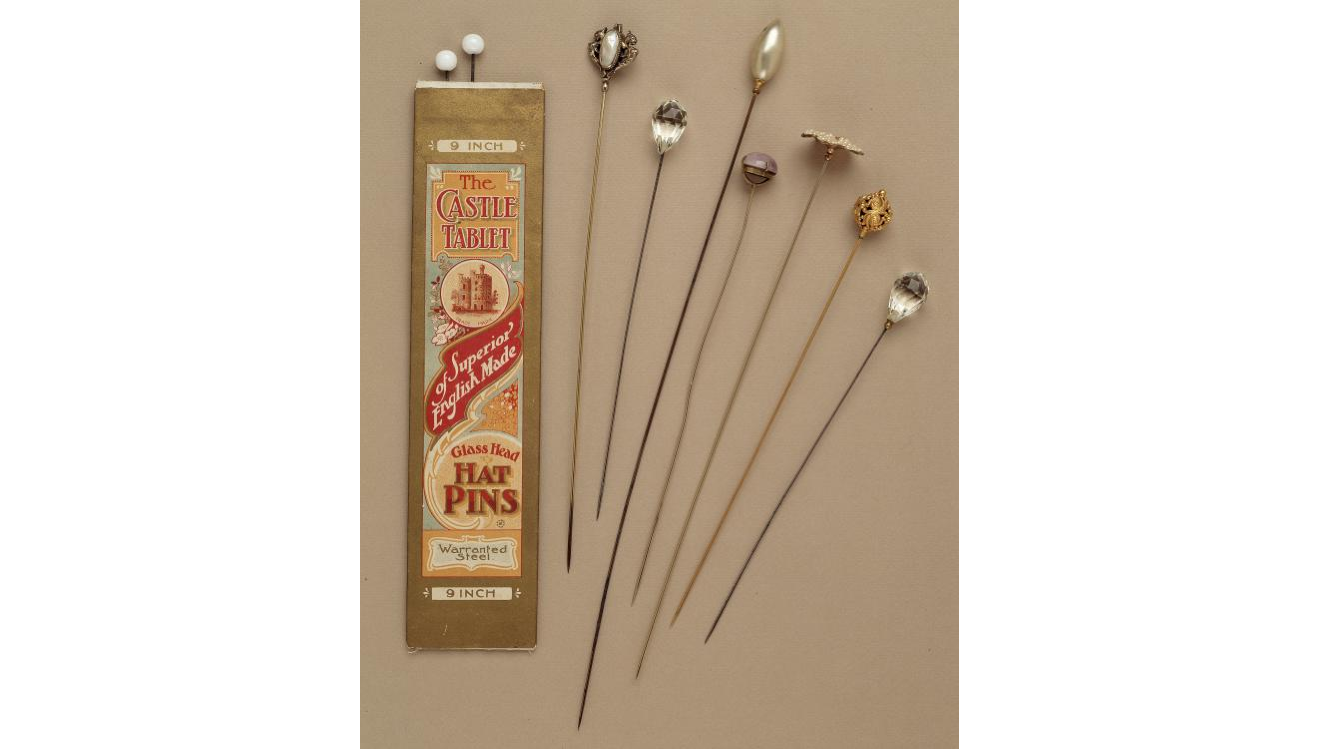
Hat pins came in all sorts of lengths and levels of elegance, depending on the size of the hat, the shape of the hat, and the social class of the person wearing the hat.
A selection of Edwardian Hat Pins:
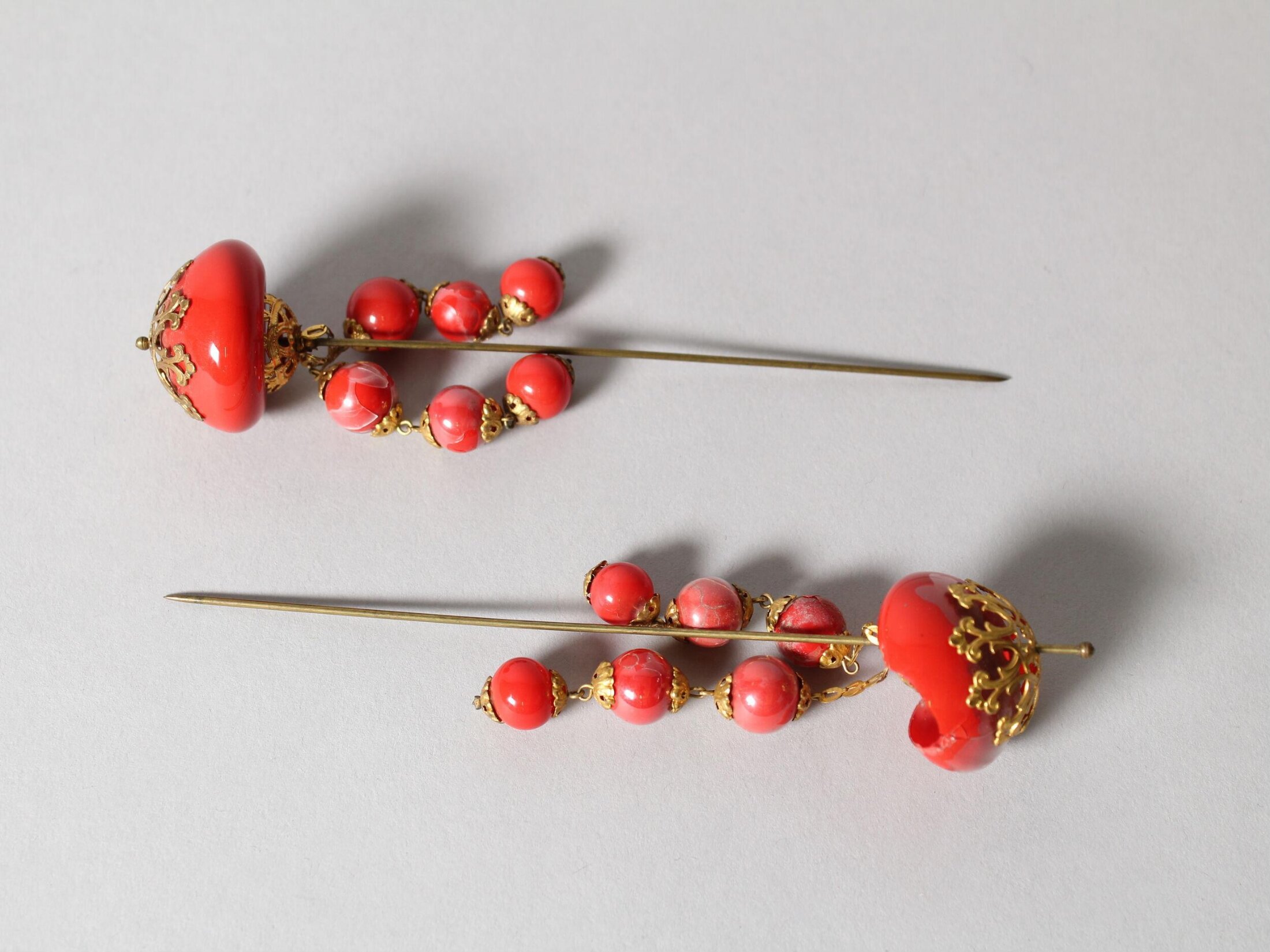
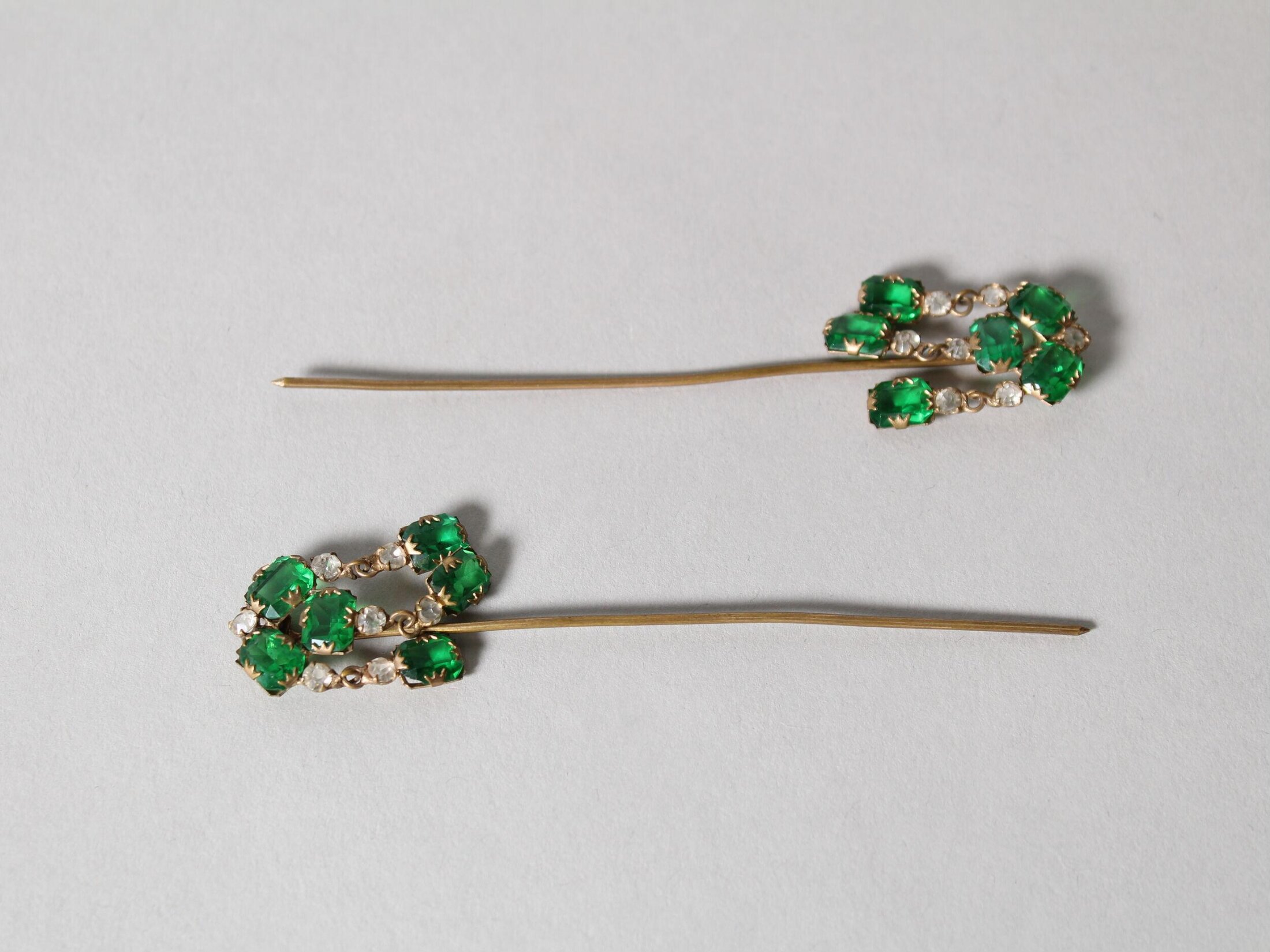
Two pairs of shorter and very fancy 19th century ones:
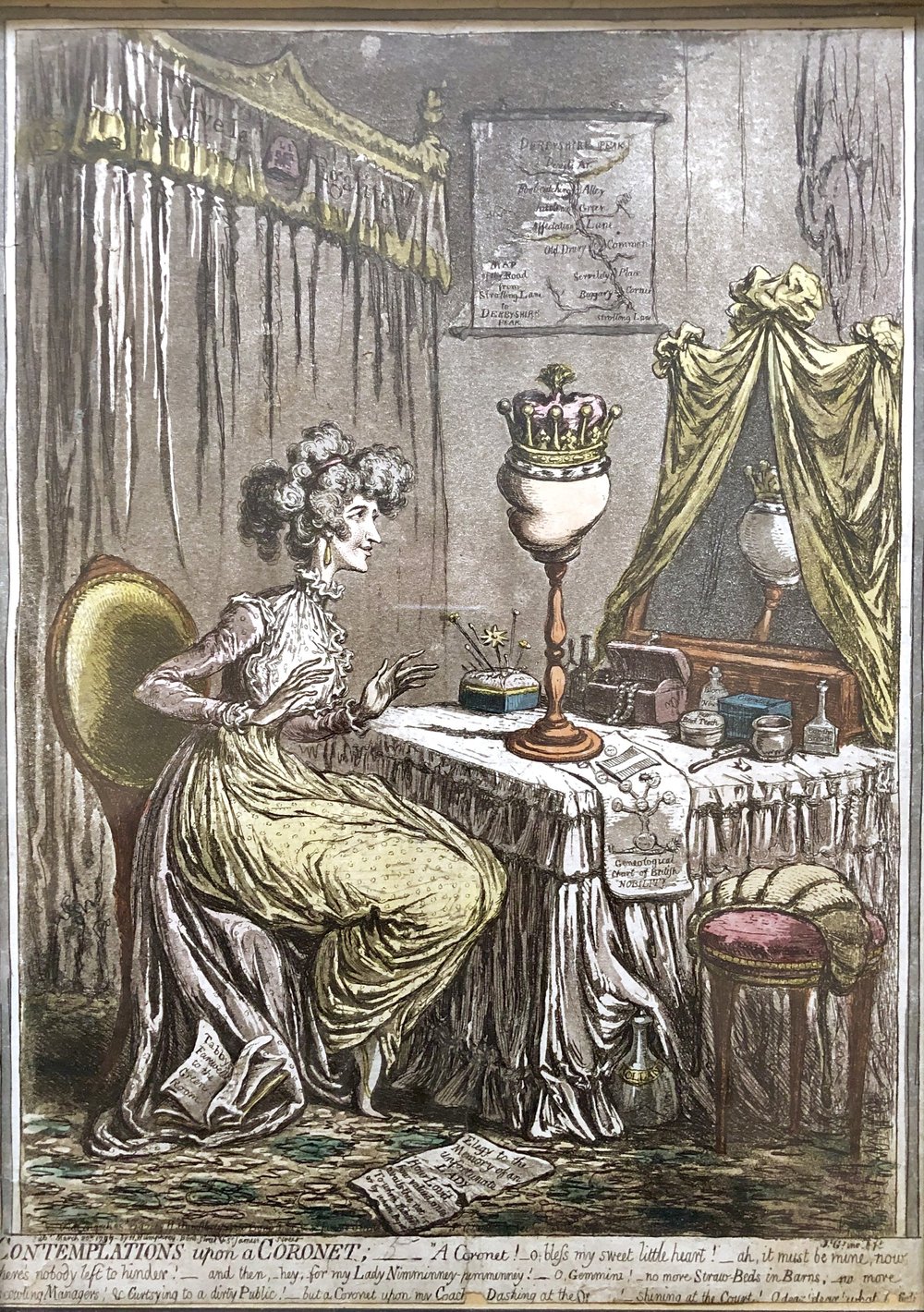
And from the National Portrait Gallery, the 1797 satirical Print ‘Contemplations upon a Coronet’ by James Gillray, showing a dressing table with a cushion studded with long hat-pins that look awfully similar to the Edwardian ones from over a century later!
Antique hat pins can be pricey, but DIY reproductions are not! You can buy blanks from suppliers, or shave points into the tips of straightened #20 gauge wires – I’ve even seen someone use the straight of a clothes hanger!
If you type ‘antique hat pin’ into the ebay search bar, you’ll find hundreds of examples to inspire you, and browsing thrift shops for bead necklaces that can be taken apart and remade into hat pins is a fun way to spend an hour on a rainy afternoon.
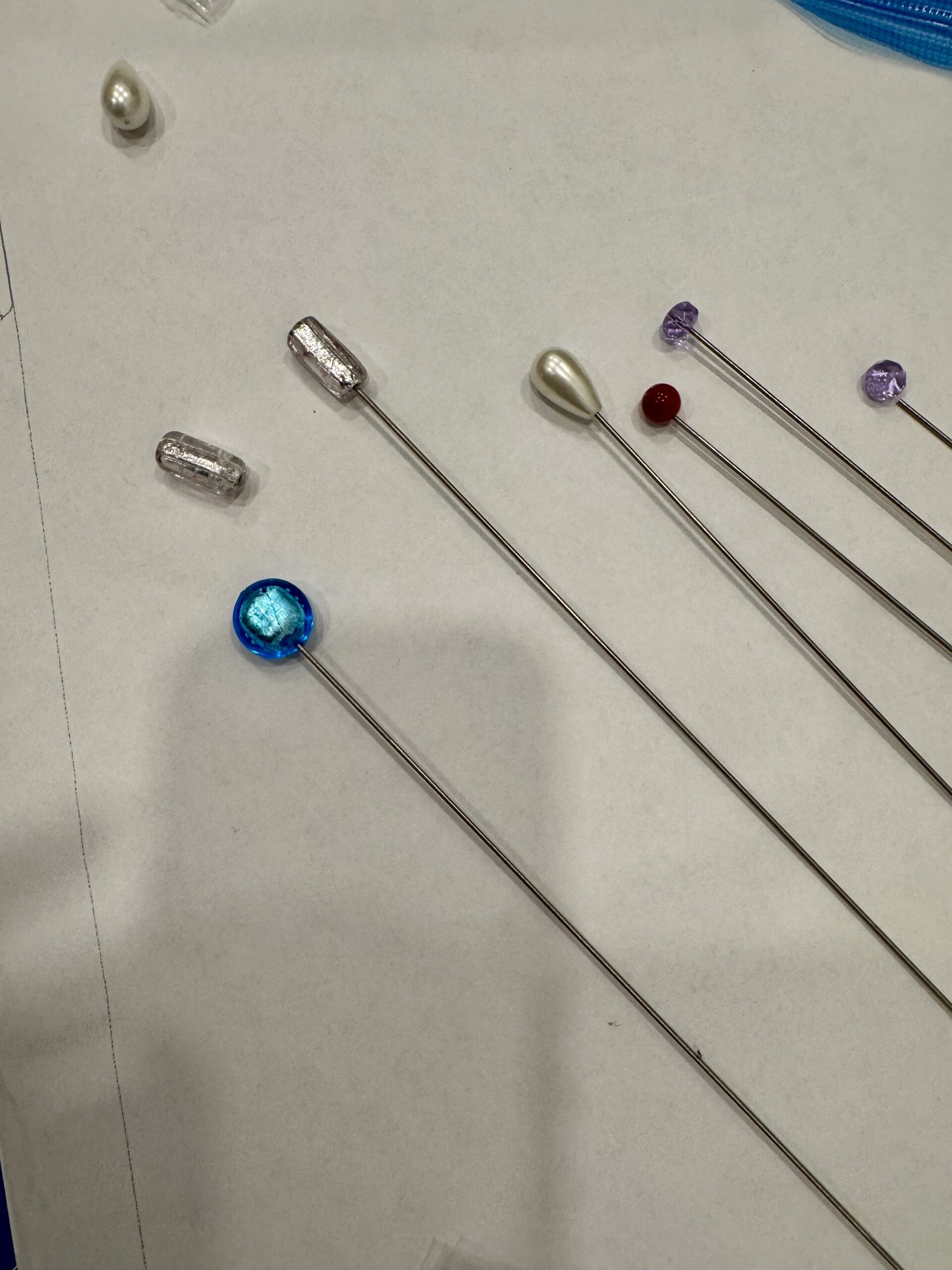
My bead stash had a few decent options, and I played around until I had a few that I liked. I slid the beads onto the blunt end of the shanks and glued them on with a little E6000 glue.
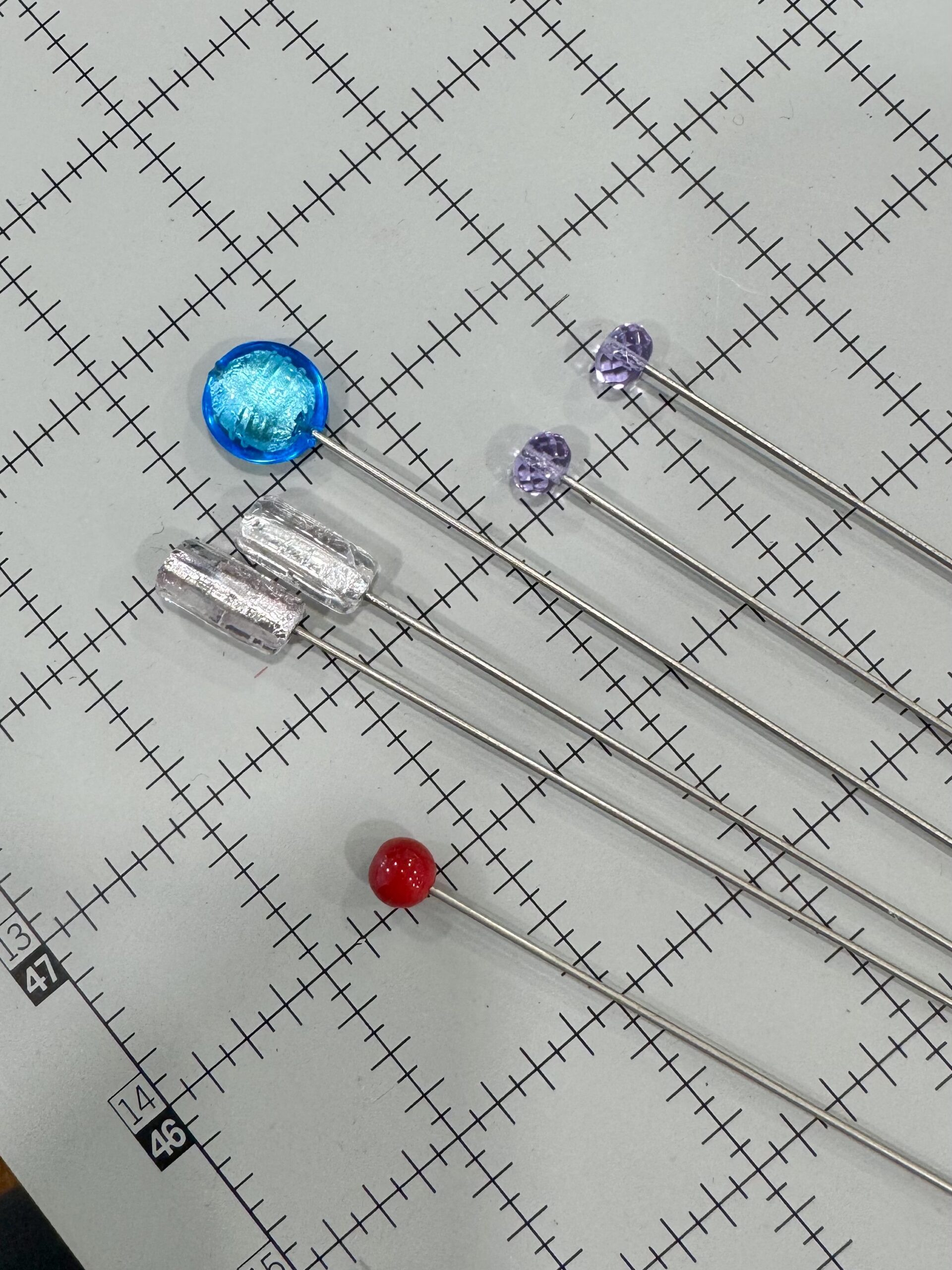
Note: E6000 is Effective but Nasty. Use it outdoors or in a space with good ventilation, wear a respirator, and leave your projects to dry for 72 hours in a well-ventilated space.
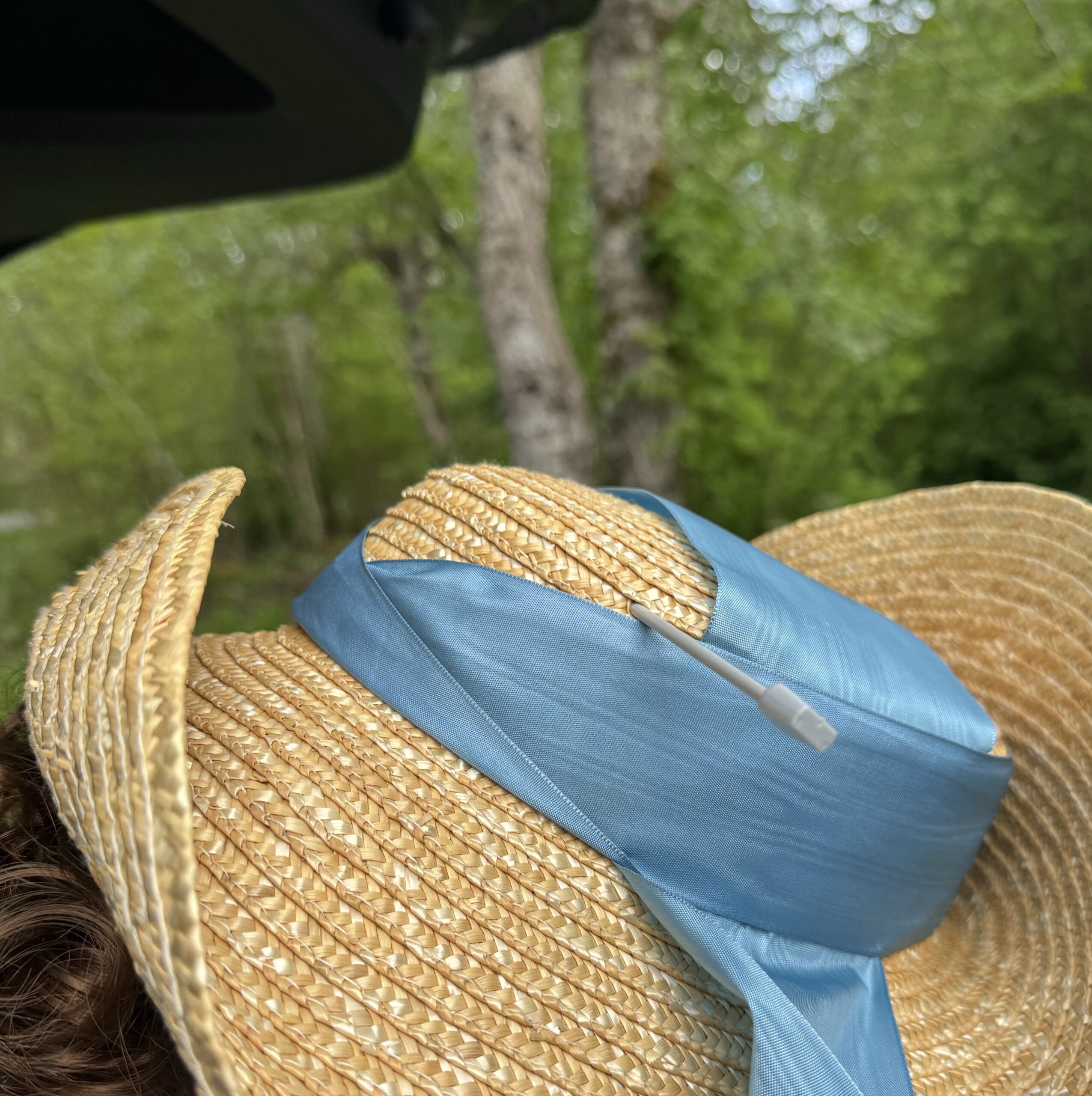
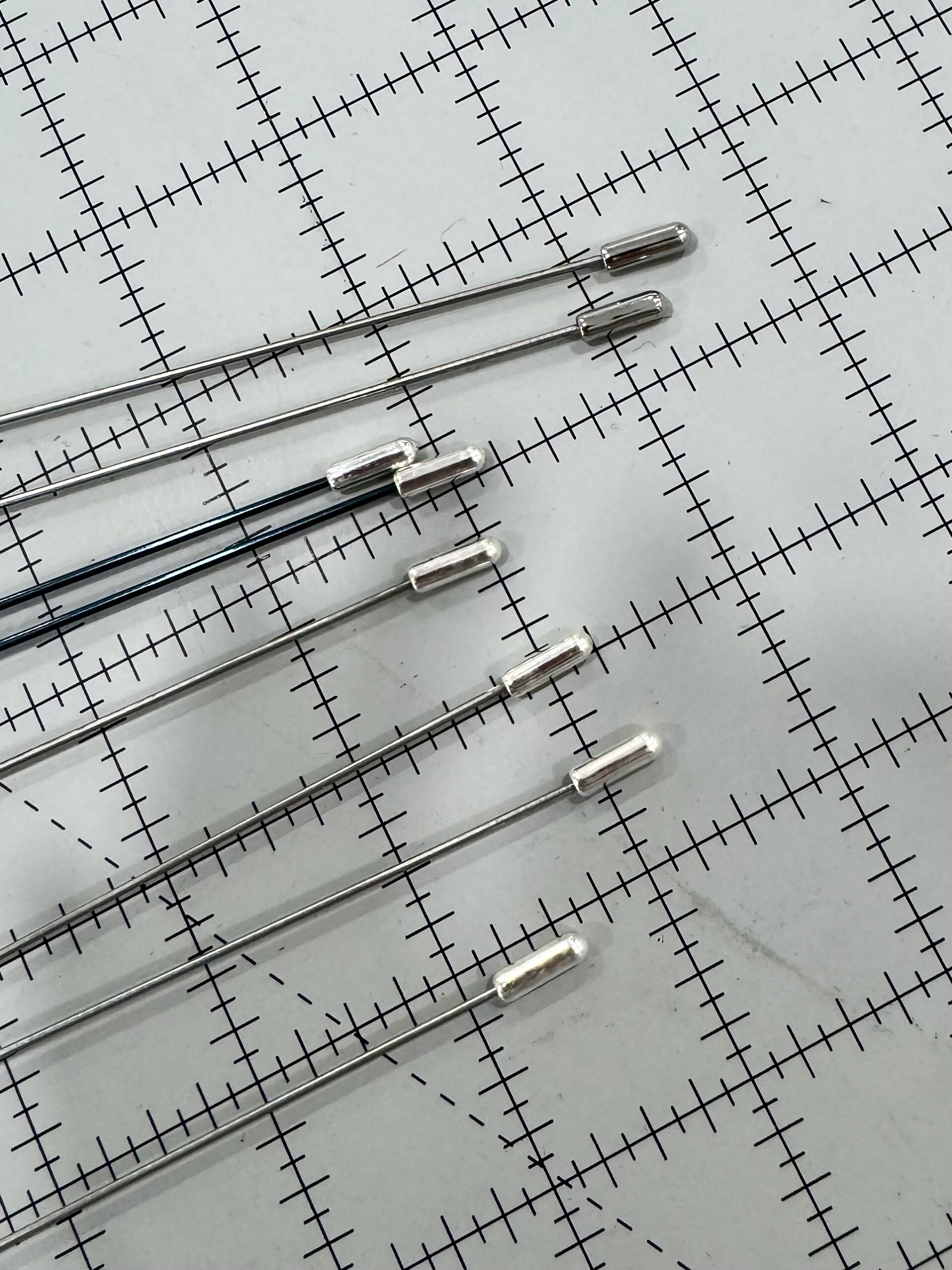
Once my hat pins were dry, I capped the sharp points with pin caps from a packet of cheap stickpin blanks.
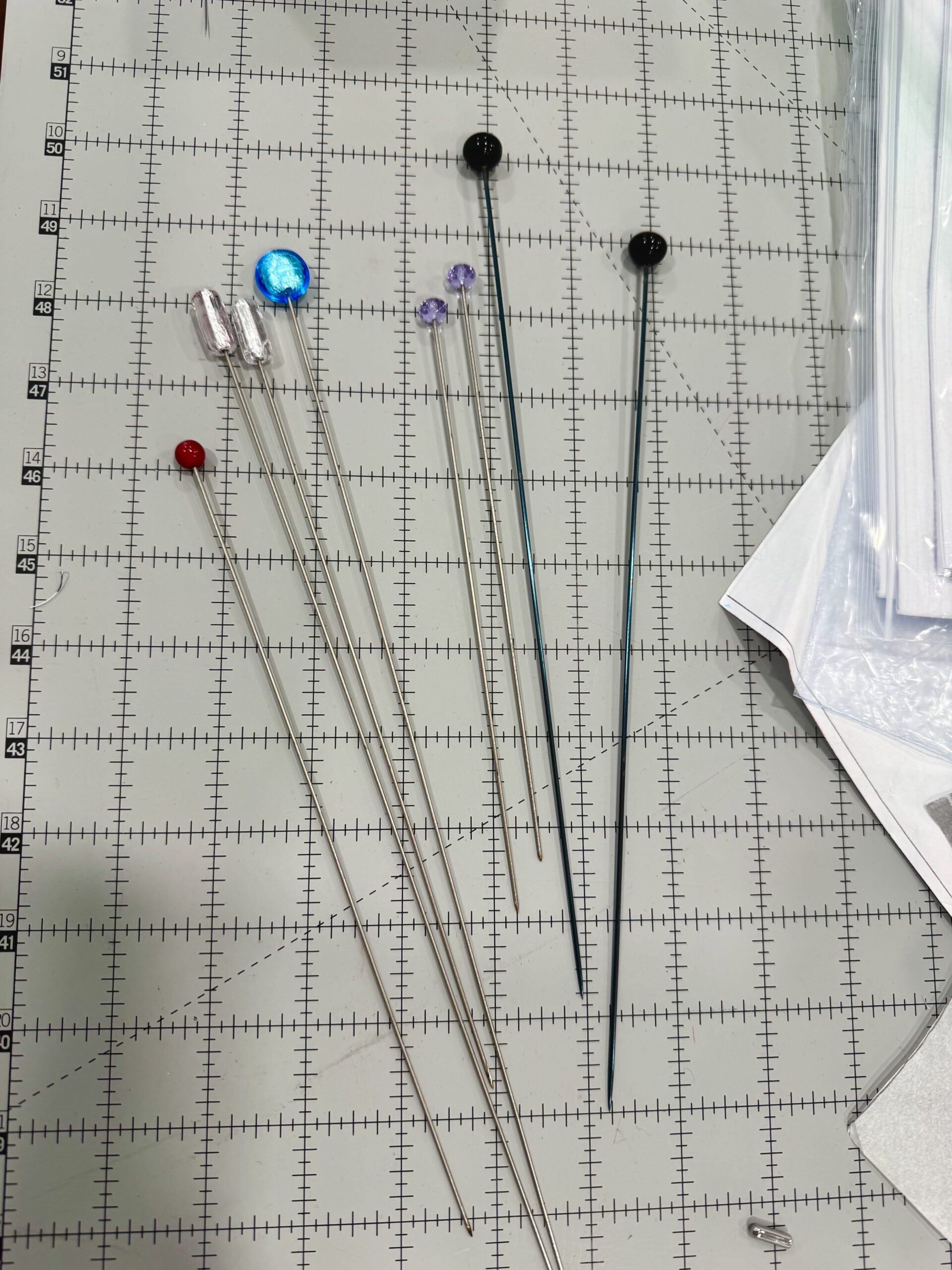
This last photo also shows a pair of antique black pins that I thrifted last month – just after I ordered my shanks, of course. I reckon this is pretty solid stash to cover all millinery contingencies!
The American Hat Pin Society has a nice timeline on the history of the hat pin.
If you want to do any further reading, check out ‘An accessory with a dangerous twist‘ from the Swiss National Museum!
Or ‘how to wear an illegal hat pin‘ at the pragmatic costumer!