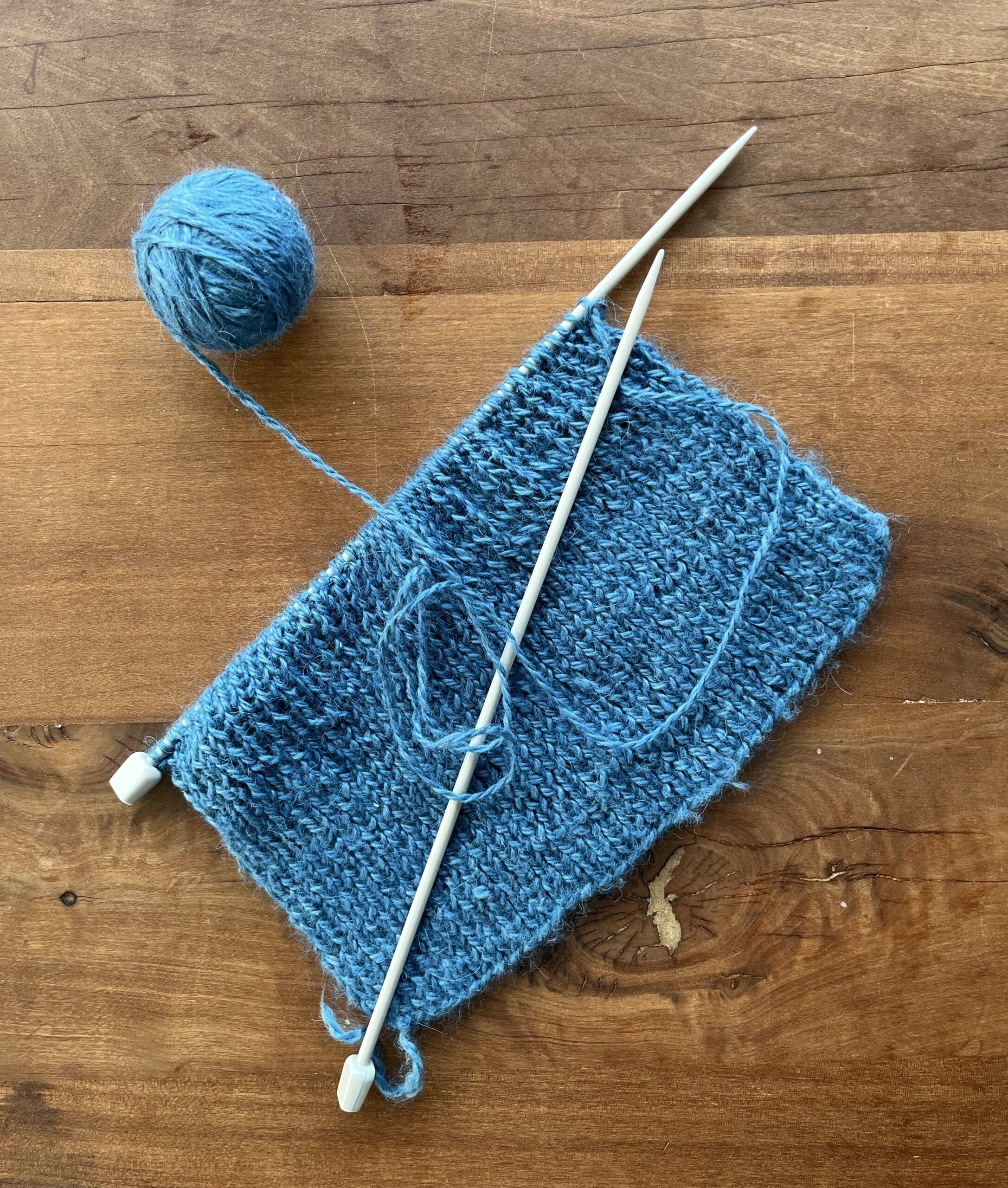
I would be the first to admit that I am not a natural knitter. The way that I learned to knit involves flapping both arms like wings and letting go of the needles every time I loop the thread, and worst of all, I don’t have any fun while I’m doing it. I jam, I drop, I snag, I lose count, but unfortunately, thirteen and a half years ago, I walked into a yarn store in Vancouver, and fell in love.
The ripple effects of that unfortunate passion are still being felt today. The yarns in that shop were so soft, so colorful and so soft. With wool like that I could become a real knitter. With my arms full of rainbow-colored softness, I told my husband I was ready to learn to knit. I was really, truly, definitely ready –
My husband petted the wool and admired the colors and promised me that if I could finish one scarf, he would bring me back to Vancouver and let me buy all the yarn that they had.
Twelve years later, I took my scarf to the house of a friend who knows how to knit and begged her to help me finish it. My husband is a pretty good judge of my knitting aptitude, I reckon.
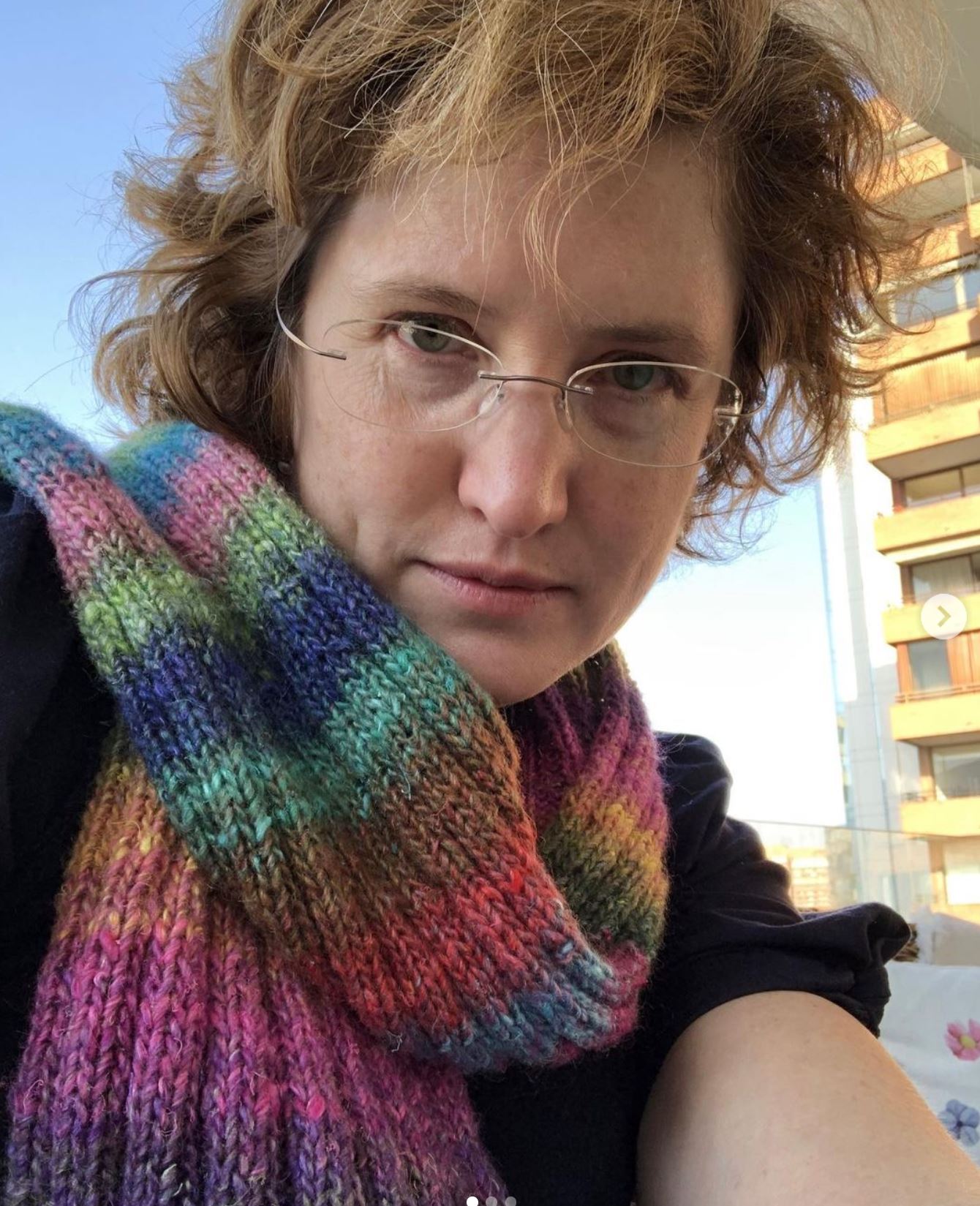
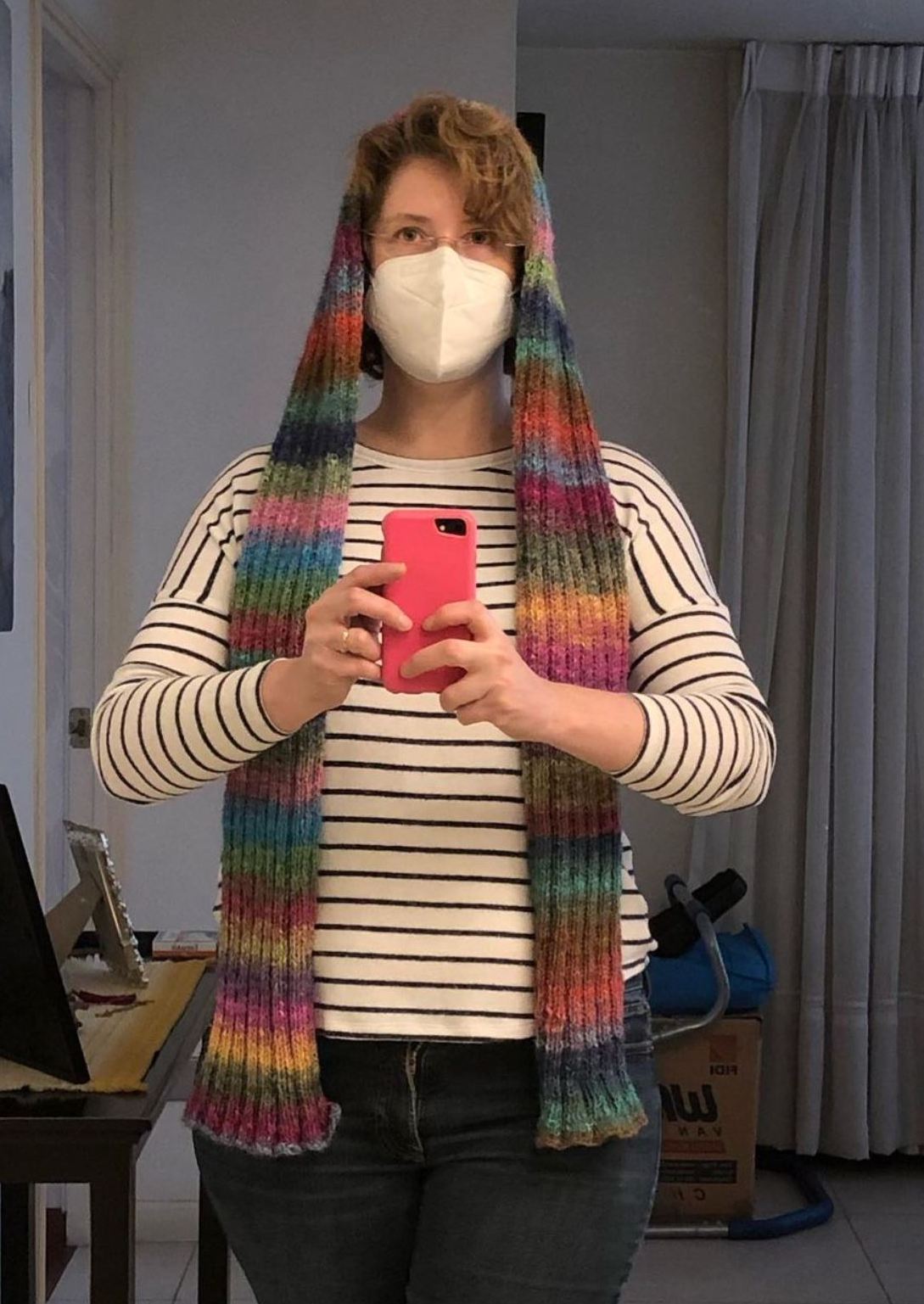
My twelve-year scarf is very beautiful. It is striped in bright magenta-and-turquoise-emerald rainbow colors, and it is worked in wide ribs of knit-two, purl-two, and it has a sweet lettuce-like ruffle on both ends. It is so beautiful that you would hardly notice where the knit-two purl-two becomes knit-two purl-one or purl-one knit-three, and I think that these little variations give it depth and character it might otherwise lack. They stop it from looking like something professional from a shop. Let those stitches breathe a little, I say. Let that knit-two-whoops-where’d-the-purl-go lift up its head and sing.
Valentina, my knitting friend, is at the other end of the knitting spectrum from myself. Valentina can knit a hat in three hours and a cable-ribbed herringbone lace stitch sweater in a week. She can infer a pattern from a twenty-second look at a photograph in a magazine, and knit it for herself without needing the intermediary steps of writing down the pattern, or even drawing a diagram, first. She knits without looking. She knits in the dark. She truly believes that she operates at a normal, accessible level, and my fumblings with knit and purl have been, to her, absolutely bizzare.

(Just look at this baby dress above, for example. It’s a little something Valentina whipped up over a weekend, just because she felt like it.)
After I’d cast off the last stitch on my rainbow scarf, Valentina told me I would have to make another one. And after an afternoon of watching her fingers dance, I said yes.
Aside from Valentina, support has been somewhat thin. My husband told me that I ought to make a little visit to Kuna, the very expensive and super-high-end Peruvian alpaca shop. Alongside the obscenely expensive alpaca sweaters, they sell yarn as well. He said that if I’m going to spend another 12 years making a second scarf, it needs to be worth it.
It took me another eighteen months, but when I was down in Santiago last week, I called his bluff and went to that Peruvian alpaca shop, where the sweaters feel like they’re knitted from the tears of baby angels and the shawls might be the wings of the very angels themselves. I played with skeins of powder-blue yarn that were so sweetly soft I cried tears of my own as I touched them, and to my shock I found that while sweaters knit from angel tears may be priced higher than platinum, the value must all be in the knitting, because the yarn itself was no more expensive than the ordinary sheep stuff I’d bought in Vancouver 13 years ago.
I would not be the only crafter who cannot knit! I bought 6 skeins. Valentina will look at me proudly, and when it is done, my husband will have to wear the new scarf, and every single alpaca angel tear around his neck will fall with a sound, and that sound will be “So there.”