
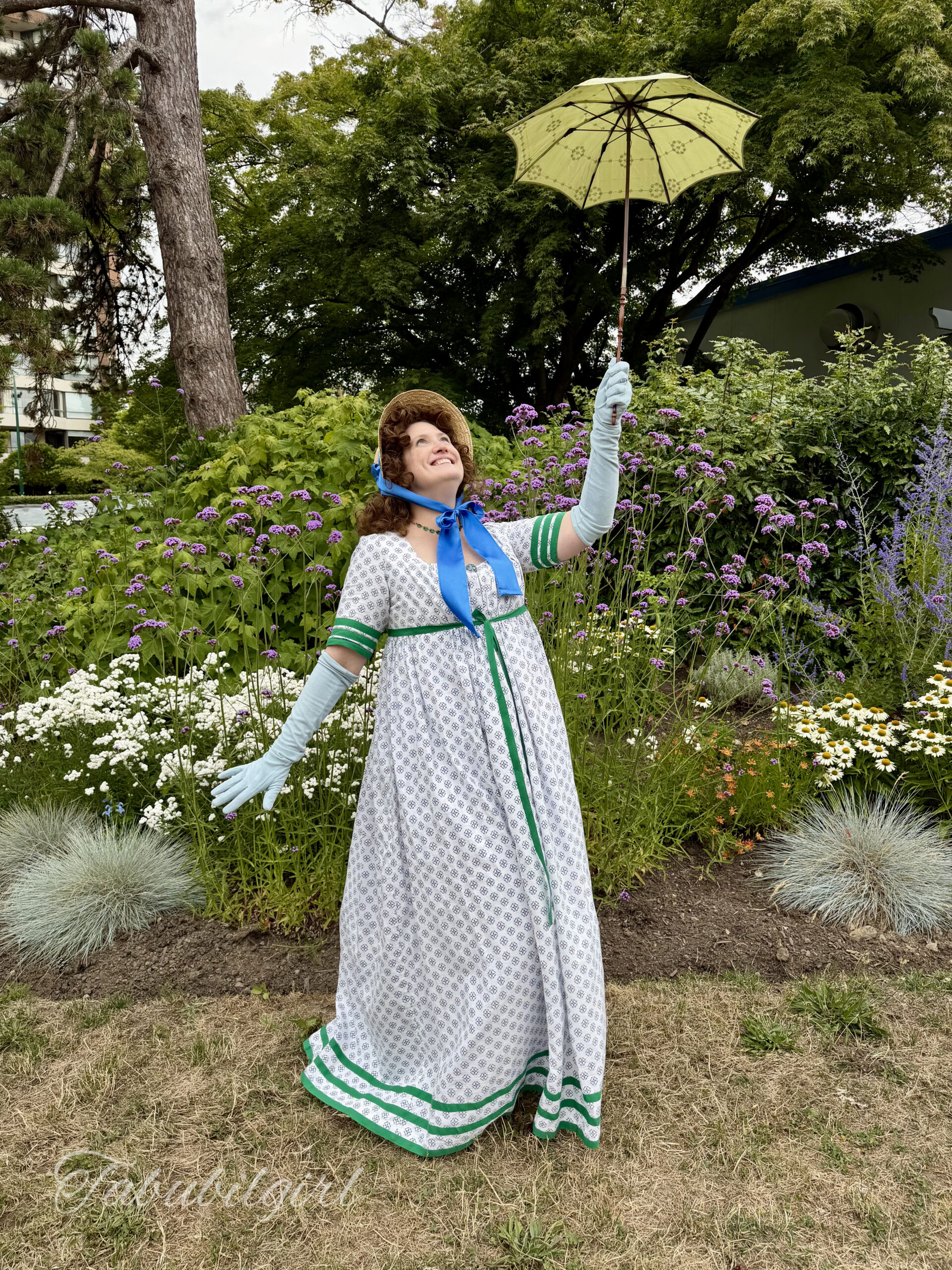
This gown started as a thrifted bedsheet, and was intended to be a wearable mockup for an 1807 bib-front gown. Unfortunately, I accidentally cut short, tight 1790s sleeves, and then I didn’t like where I set the skirt slits, and at a late and cranky hour I turned the slits into seams and decided it was just going to be the late regency round gown it wanted to be: a regency round gown with racing stripes.
As a regency gown, this particular self-drafted pattern was a disaster. It seemed to be coming together well, and really well and I was quite pleased with myself, until I put it on over my stays for the first time and looked at it in the mirror. I have no idea how I did this – but somehow I ended up with a bodice that sank dramatically down in the back!
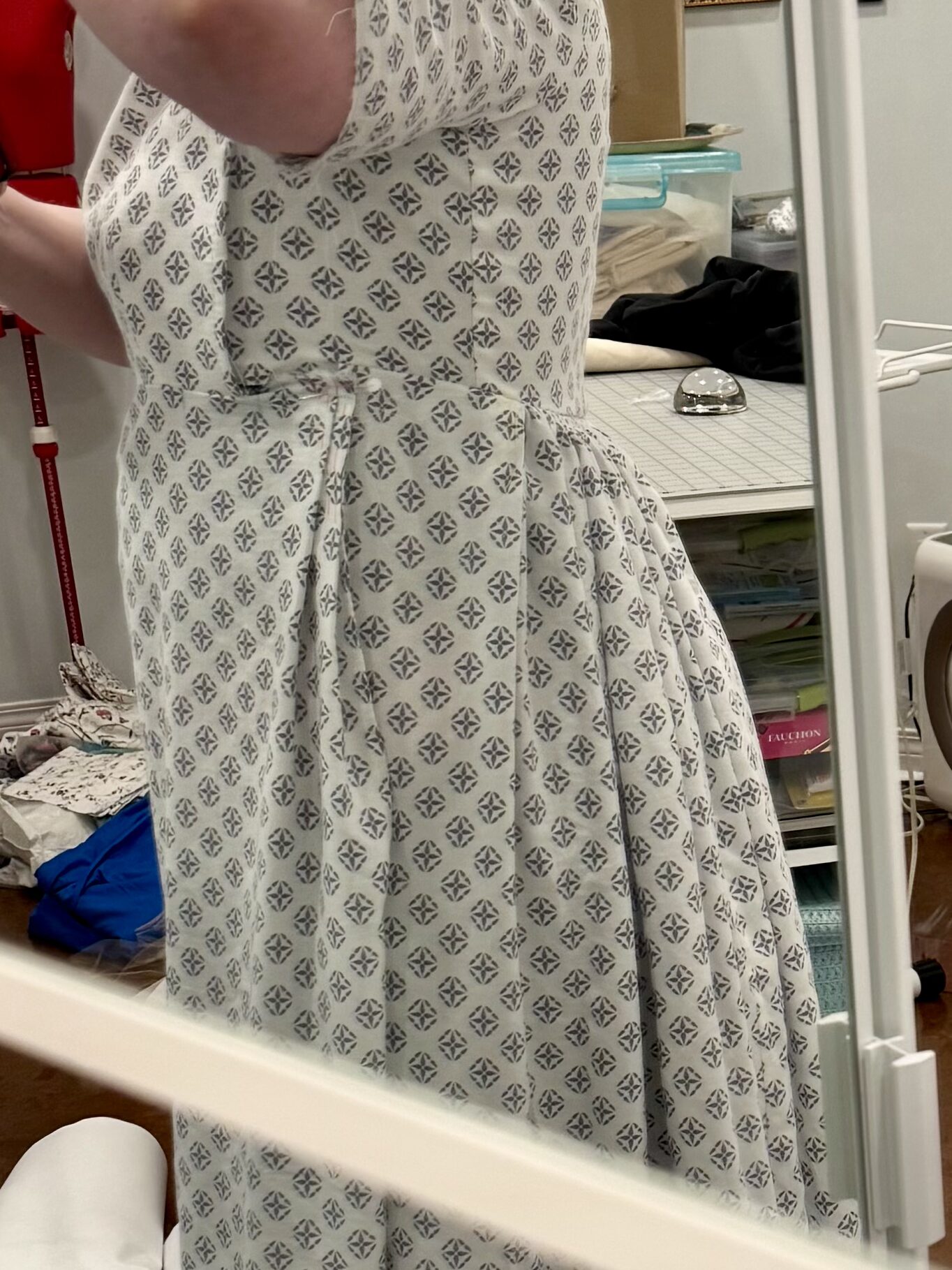
That wasn’t the only thing I’d stuffed up either. The apron slits on the skirt were too far forward, and the sleeves were too darn tight and short. In drafting this pattern I’d begun with my 1790s bodice block, and (on autopilot, I guess?) I’d forgotten to adjust the sleeves. I wrestled with the gown for a while, getting crankier by the minute, then I gave up, seamed closed the apron slits and turned that hot regency mess into the late 1790s round gown it clearly wanted to be.
(You can see other examples of my 1790s round gowns HERE and HERE.)
Fortunately, I had just enough leftover fabric that I could switch out the bib-front for a pair of (very carefully pattern matched) drawstring panels.
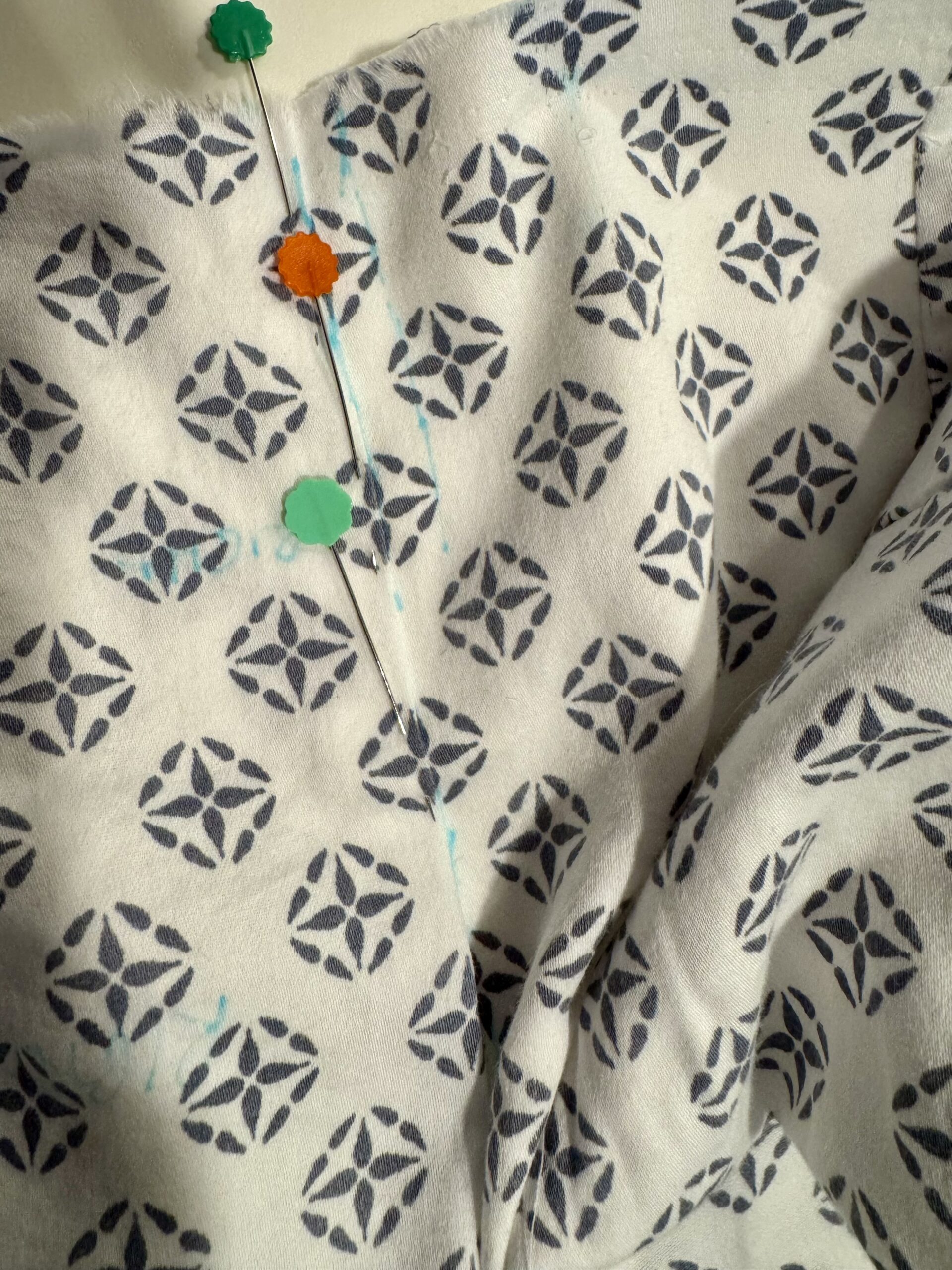
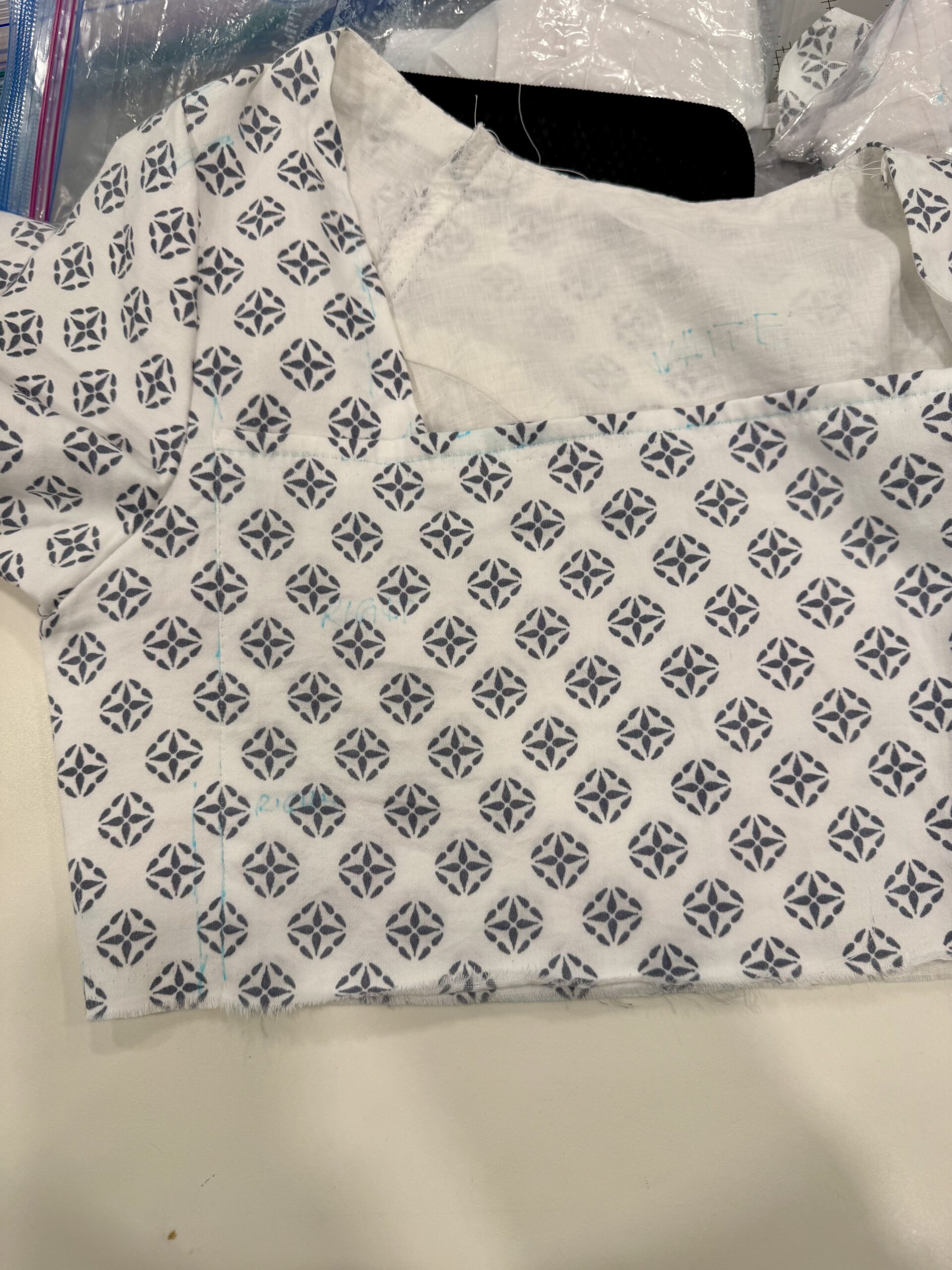
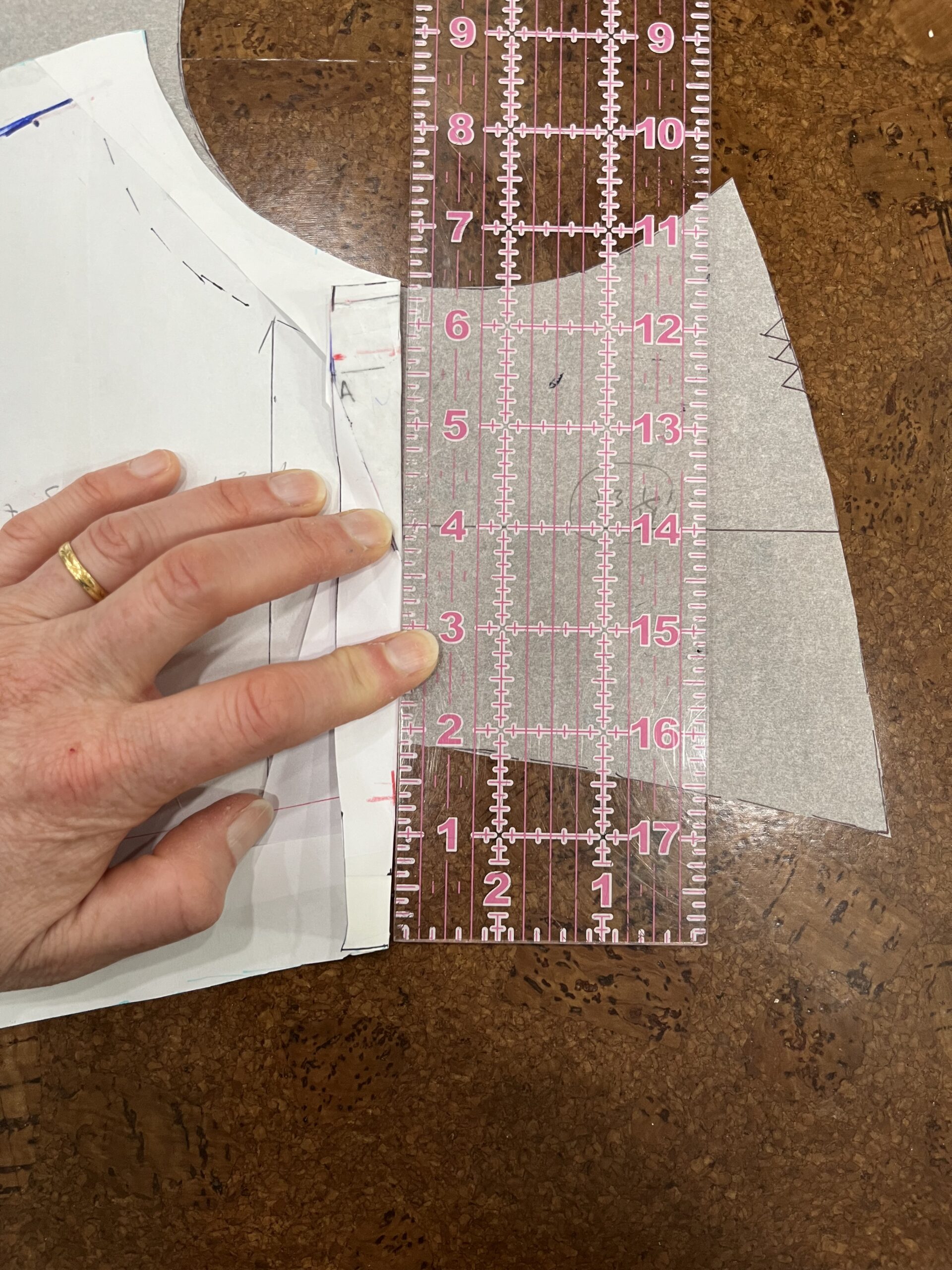
While I sewed the new panels onto the bodice fronts, I decided that if I were changing things up anyway, I’d take my late 1790s round gown all the way to the end of the century. I wouldn’t just level the waistline , I’d take it as high as I possibly could, right up to my bust.
On my body this let me take it as far as a 3 inch side seam!
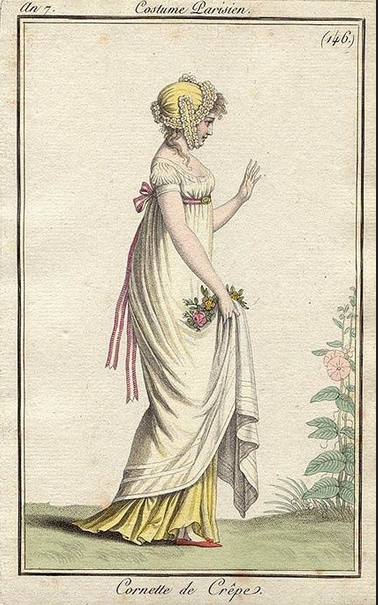
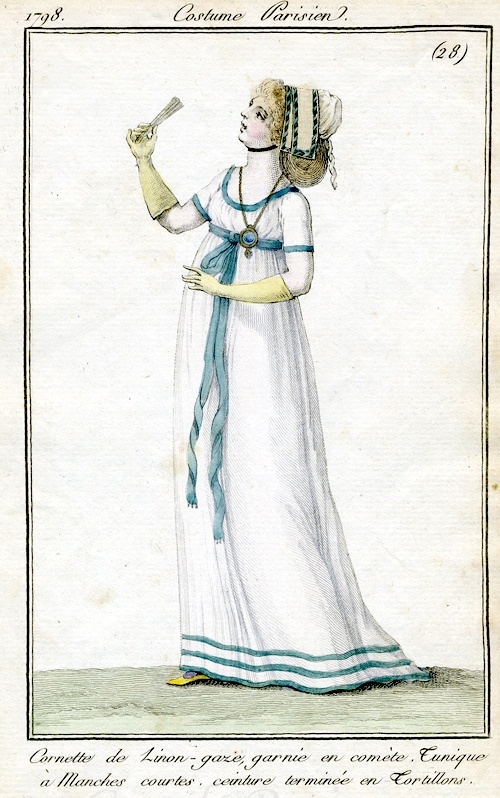
Architecturally speaking, there’s not much to this gown. The waistline hits at the broadest point of my ribcage, so it’s just the same columnar shape all the way down to the ground. I probably won’t go this high again, but it’s fun to play with silly historical fashions, and this one is straight out of a Costumes Parisiens print, circa 1798. Has to be chic, right?
only…
The longer I worked with this grey print cotton, the less I enjoyed it. The fabric wasn’t difficult to work with, but once I’d finished the sewing and the finishing, what I had was a perfectly adequate mid-weight 1798 round gown made out of the most boring fabric imaginable.
Seriously, this gown was deadly. The print was so receding, you barely noticed that the dress was even there.
It was going to need a lot of help! Fortunately, the late 1790s loved to tart things up with striped hems and ribbon trims.
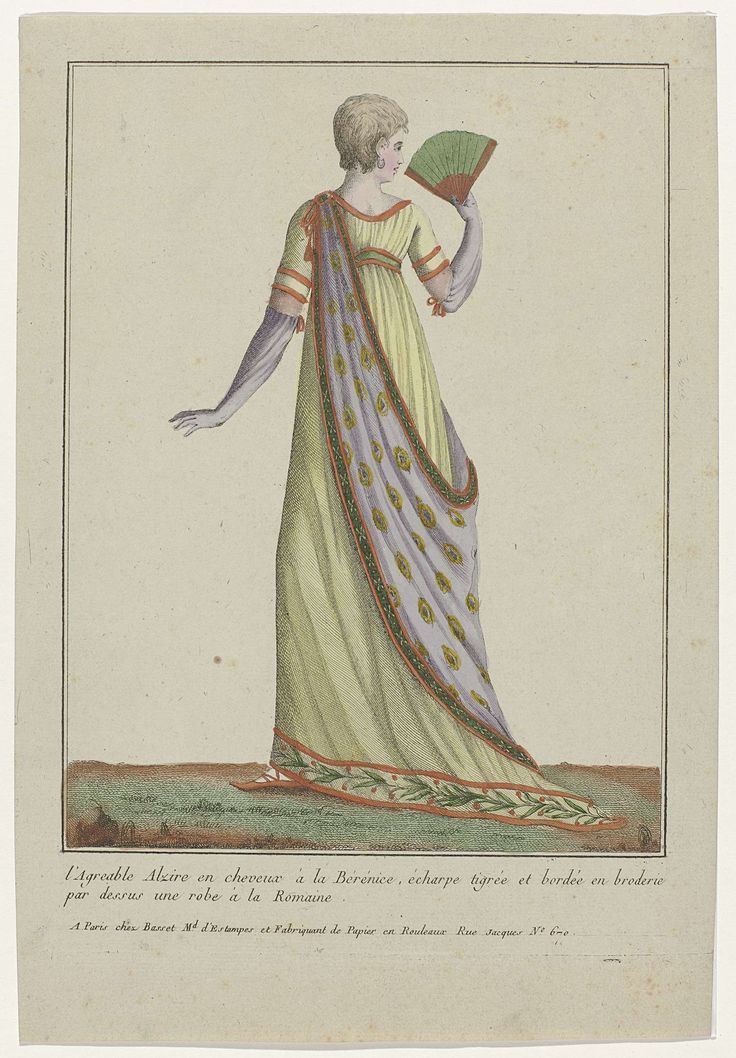
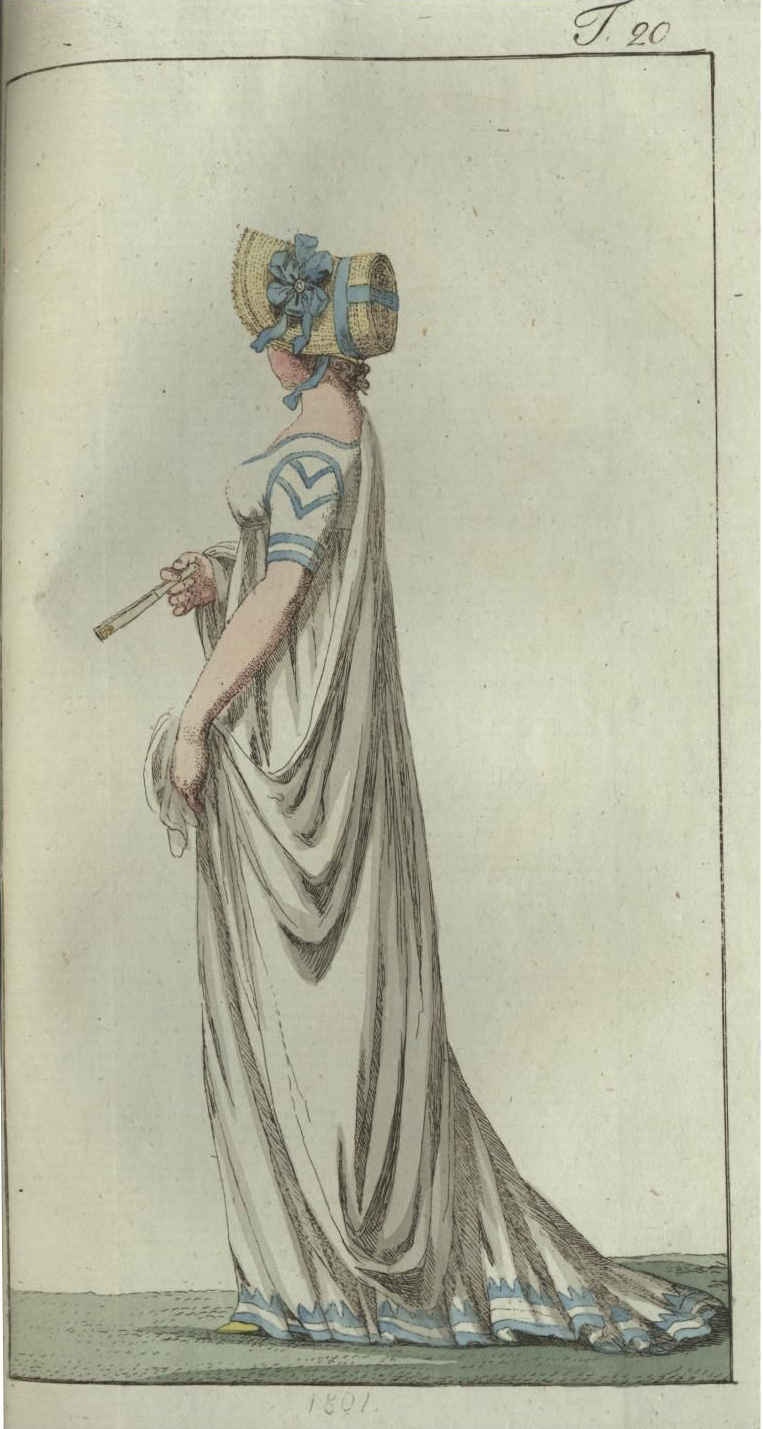
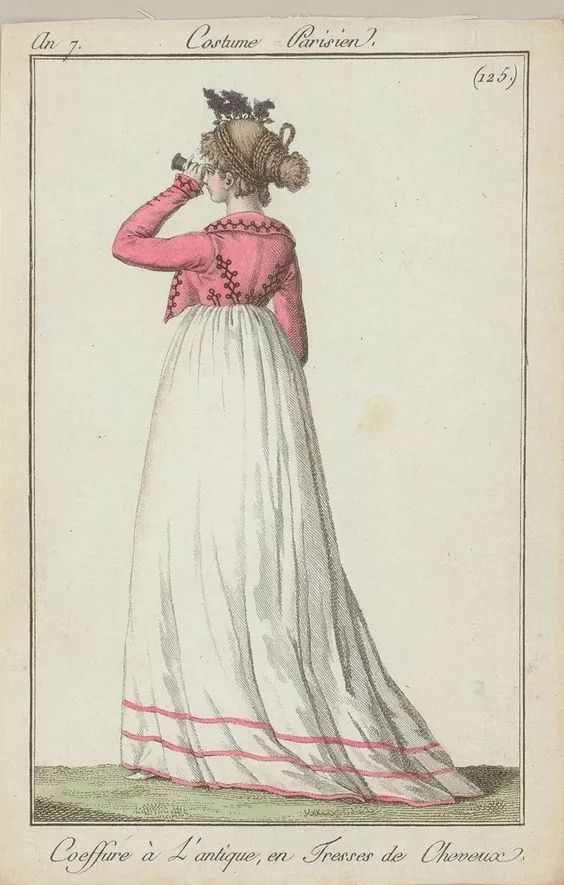
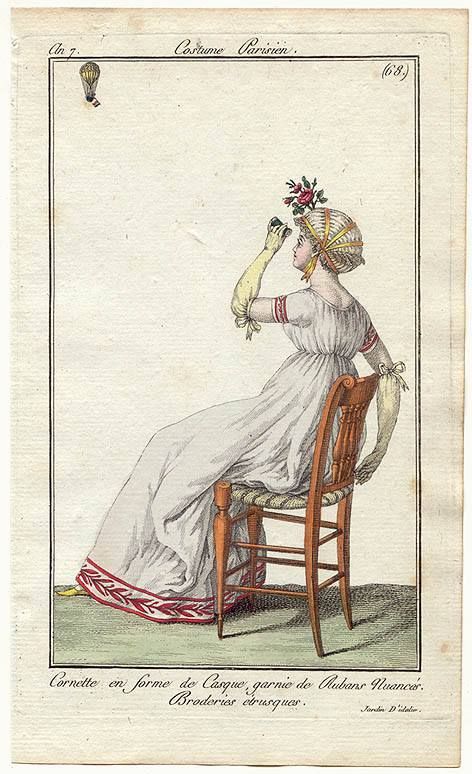
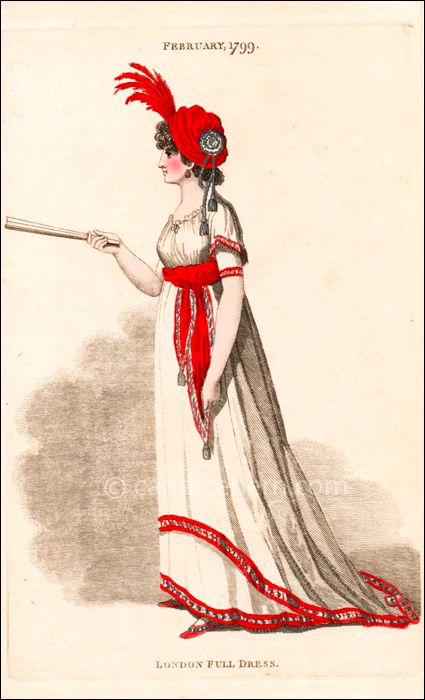
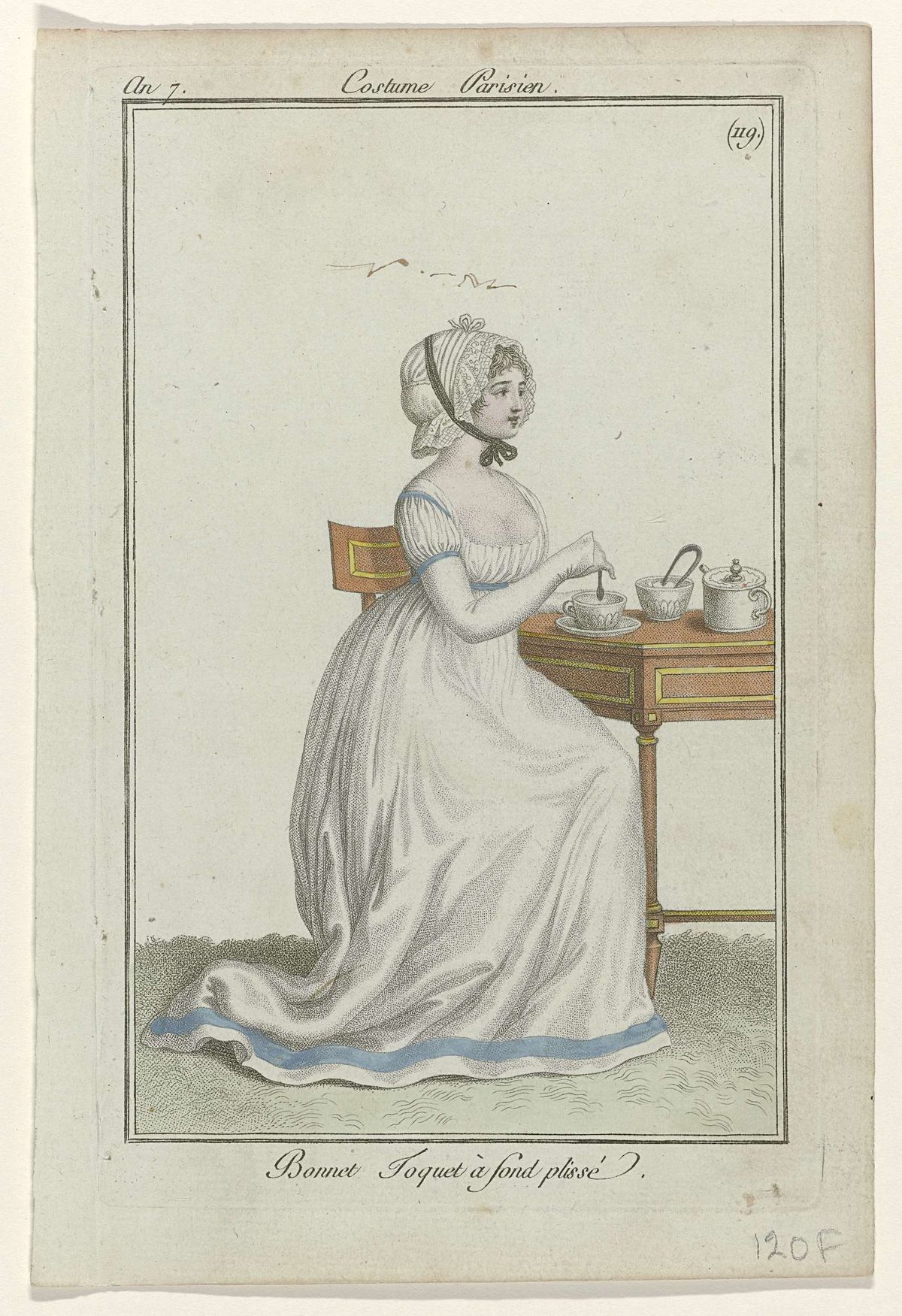
Unfortunately, this fabric was so aggressively self-effacing that it made any ribbon I put near it look gauche, garish and badly matched. The faintest hint of shine threw a trim straight into the “Well, that’s a thing” basket, and for such a self-effacing fabric, this level of Prima donna behavior was seriously pissing me off.
The trim for this gown was going to have to be as flat and matte as the block print fabric. Cotton tape might do it, and after much searching on etsy*, I found a nice tape in a tone that the gown didn’t actively reject.
*may I point you toward AnastasiaMarieshop on etsy? Stacey at AnastasiaMarieShop was absolutely wonderful, helping me with photos and swatches and eventually 5 yards of a gorgeously saturated yet simultaneously very matte and retiring cotton tape.
Inspired by these fashion plates, I tried some edged necklines and crossed bodice backs:
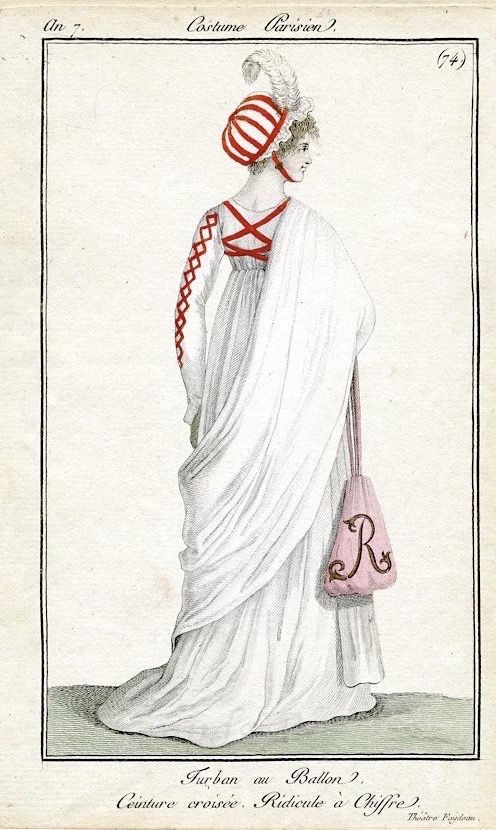
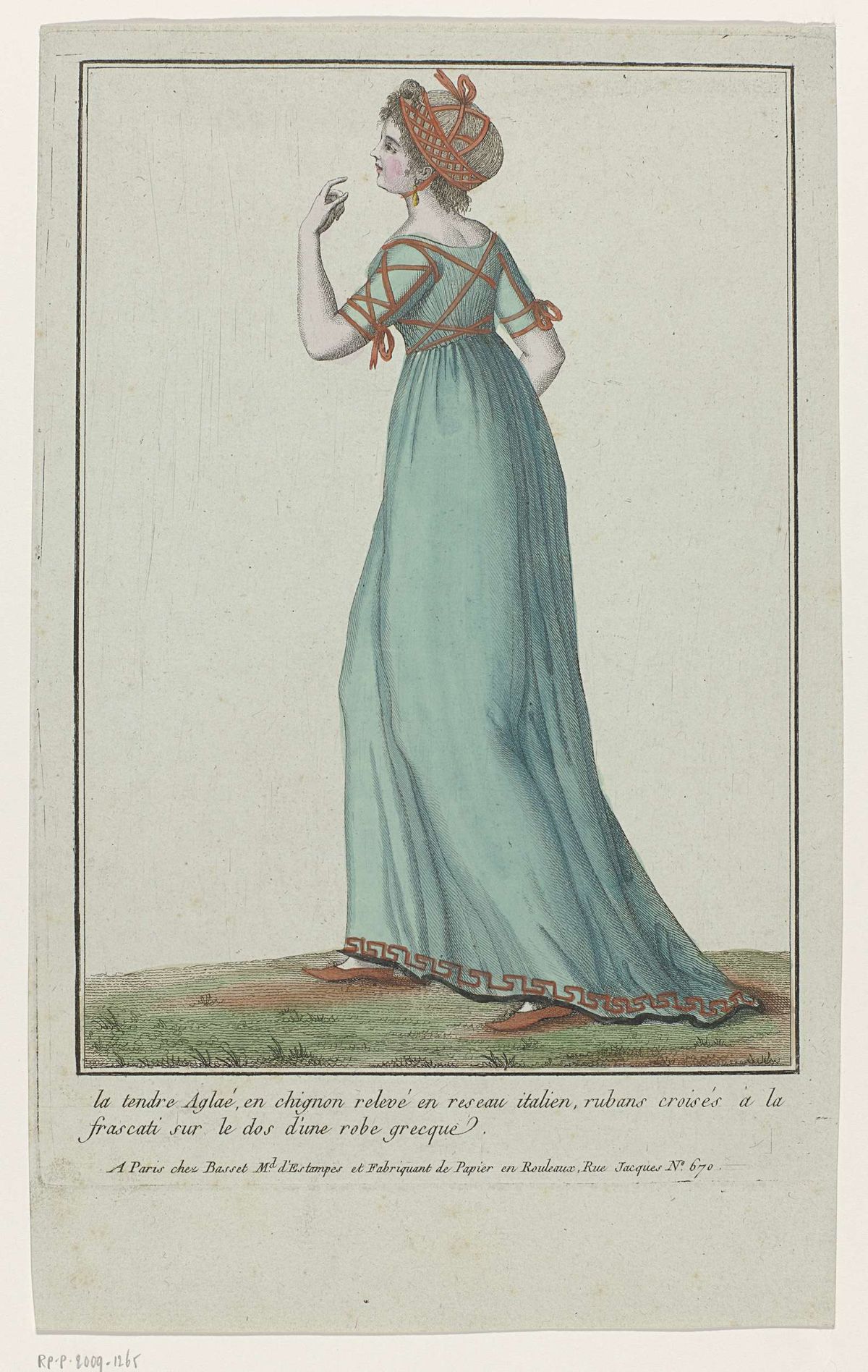
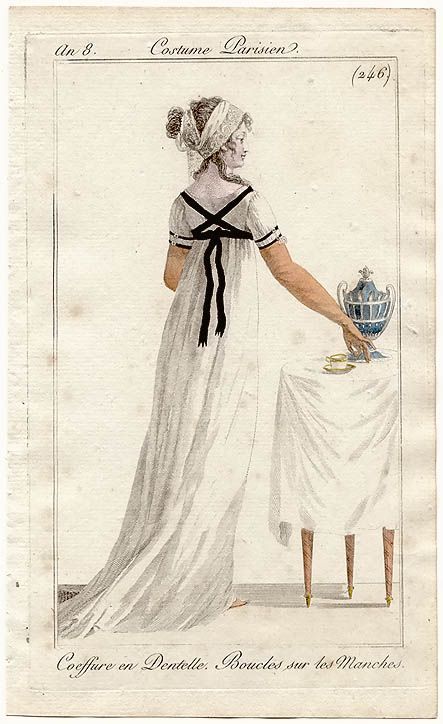
but the gown sneered again, hard, and I went with three simple rows of stripes on the hem and on the sleeves.
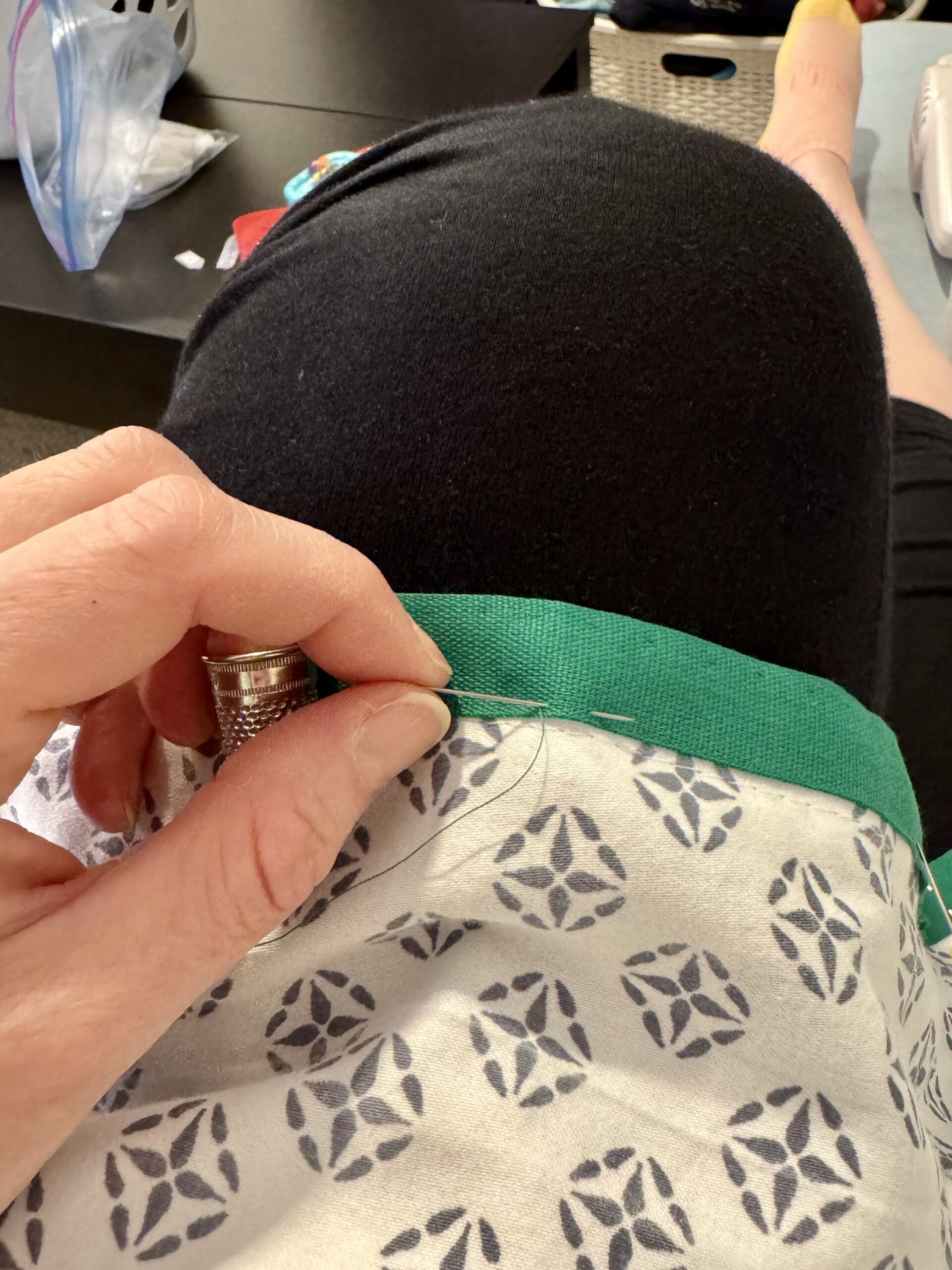
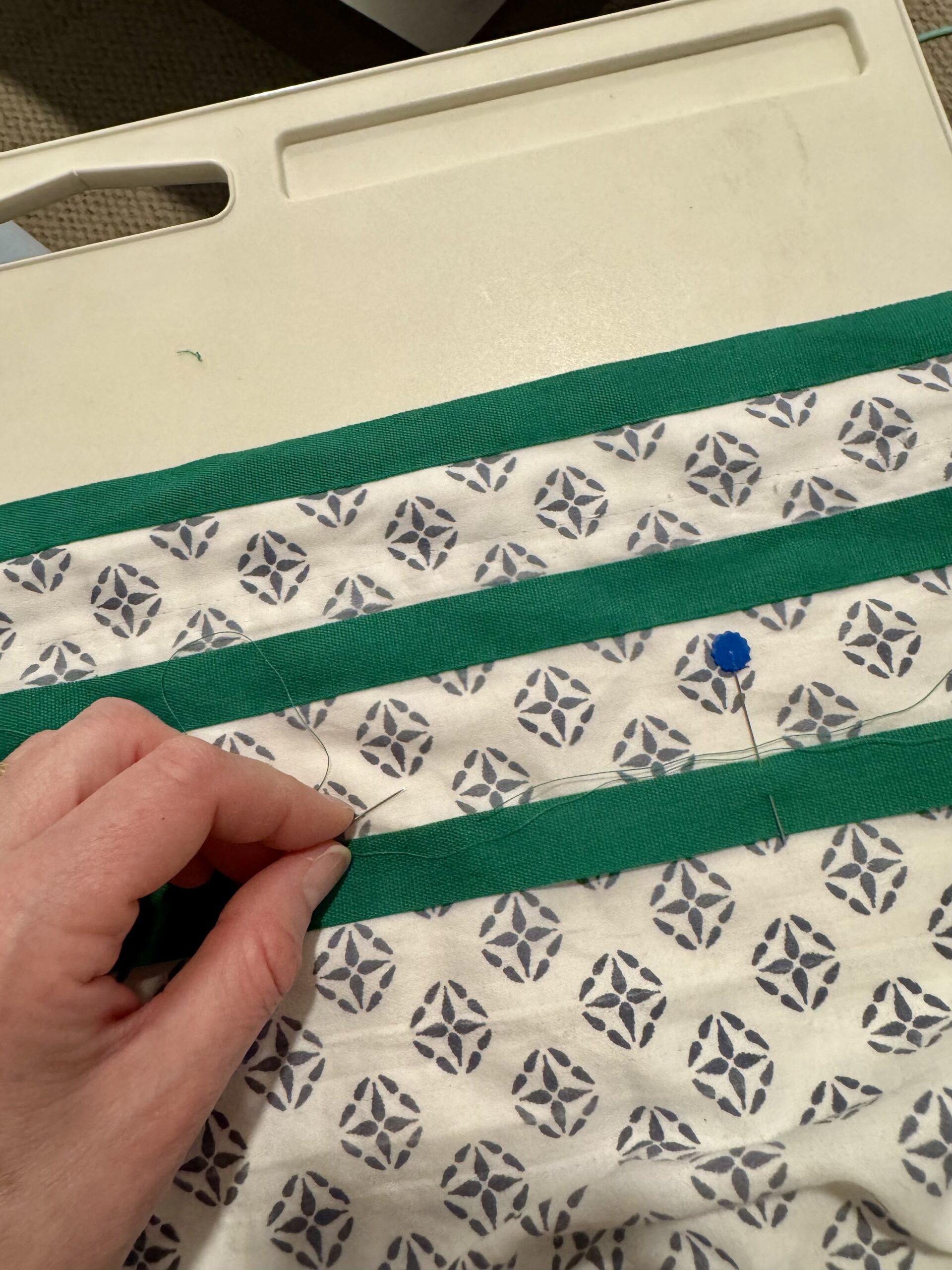
Mr Tabubil yelled “RACING STRIPES! I love it! It’s your fastest gown yet!”
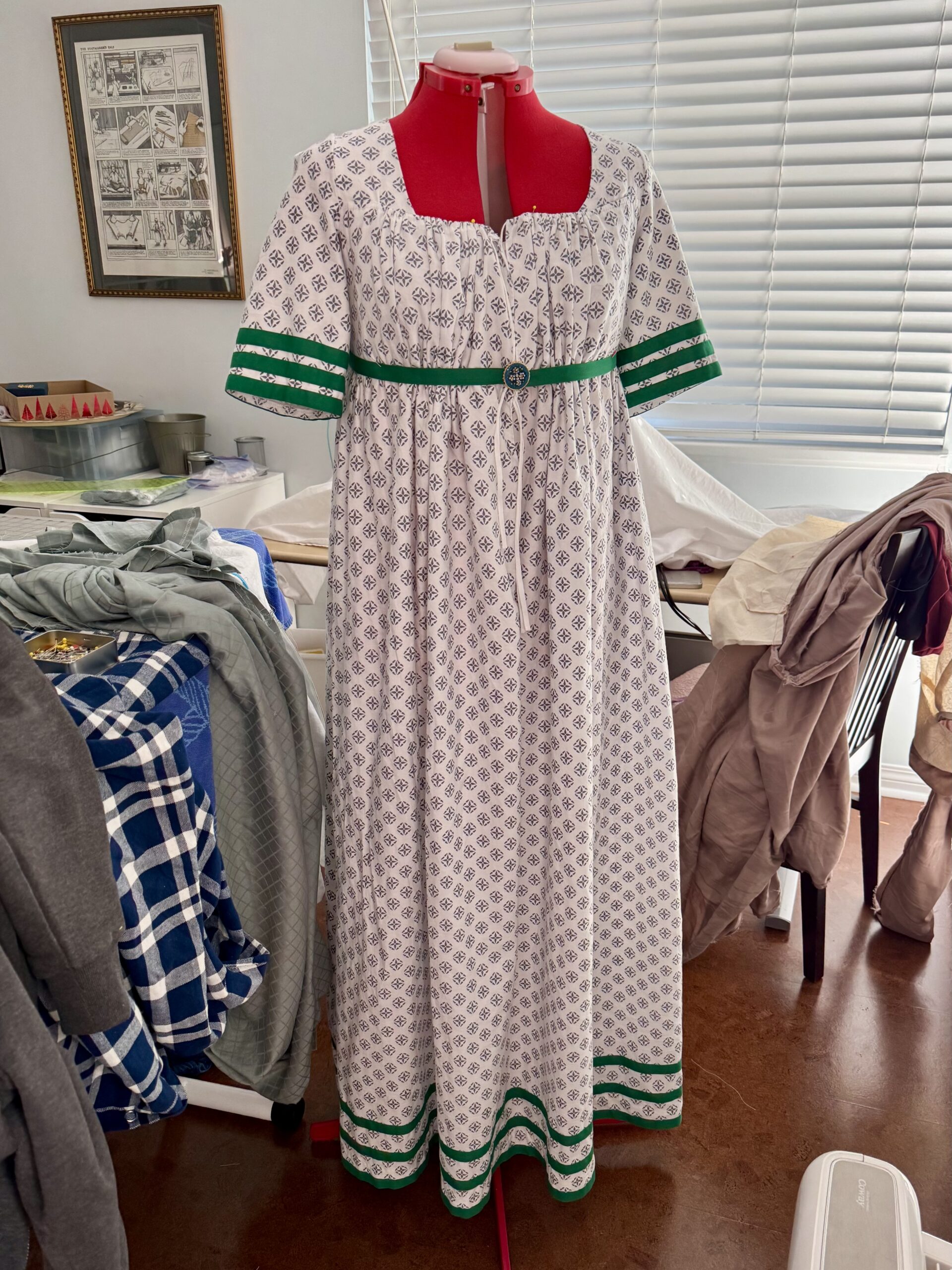
Racing stripes they were! I stitched the leftover tape along the waist of the gown, to flutter nicely in the speed of my passage, and then, in a moment of serendipity so perfect it sounds fictional, I came across one more fashion plate of a 1798 gown doing exactly that .
The gown was happy, I was thrilled. It had found a creative collaborator it was willing to work with, and I have a dress that doesn’t just pop — it zoooooms!