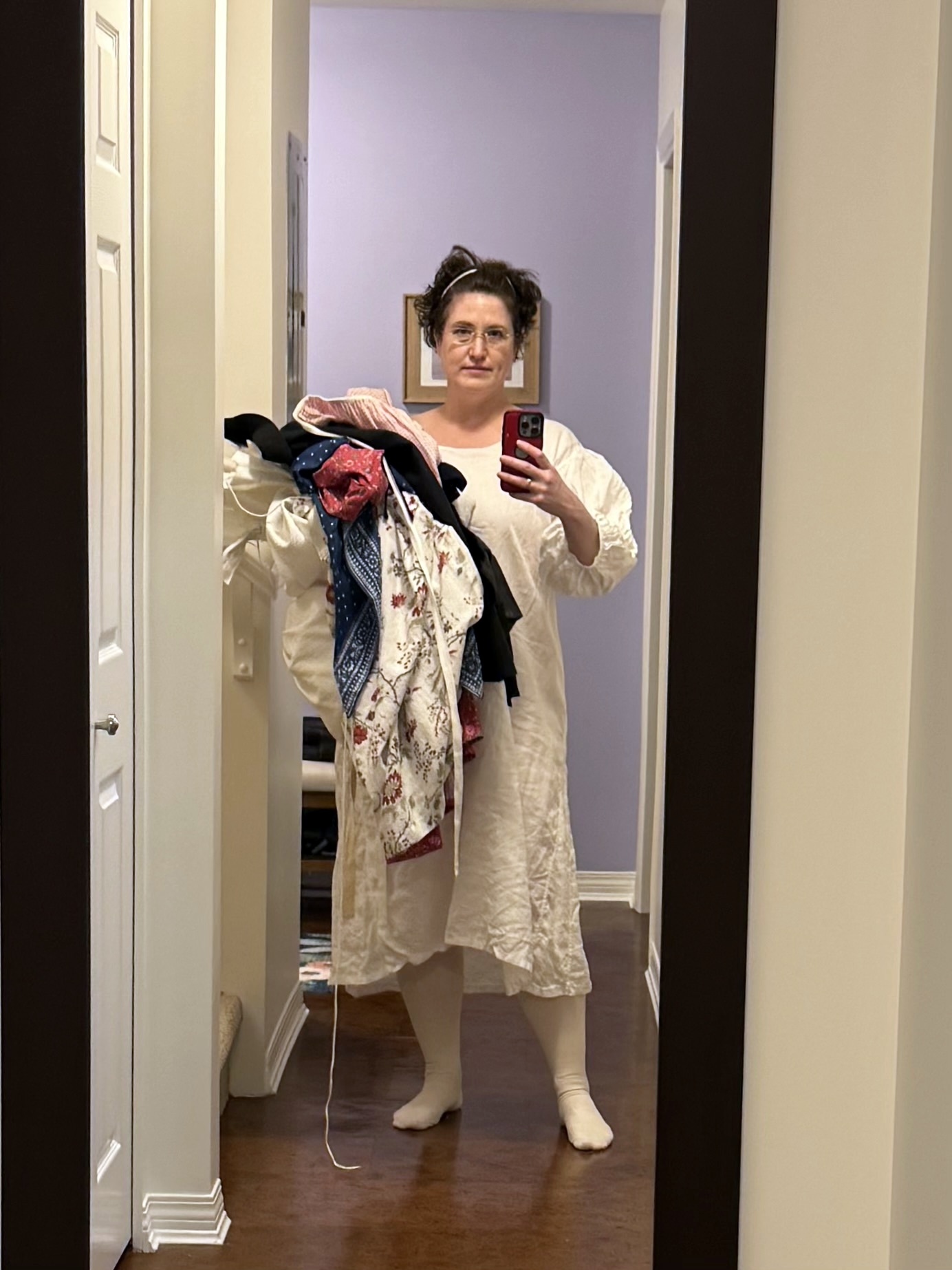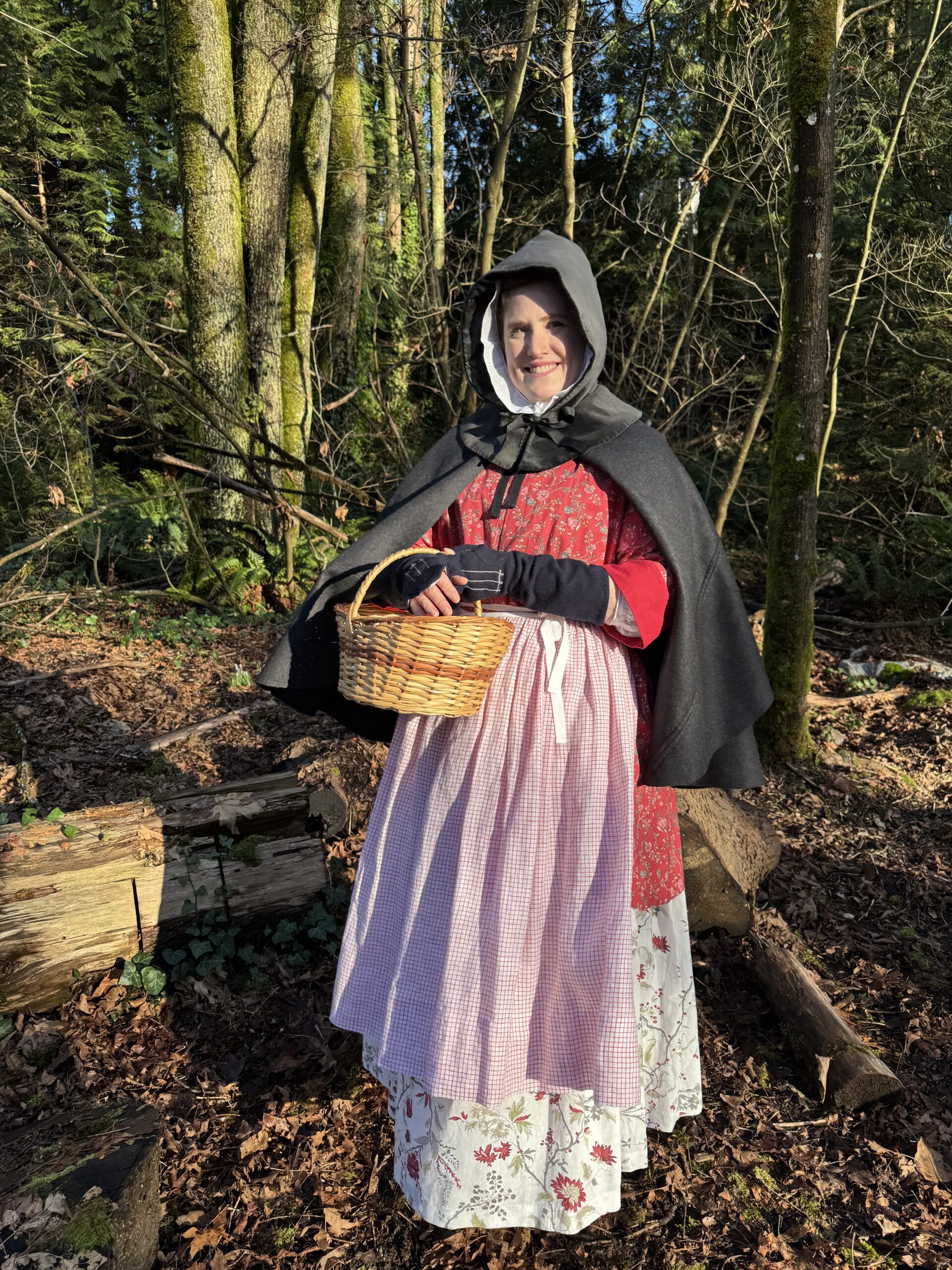
I made a red chintz bedgown that I didn’t like very much. I thrifted a curtain panel in a different chintz pattern that toned with it. I used both fabrics as the base of a winter-weather 1770s chintz ensemble and I think that the ensemble is pretty neat!
Back in 2020 I sewed a bedgown from red cotton Colonial Williamsburg chintz. I used the Kanniks Korner Wrapping gown pattern, and despite not having quite enough yardage to make the bedgown as wide as the pattern asked for, I went ahead and sewed it up anyway. Perhaps not surprisingly, I never really liked the result. The bedgown was too tight. It hugged where it should drape, and while I loved the red chintz print, whenever I wore it, I felt rather like a red tomato cottage loaf.
I went off and made a another bedgown, from the Burnley and Trowbridge pattern, and the chintz tomato was relegated to the bathroom to serve as a back-up summer dressing gown. (You can see the other bedgown i made HERE.)
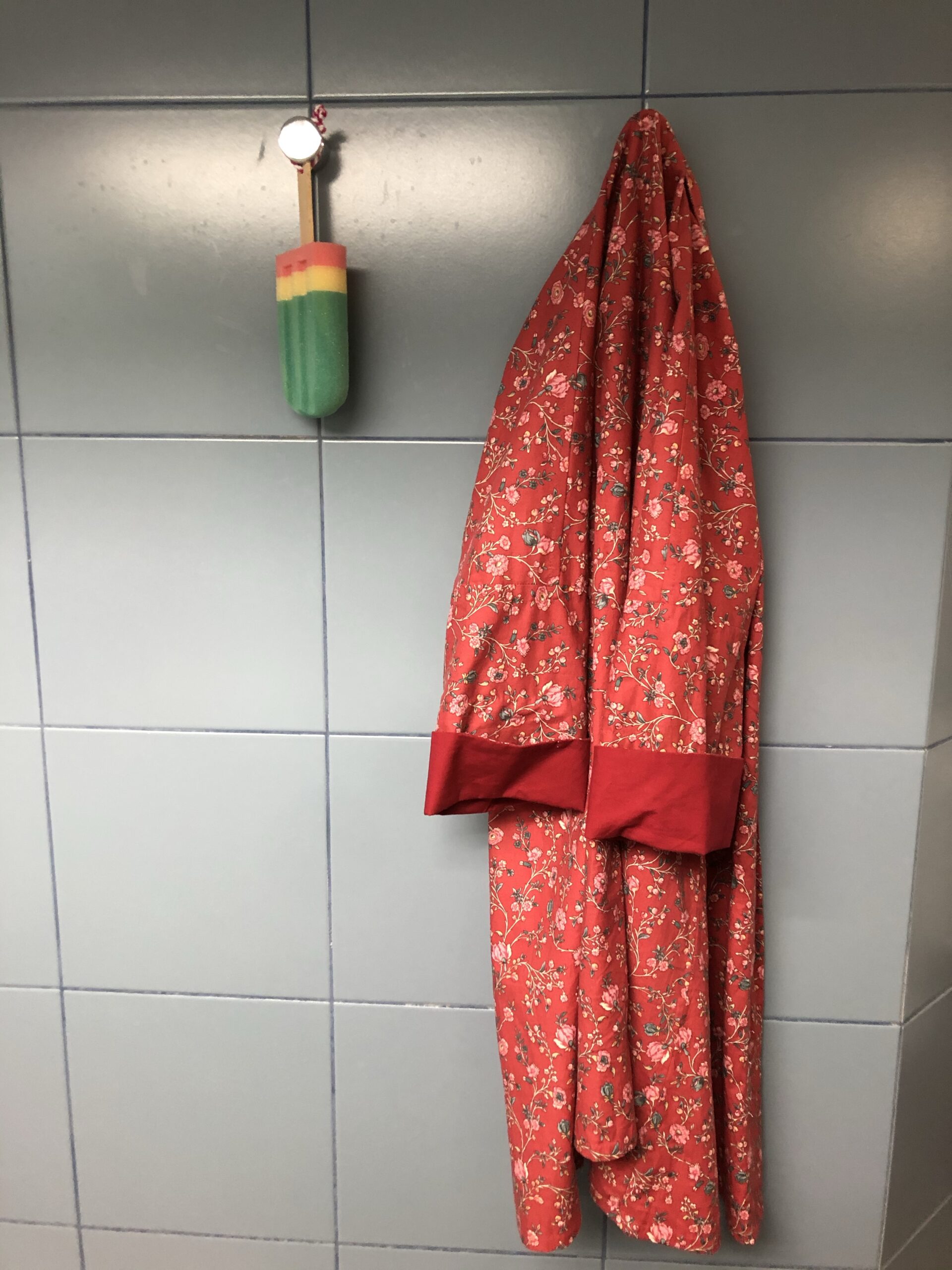
Fast-forward to Vancouver in 2025, when I thrifted a single Ikea curtain panel in a large creamy chintz print that toned quite nicely with the red in the tomato chintz. Looking at the curtain, I reckoned I knew exactly how to salvage the red bedgown: worn on its own over a plain petticoat, the bedgown looked dreadful, but perhaps as part of an ensemble, with the red chintz sort of merging into a larger, busy chintz field pattern… and if the ensemble were layered, with swinging fabrics hanging above and below the tight tomato red…
But what is this chintz stuff, exactly, anyway?
Chintz is cotton fabric with a floral pattern printed on a solid colored ground. The idea first showed up during the 15th Century in Golconda, India, and it made its way to Europe around the year 1600, where it was a bight and splashy success. Europe produced linen and wool fabrics, and the introduction of cottons – busy, cheerful printed cottons – was a hit on a very, very large scale.
The European history of chintz is a tangled chain of imports, bans, tariffs, counterfeiting and at last, by the middle of the 18th century, domestic production, when European chintz began to be produced in England, France, and, very largely, the Netherlands. By the time domestic European chintz was on the market, chintz had already stopped being novel and luxurious. It had gone middle-brow. The middle classes in the Netherlands and much of the rest of continental Europe wore them in every sort of print, garment and color combination they could come up with, as did the working classes in a more limited way as clothing came their way through the second hand markets.
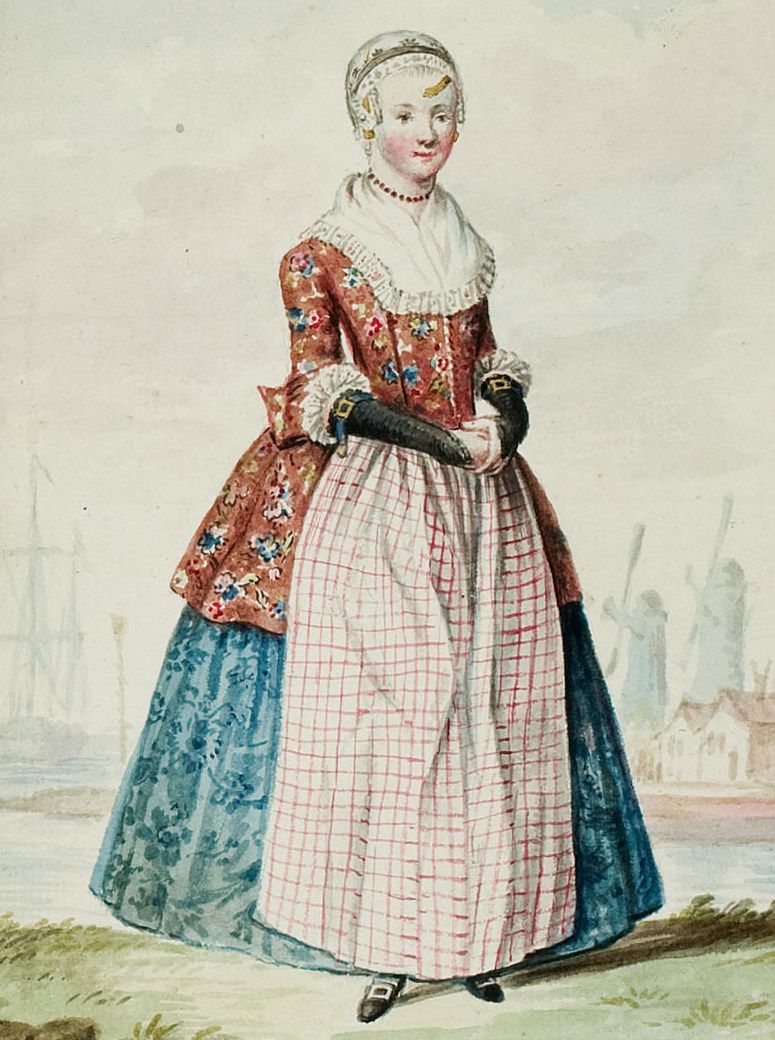
The Bunka Gakuen Costume Museum has a wonderful album of colored prints from the period of prints showing middle and working class women wearing chintz ensembles in a breathtaking range of colors and prints. The 18th century played fast and loose with color matching as it was, and the fact that the fabric prints were busy and chintzy seemed to be enough for coordination. Delightfully, the album has been digitized and can be found HERE and the sheer range of happy colors on display is downright glorious.
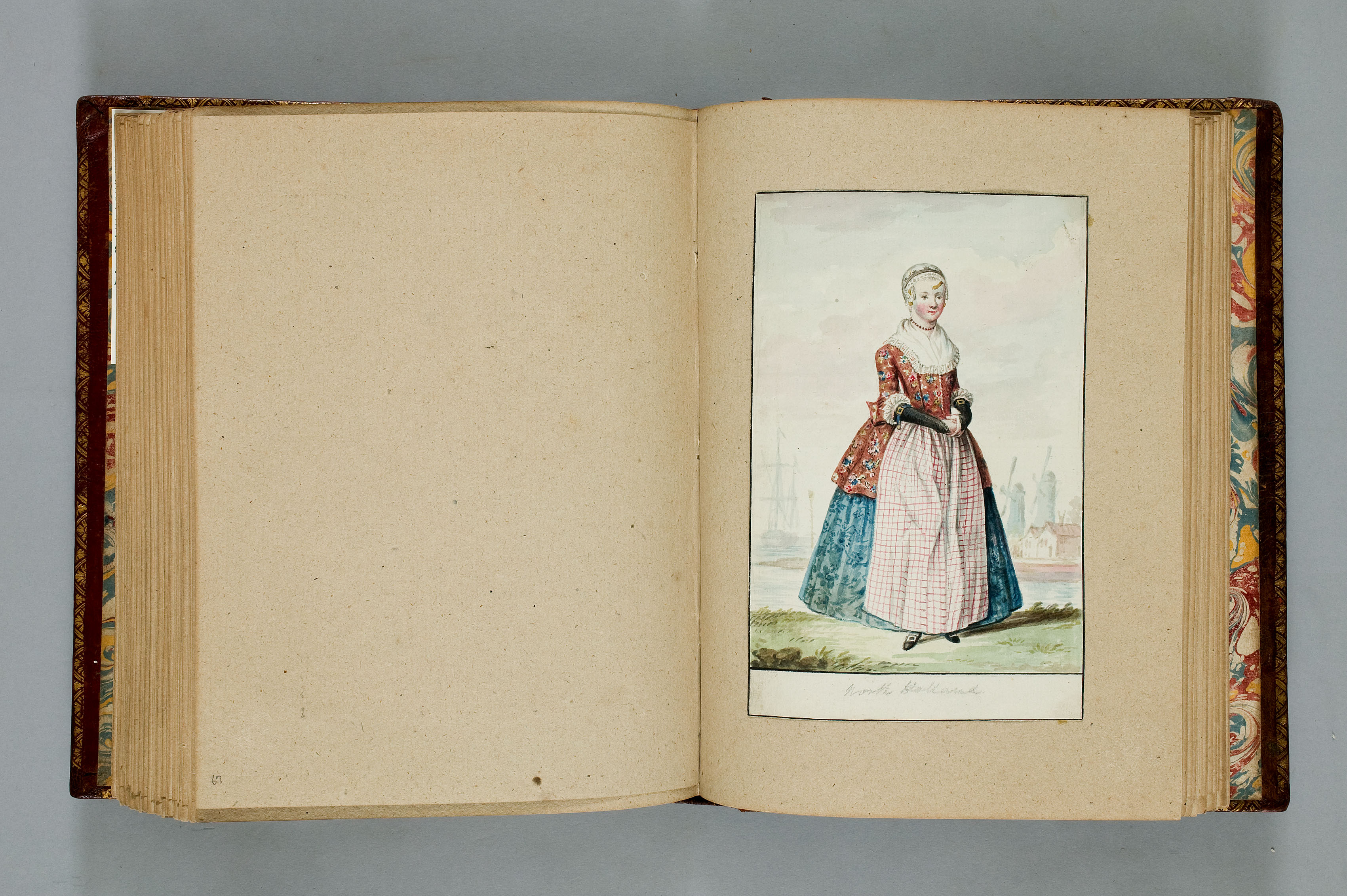
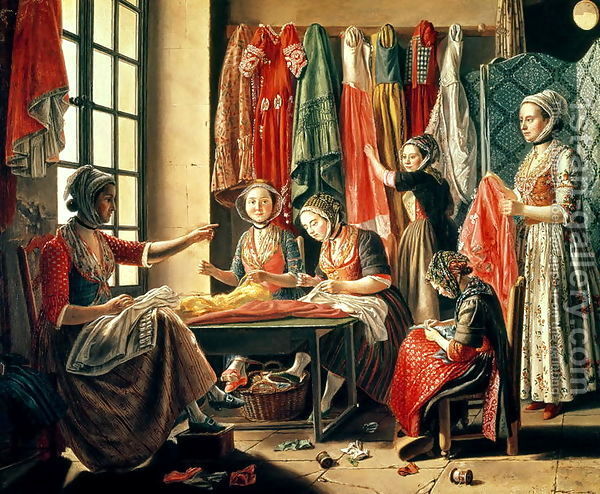
Here are some European Chintz ensembles, mostly of the 1770s.
Chintz on Chintz:
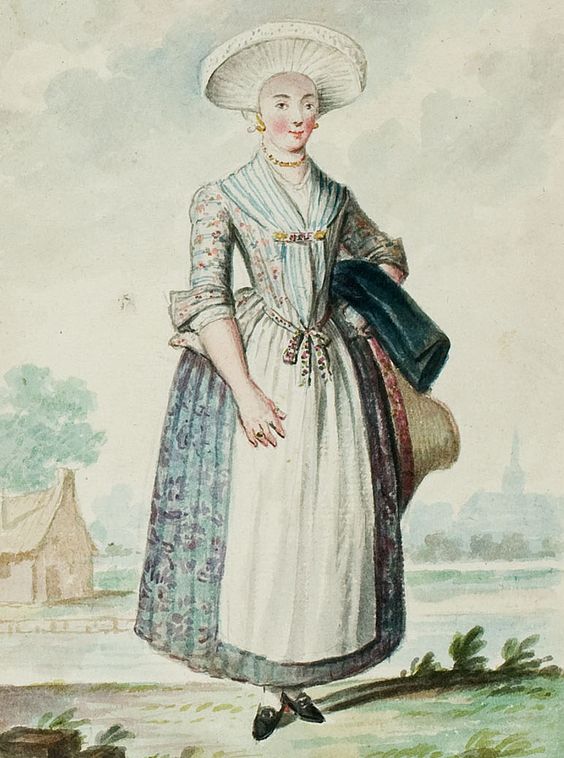
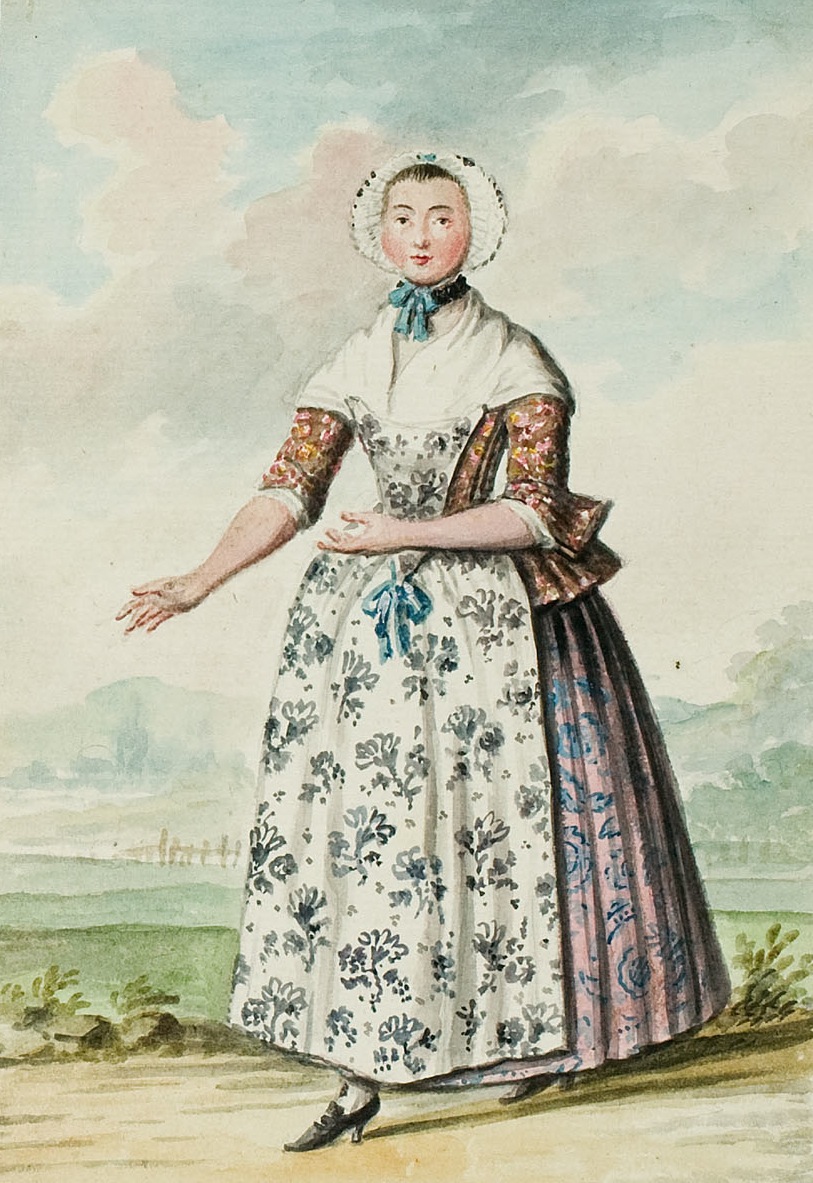
Chintz on other prints:
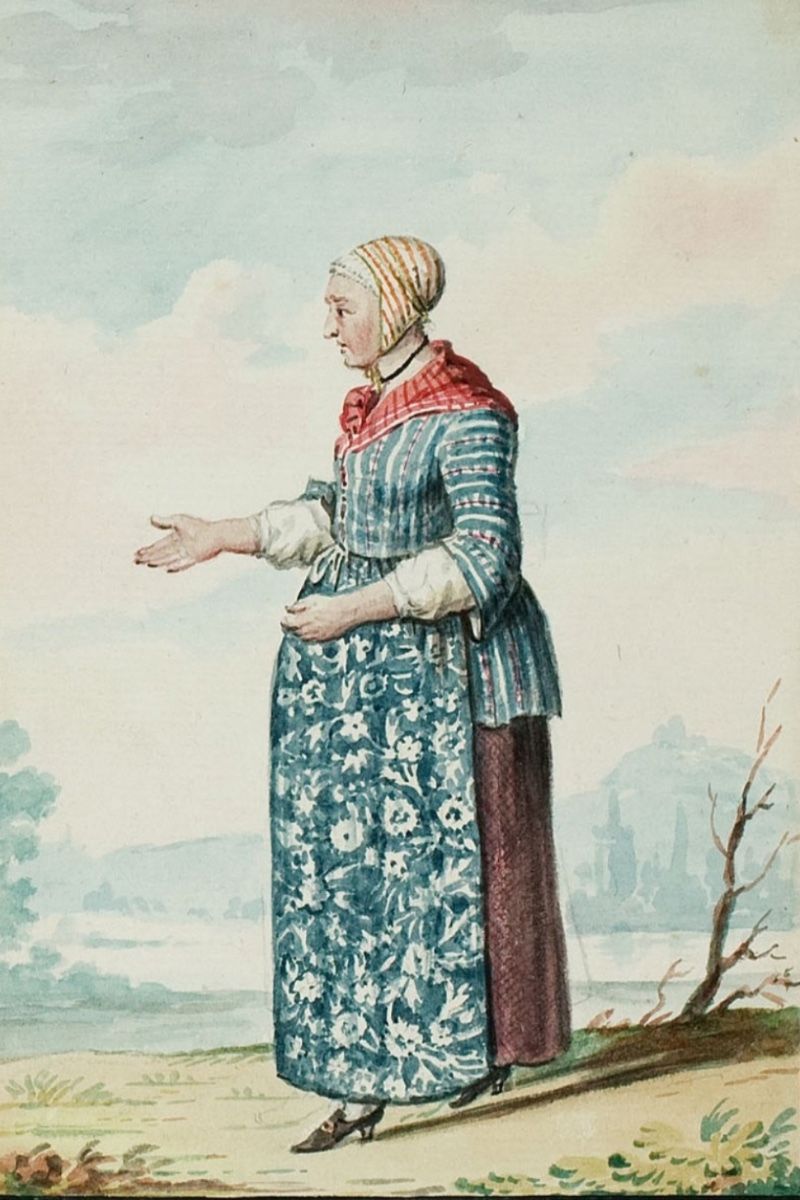
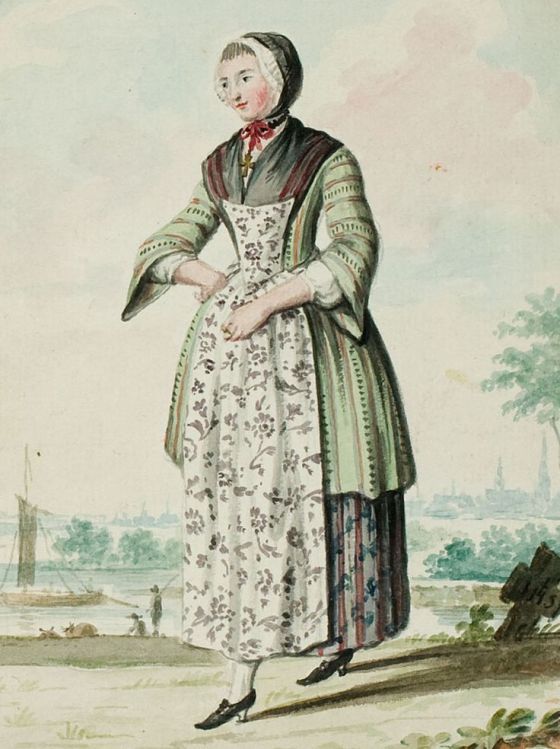
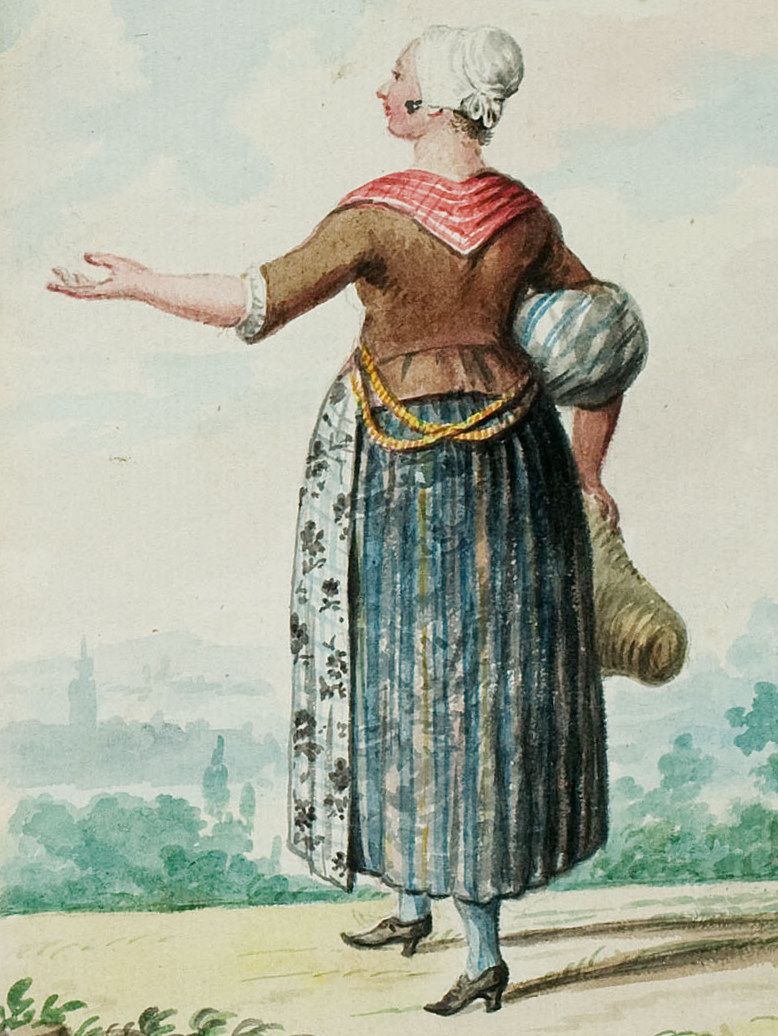
Chintz in other media:

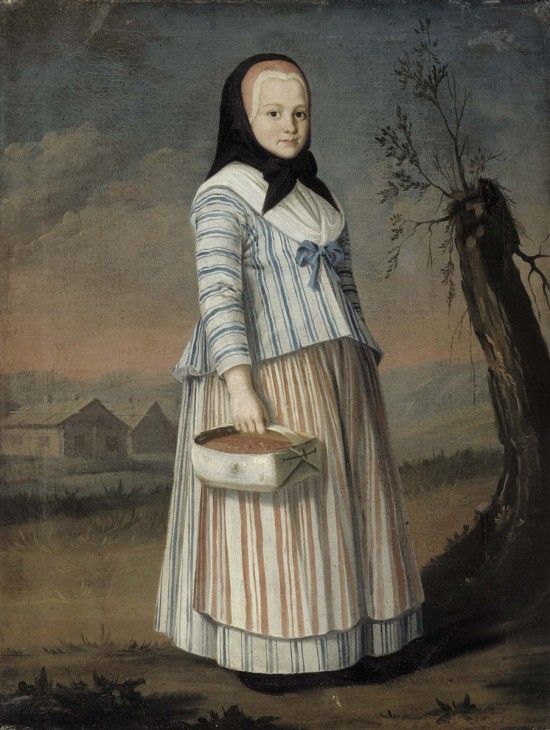
– And a lovely lady who is all in stripes, but the impression is so jolly I’m throwing her in anyway:
After looking at all of this magnificent print and color blocking, I turned to my own costume closet to see what i had ton hand for a 1770s chintz ensemble of my own.
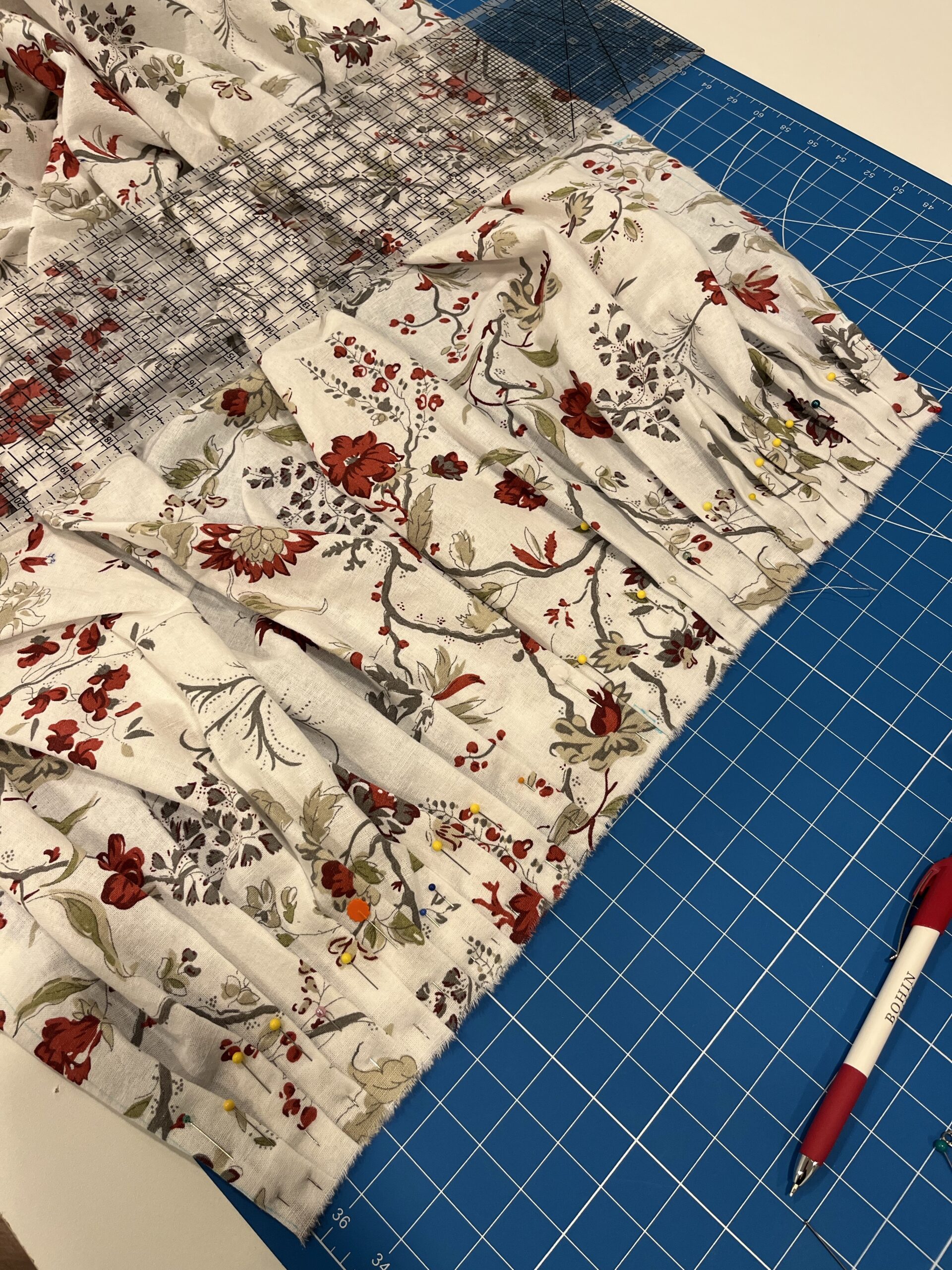
The curtain was large enough for a simple pleated petticoat, so I took that as the place to start. (You can see how I sew up my pleated petticoats HERE.)
I already had a red and white check linen apron that I sewed to wear with my blue plaid short gown. It would tone cheerfully with the petticoat and bedgown.
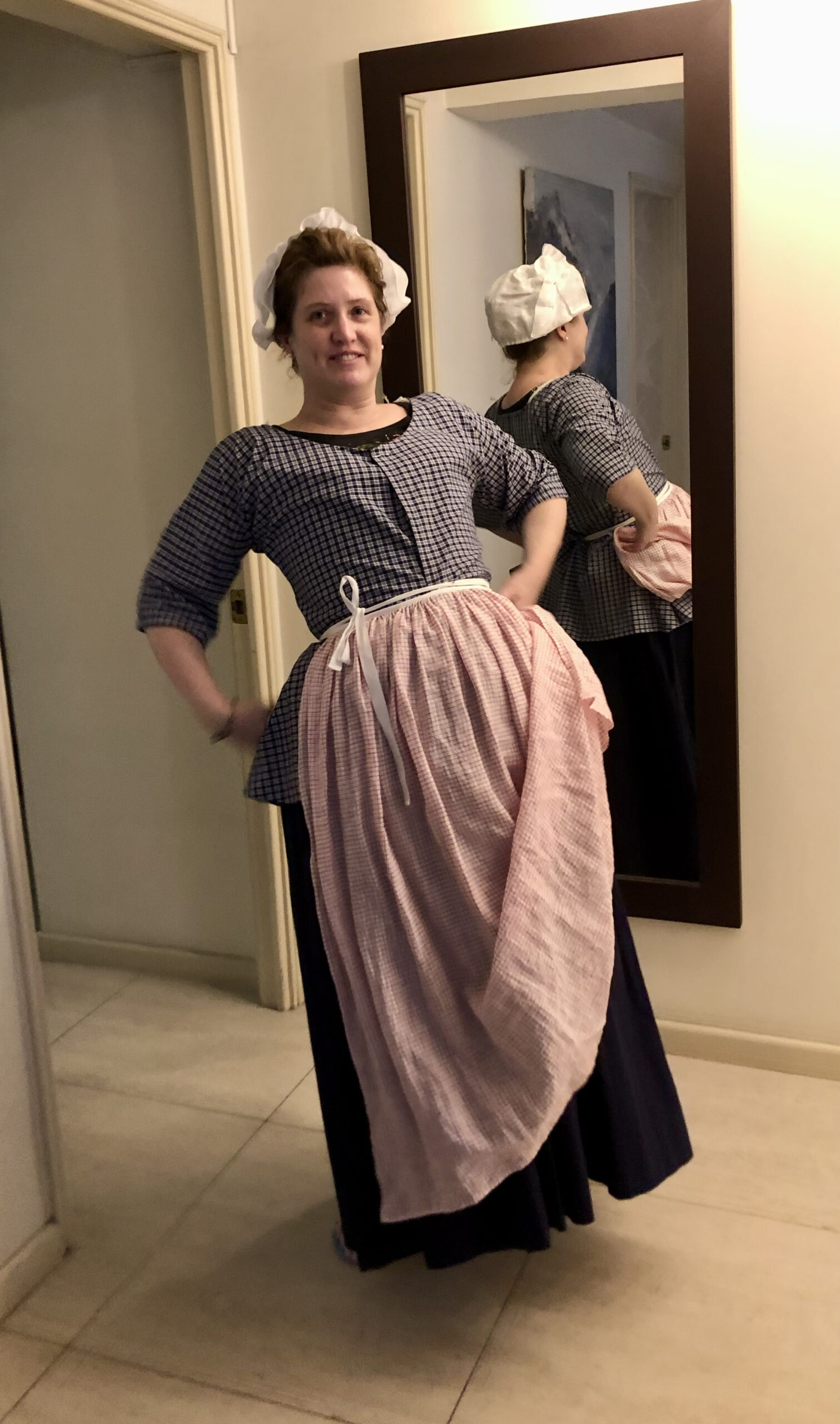
The apron was almost as long as the chintz petticoat so i hemmed it up several inches for maximum visual effect.
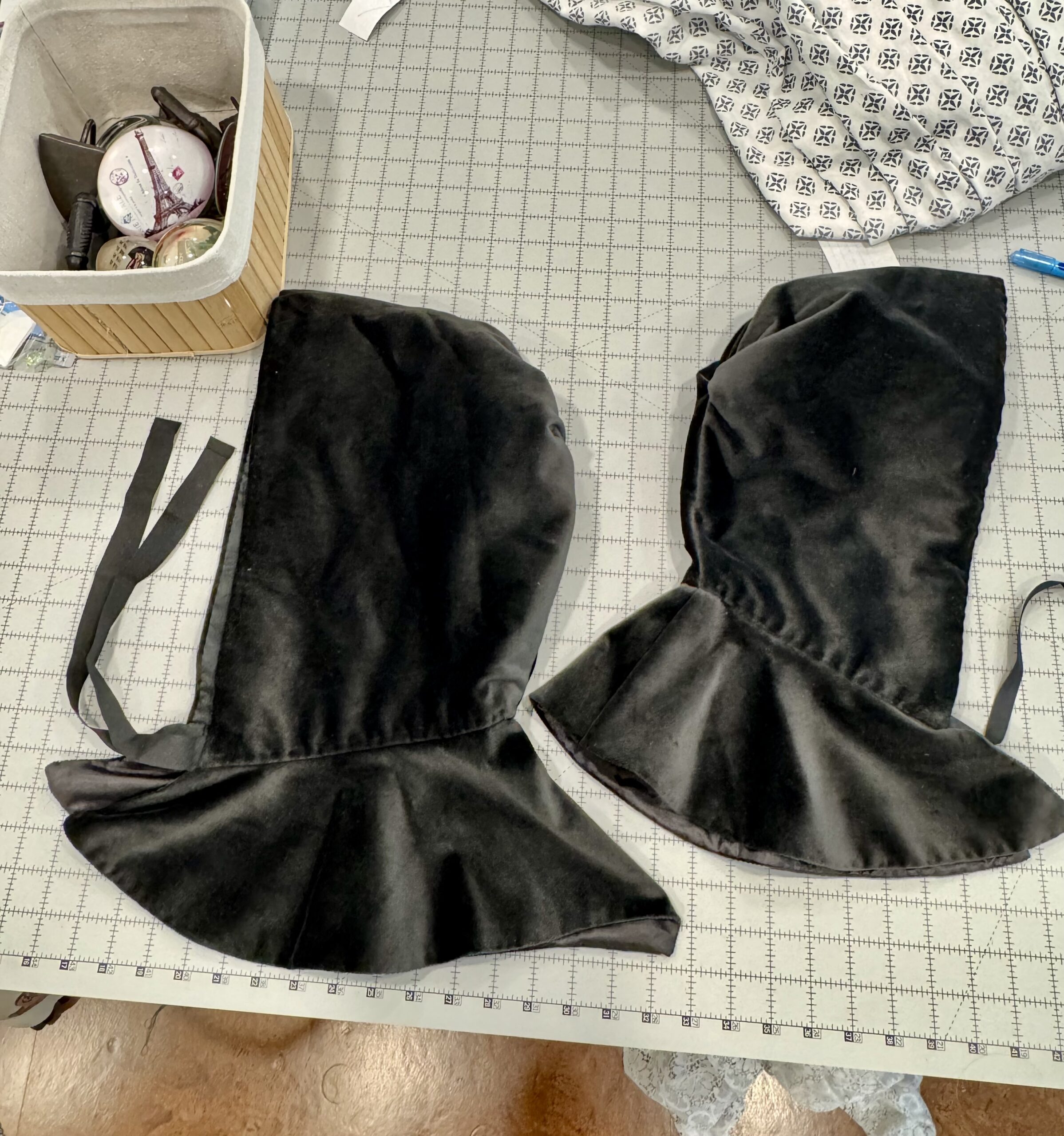
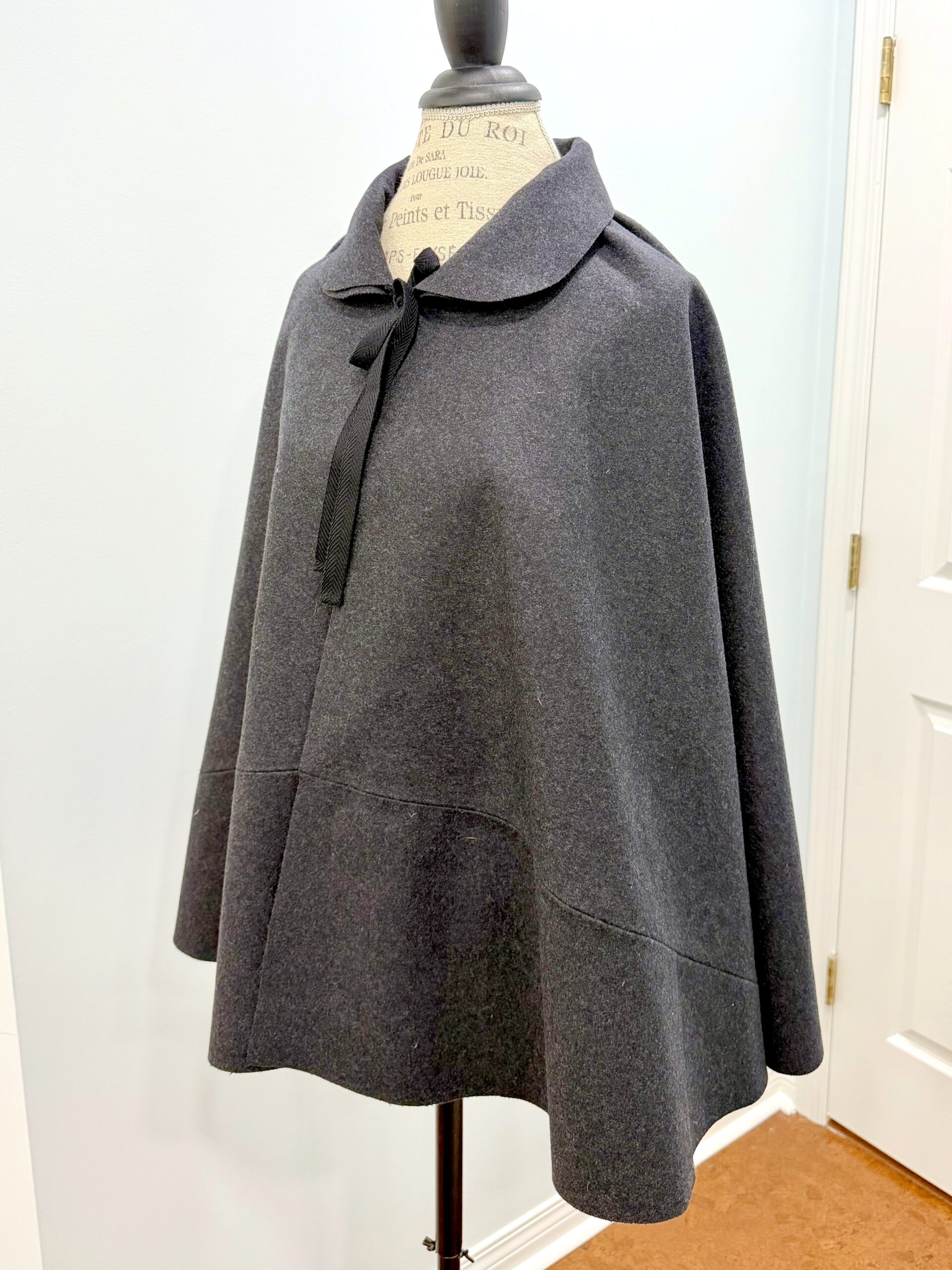
If I made this this 1770s chintz ensemble were a winter-weather one, I’d have the layering I was looking for, so I sewed myself a wool short cloak and a velvet winter hood. (You can see how I made my short cloak and my winter hood HERE and HERE.)
Then I added soft blue wool mitts, a patterned kerchief, and on my head, a lappet cap. There aren’t too many lappet caps in the prints I’m referencing, but long lappets wrapped snugly around my chin would be an additional warm layer in winter, and I could see a busy housewife caring more about keeping out an icy wind than looking brand spanking up to date. (You can see how I made my lappet cap HERE.)

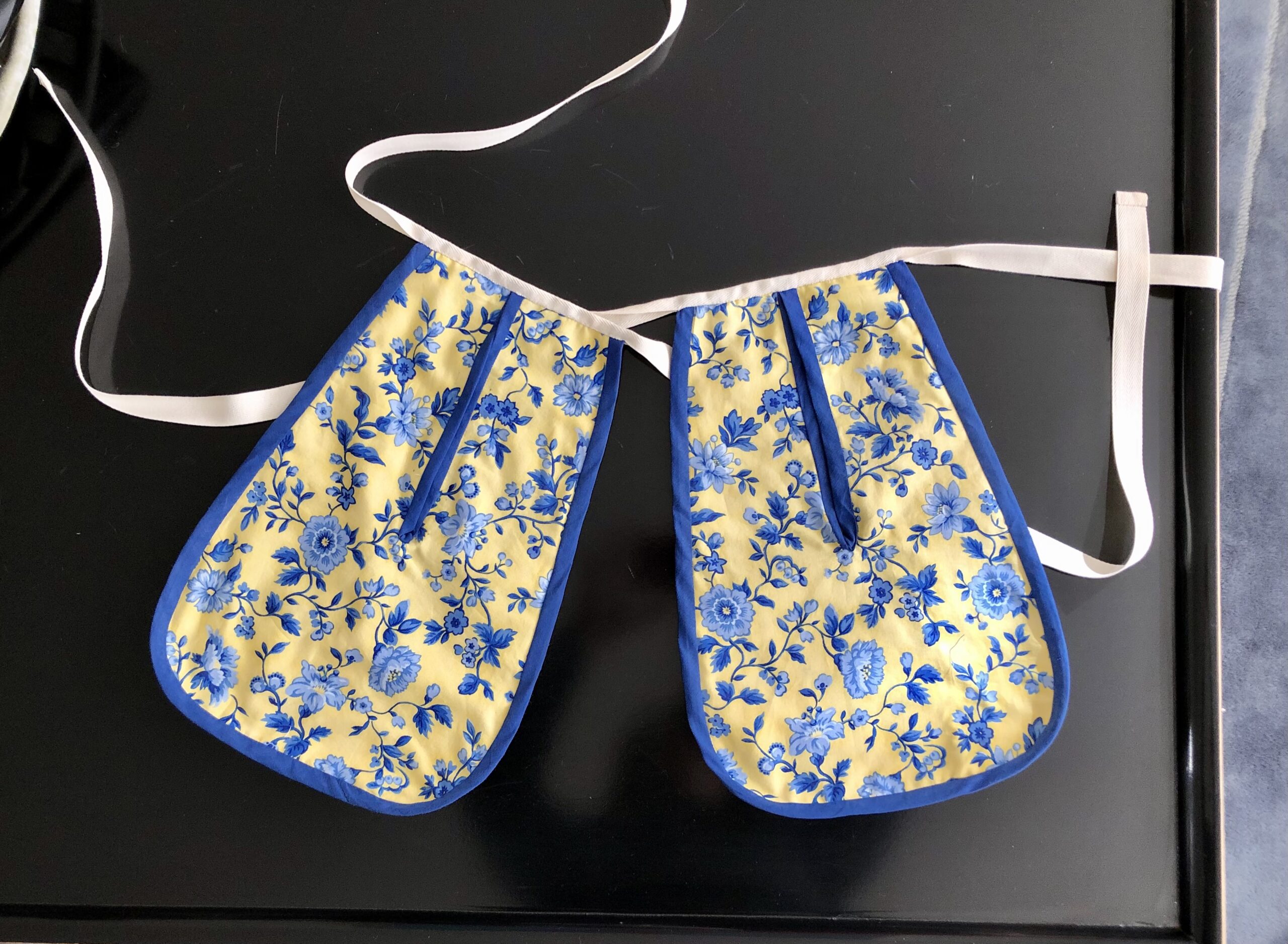
Beneath it all I would wear a heavy matelassé petticoat and a pair of pockets – also in chintz (albeit a slightly more modern print!)
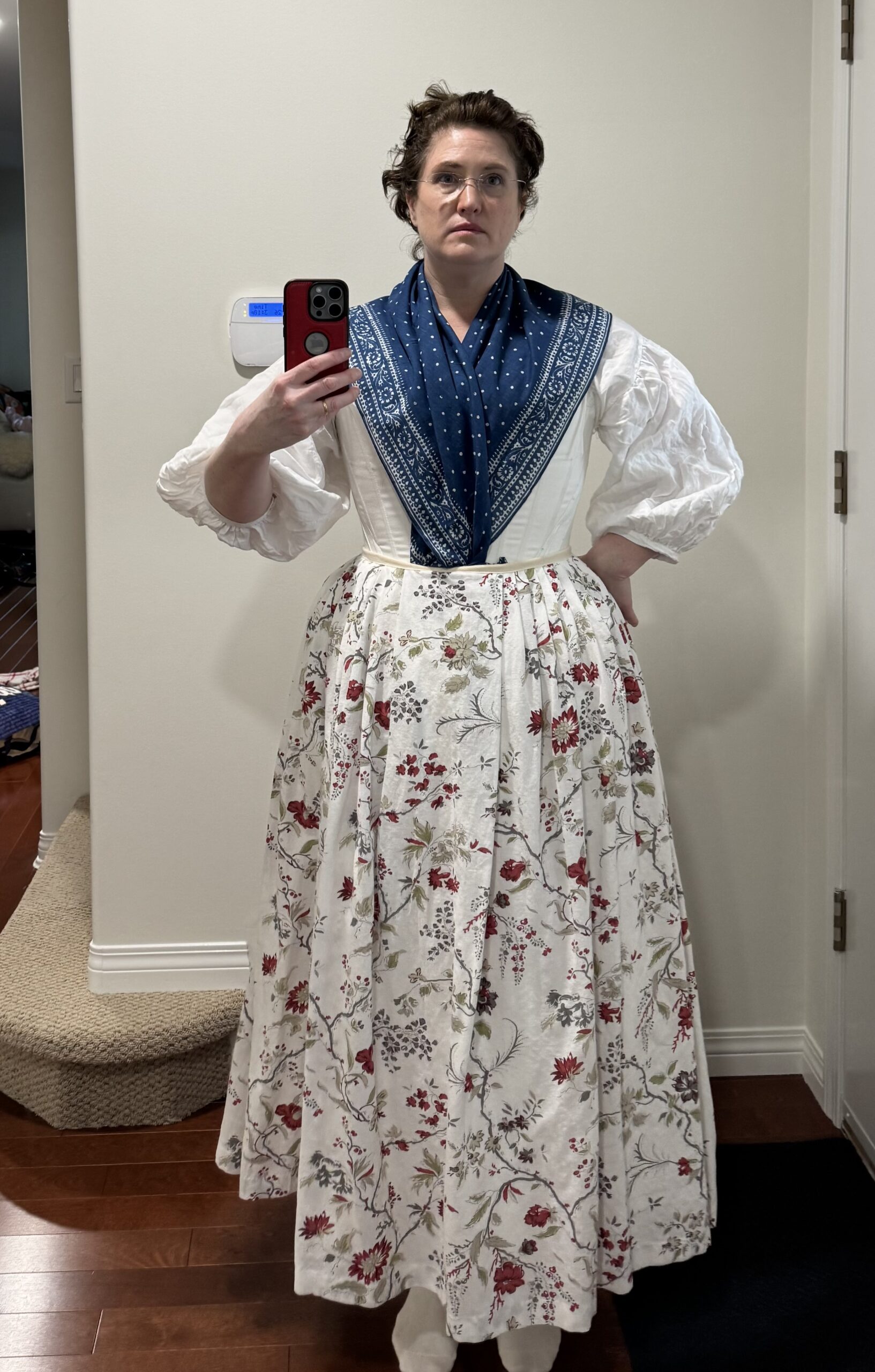
With all those layers prepared, I was ready to go!
Layer one: a mid-18th century linen shift, stockings and stays, a warm cotton matelassé petticoat (unseen because I forgot to photograph it) my new ikea petticoat, and an indigo kerchief (about to be tucked into the stays so it stays put.)
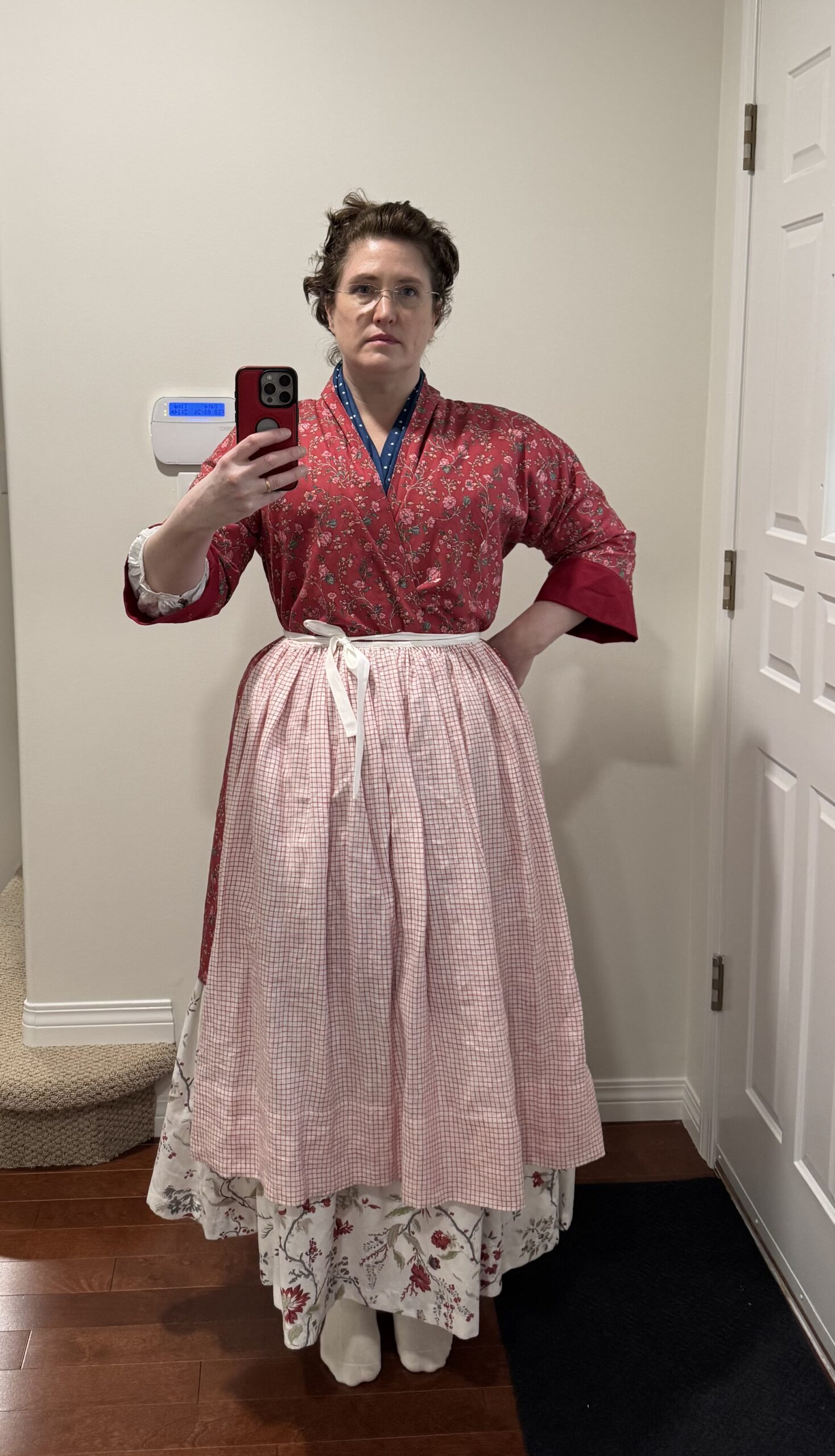
Layer two: The tomato loaf and linen apron go on.
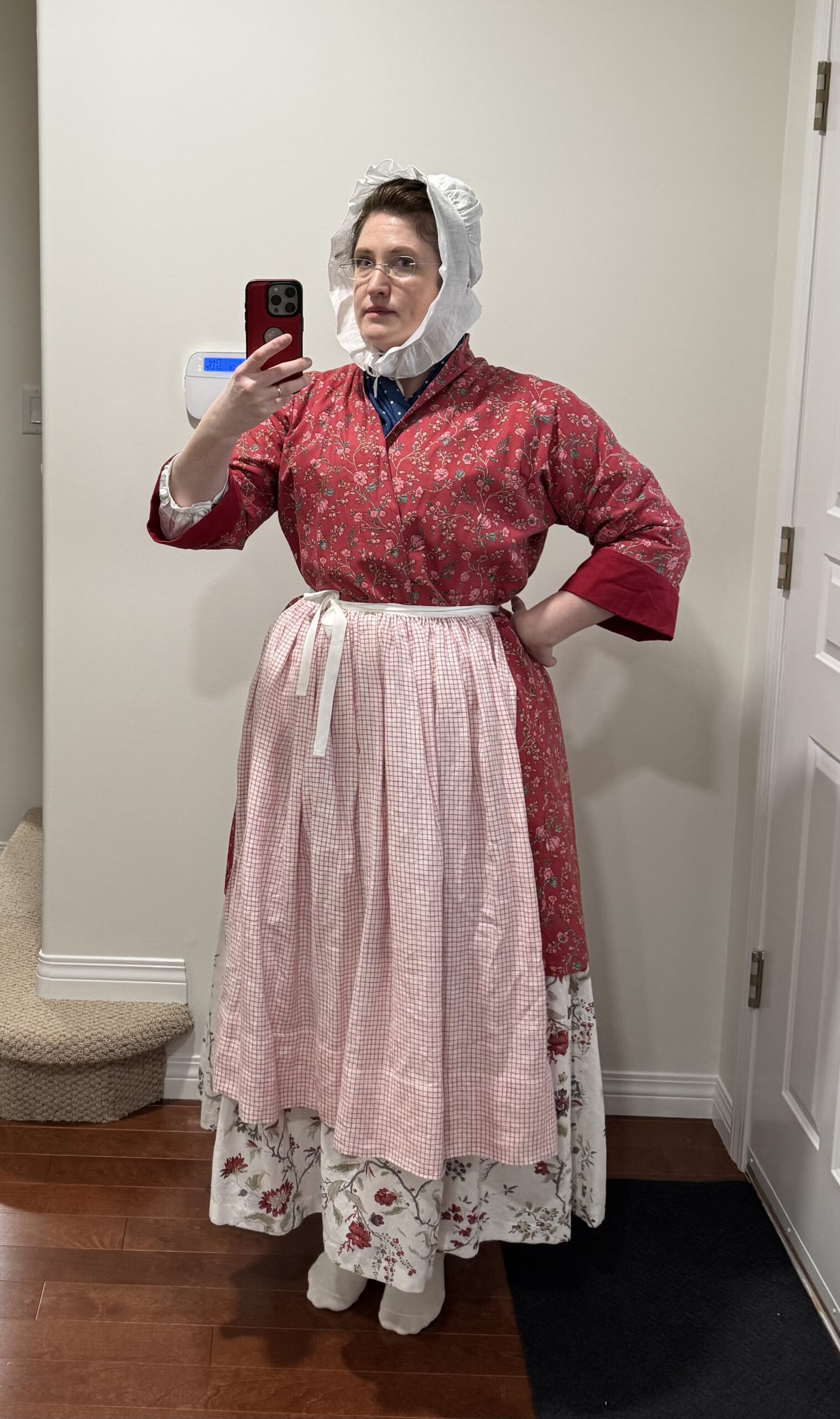
Layer three : A linen lappet cap is added! Is it warm? Yes. Is it chic? Not even a little bit!!
Layer four: Wool Mitts, a wool short cloak and a silk-lined velvet hood.
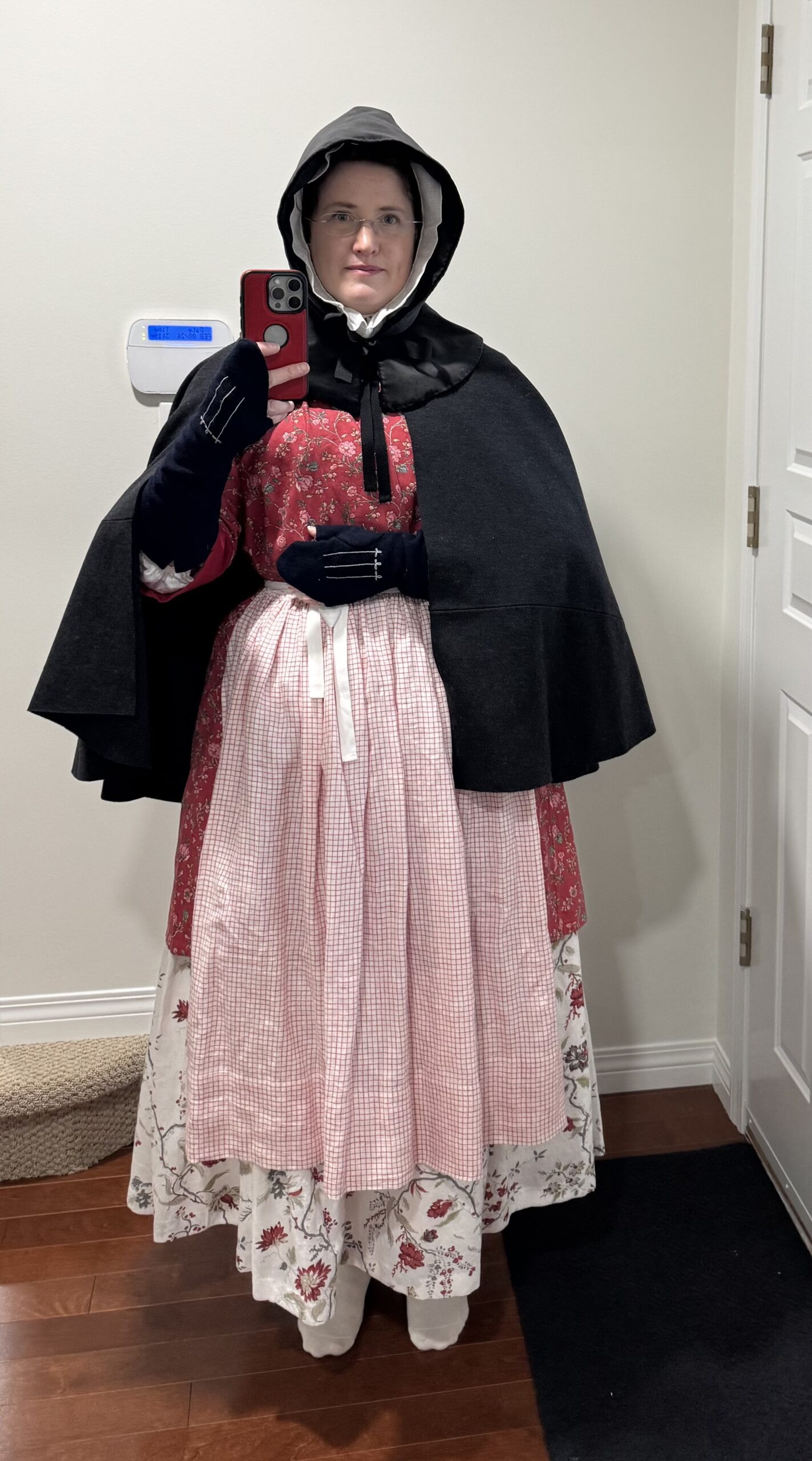
My 1770s chintz ensemble was ready to go outside and find some winter!
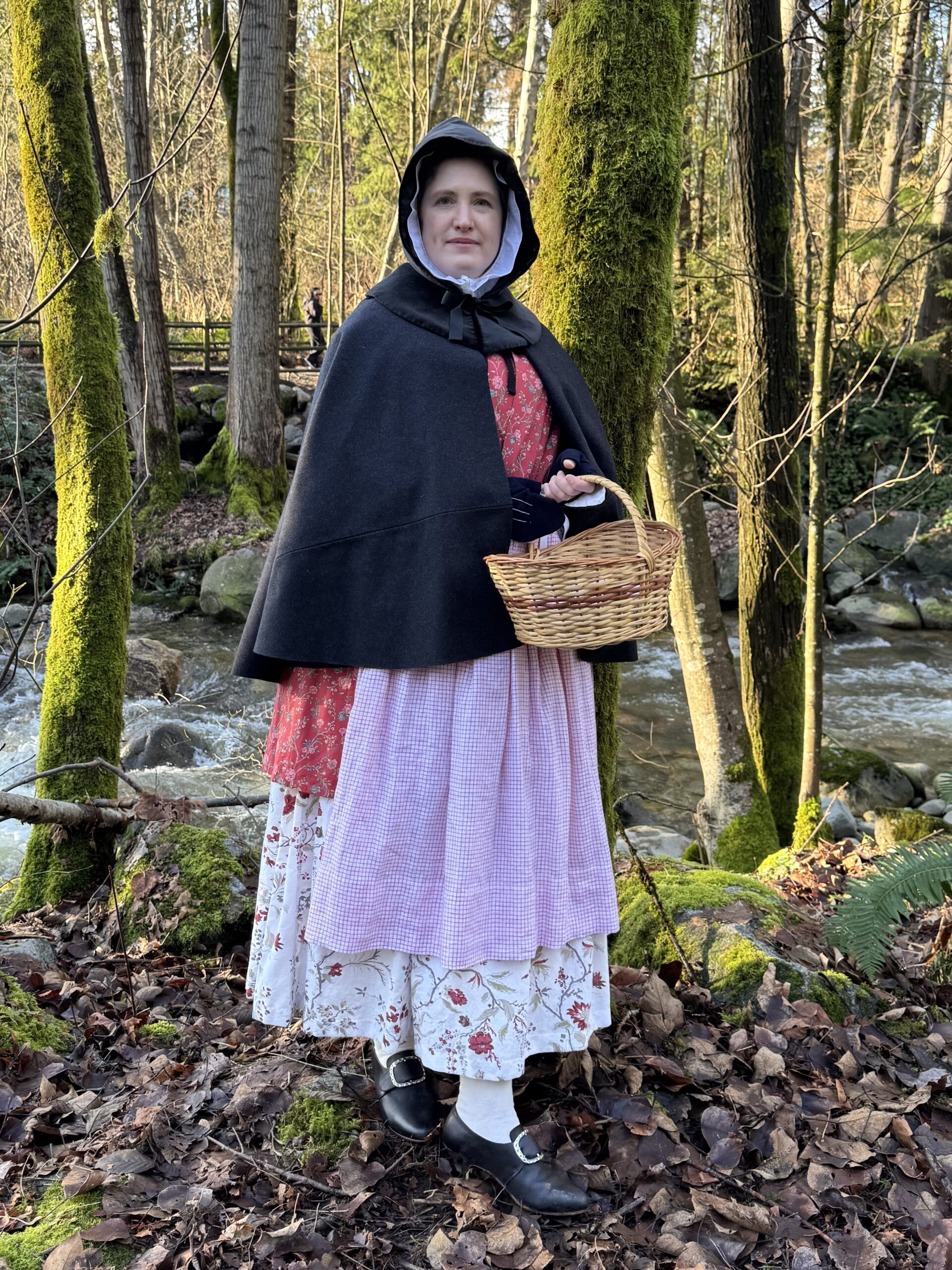
Well, sort of winter. It wasn’t actually very cold, so I took off my woolies and undid the strings on my lappet cap.
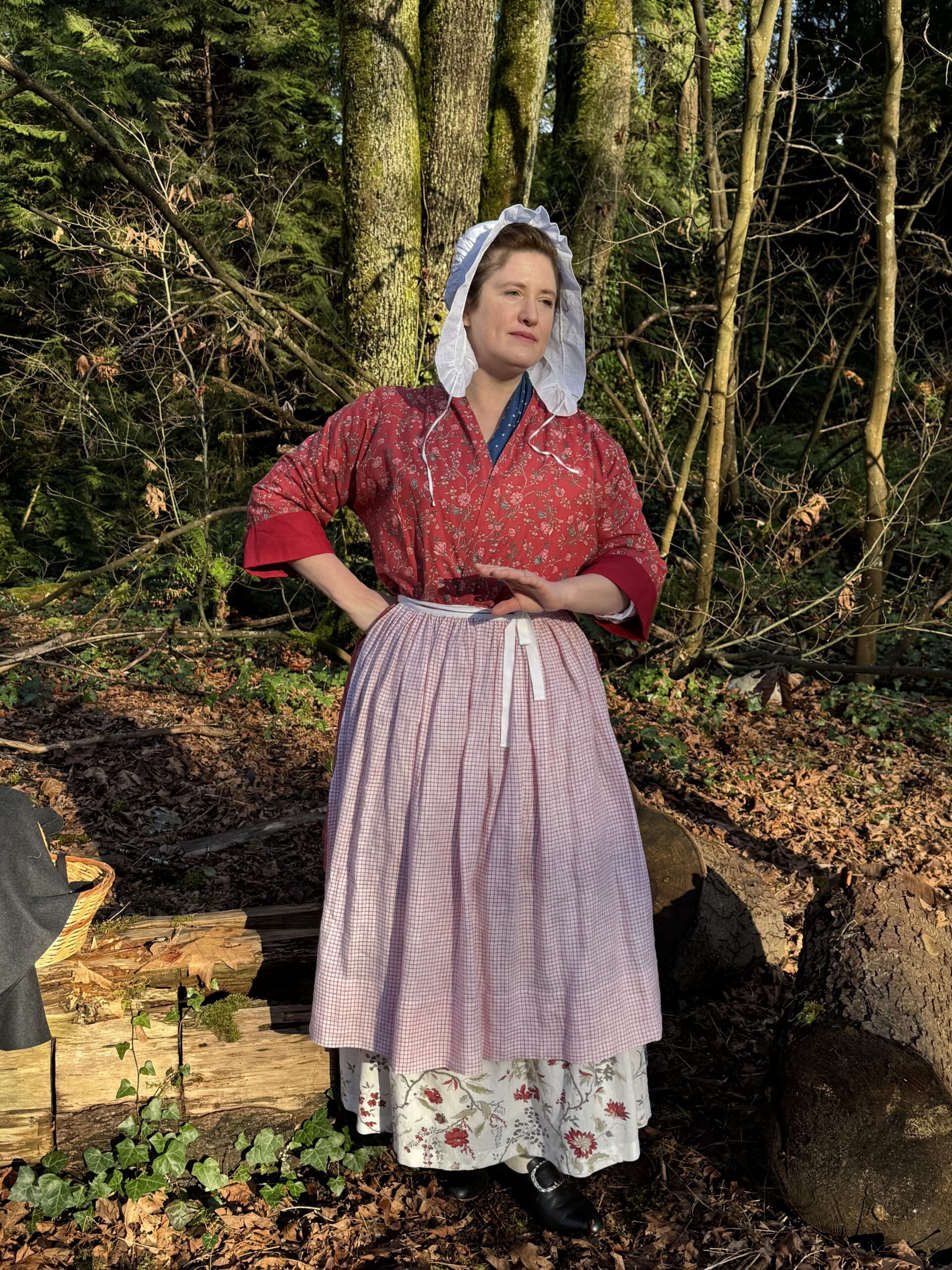
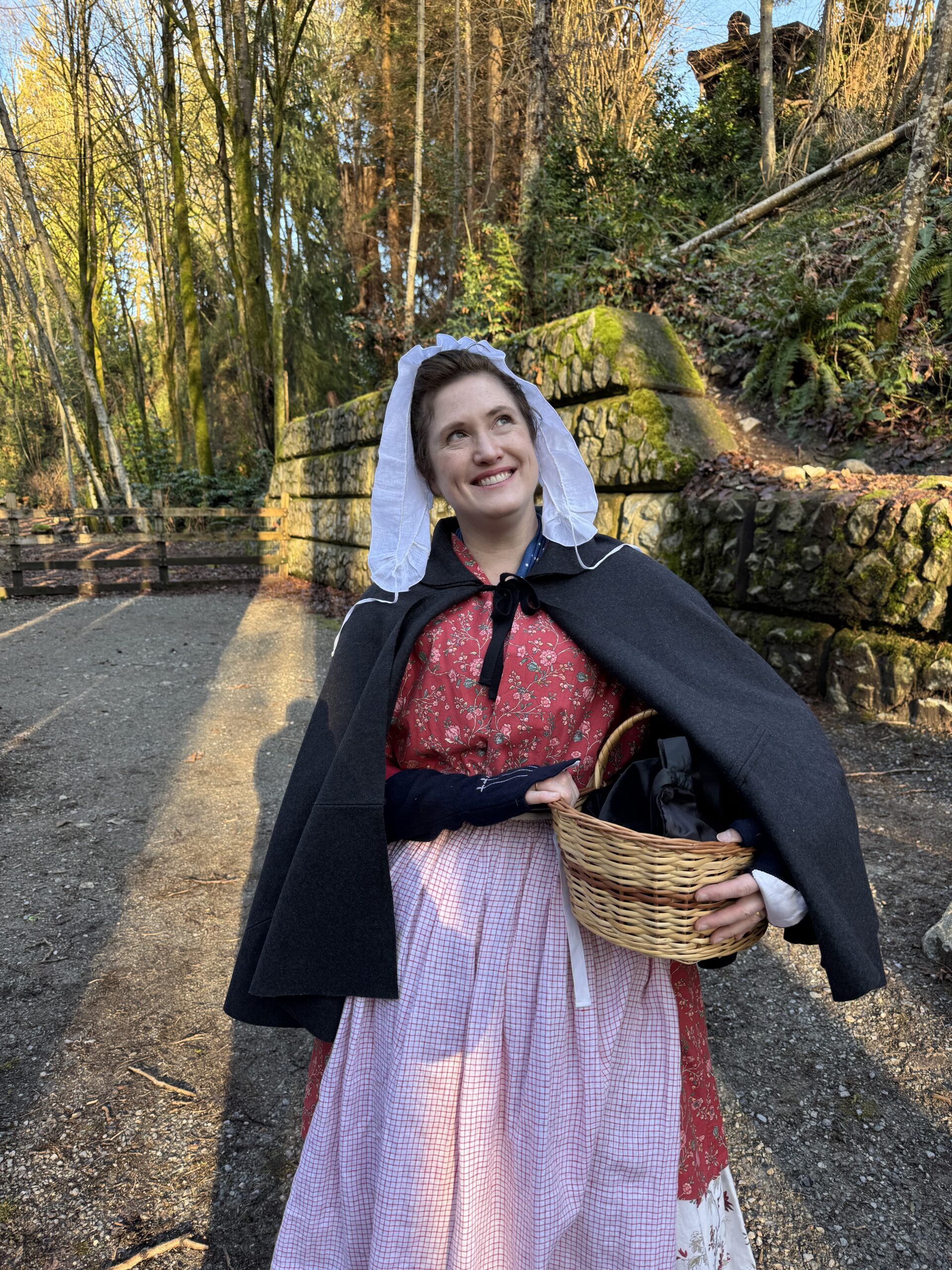
It became a little cooler as the sun went down, so I put on my cloak and mitts again and picked up my basket! My busy housewife had to marketing to do!
More Information on Chintz:
Atelier Nostalgia has written a fantastic series of posts about 18th Century chintz in the Netherlands – Interestingly, while the extant fashion prints say one thing about how these prints were worn, it, sounds like a curator with expertise wasn’t quite sure they were worn that way in real life, that generally speaking, the upper and lower halves of the body weren’t both chintz. I’d love to learn more about her studies – the prints I’m working from are purportedly depictions of regional working class dress, but they are mostly Swiss, I believe, rather than Netherlandish.
Chintz had a big moment in the historical costuming community in 2012-2013 when Ikea introduced a line of historical chintz curtain prints. They came in several colorways, and quite a lot of costumers participated in a “Curtain-Along”, making a wide range of garments in all sorts of styles. If you’d like to see a whole lot of fabulous historical chintz costuming, Festive Attyre has a fantastic wrap-up with links to many of the costumers HERE.